

Cold plate with combined inclined impingement and ribbed channels
a cold plate and inclined impingement technology, applied in the field of cooling devices, can solve the problems of increasing the need for effective heat dissipation, increasing the amount of heat, and no straightforward extension of those principles for high heat flux in the smaller and more efficient electronic devices, and achieves the effect of increasing the local heat transfer ra
- Summary
- Abstract
- Description
- Claims
- Application Information
AI Technical Summary
Benefits of technology
Problems solved by technology
Method used
Image

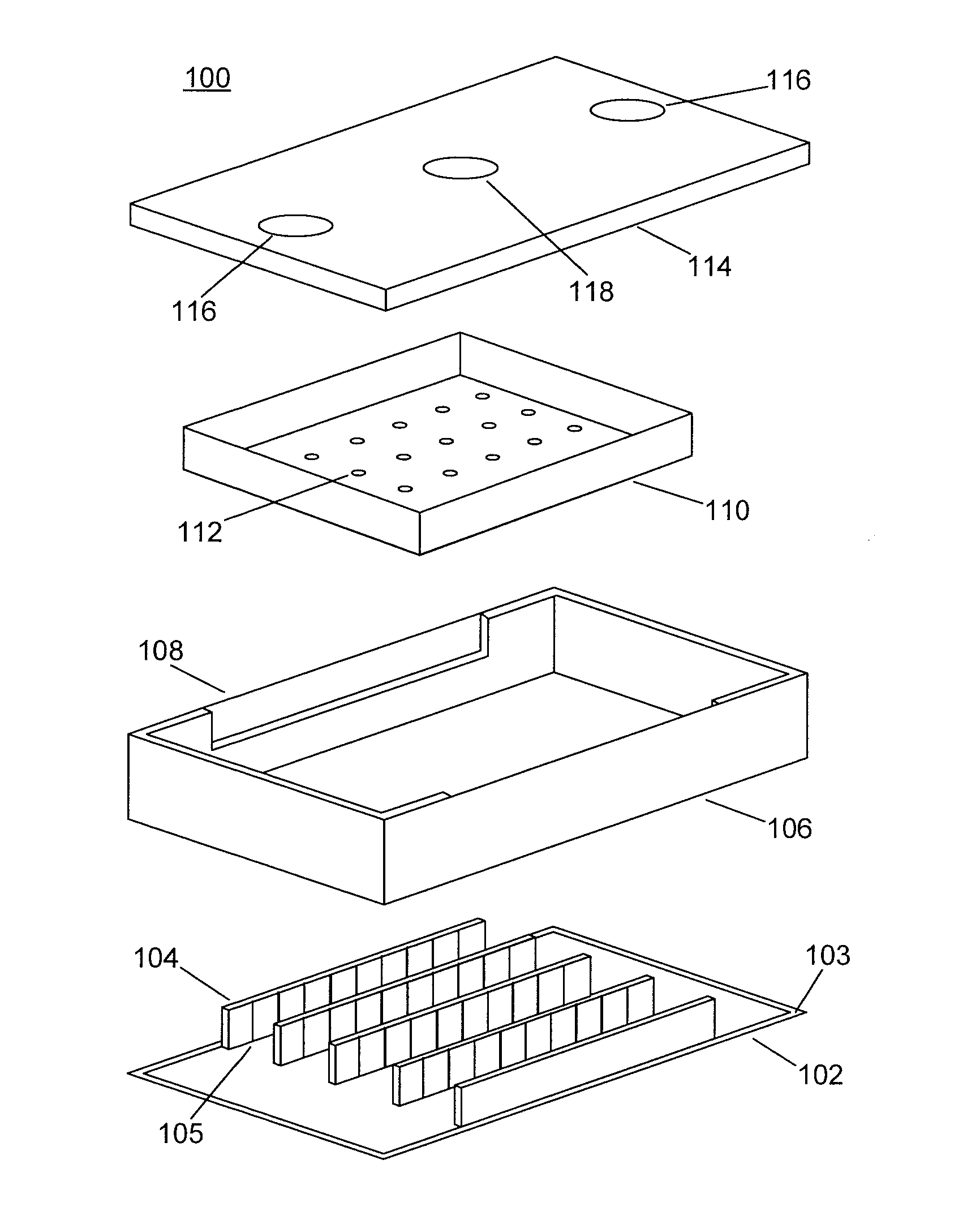
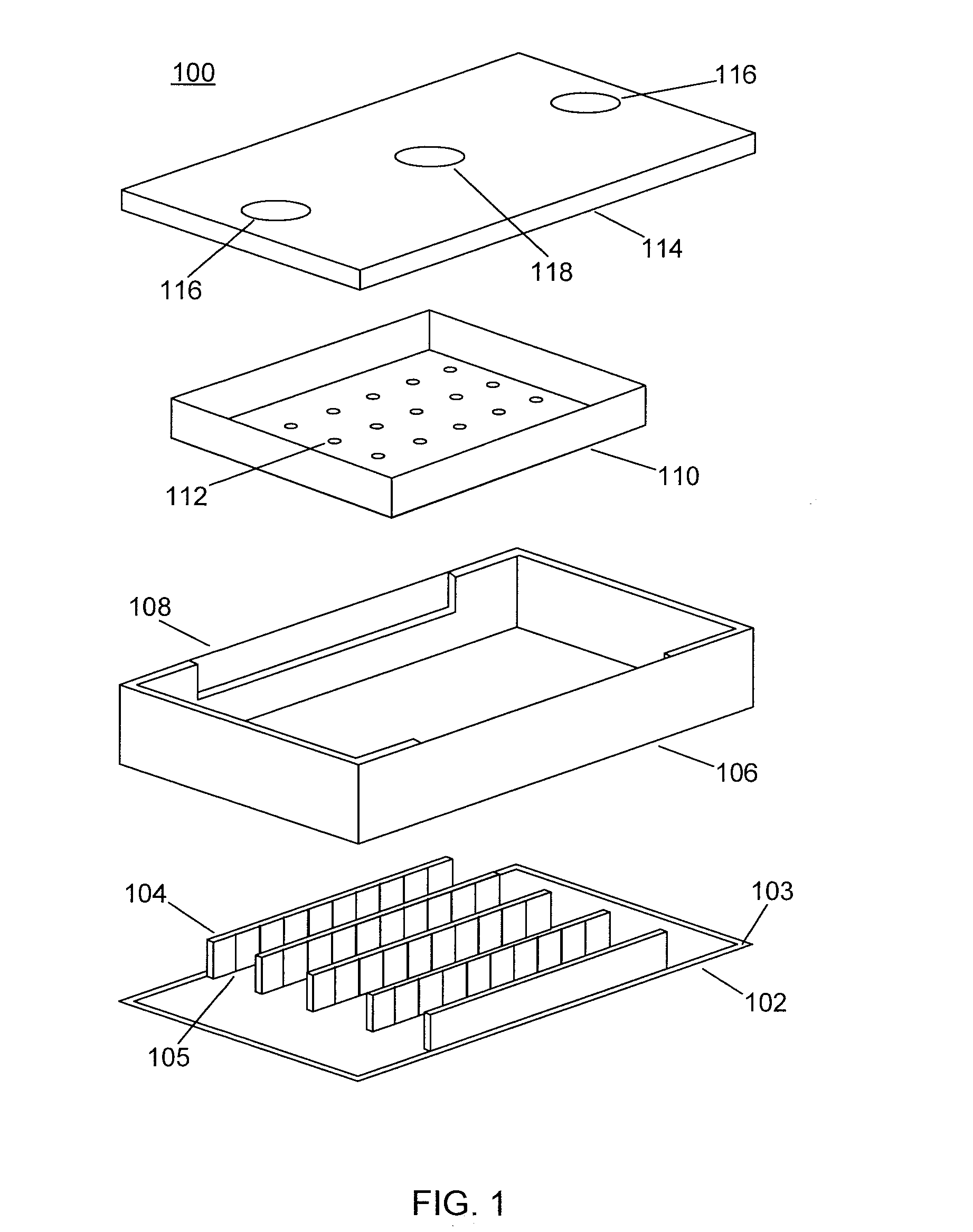
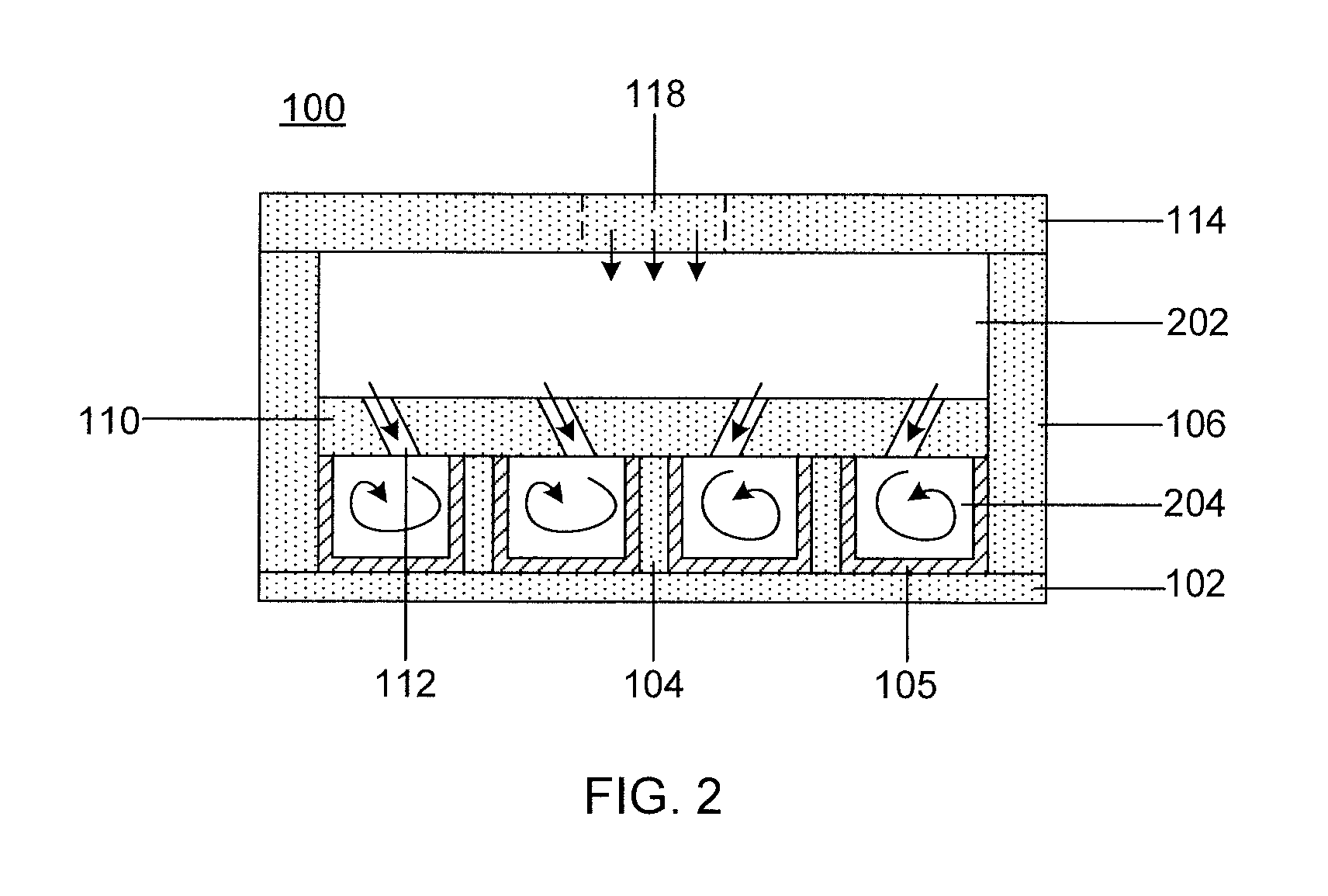
Examples
Embodiment Construction
[0022]The present principles combine inclined impingement of coolant with ribbed cooling channels to produce a cold plate for high heat flux applications. The present embodiments use an array of impinging jets to provide high local heat transfer rates and, furthermore, provide an increased wetted surface area and increase flow turbulence along cooling channels with ribs, thereby increasing the overall heat transfer rates by exploiting efficiencies that result from particular kinds of coolant motion. When flow is turbulent, coolant particles exhibit additional transverse motion. This enhances the rate of energy and momentum exchange between coolant particles, thus increasing the heat transfer coefficient and increasing the cooling effect. This improves on conventional single-phase cooling systems, which do not concern themselves with coolant flow at such a minute level.
[0023]Although it is specifically contemplated that the present principles may be applied to fields of technology su...
PUM
| Property | Measurement | Unit |
|---|---|---|
| impingement angles | aaaaa | aaaaa |
| impingement angles | aaaaa | aaaaa |
| impingement angles | aaaaa | aaaaa |
Abstract
Description
Claims
Application Information
 Login to View More