
System for establishing and maintaining a clock reference indicating one-way latency in a data network
- Summary
- Abstract
- Description
- Claims
- Application Information
AI Technical Summary
Benefits of technology
Problems solved by technology
Method used
Image

Examples
Embodiment Construction
[0027]Although the invention will be described in connection with certain preferred embodiments, it will be understood that the invention is not limited to those particular embodiments. On the contrary, the invention is intended to cover all alternatives, modifications, and equivalent arrangements as may be included within the spirit and scope of the invention as defined by the appended claims.
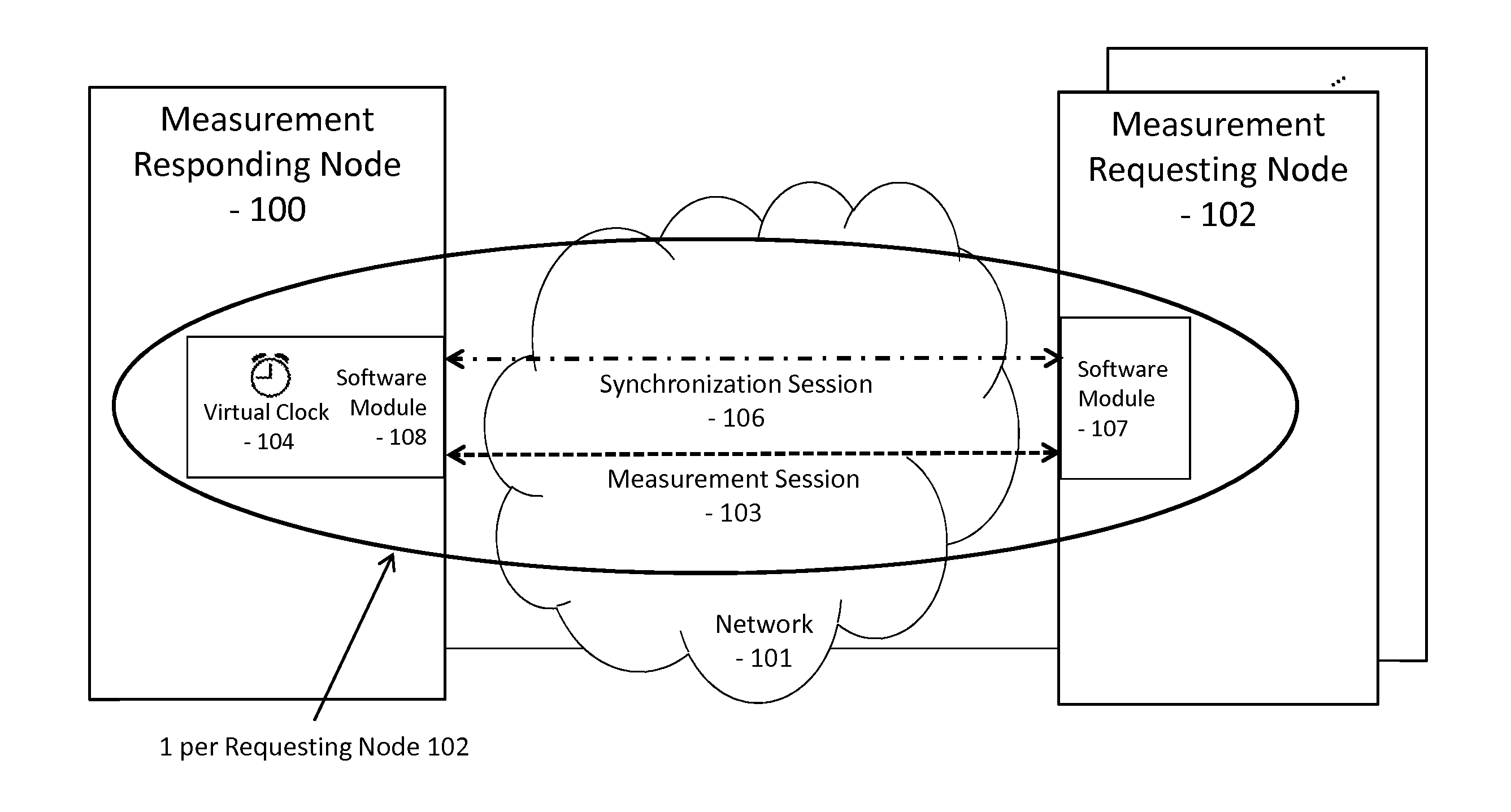
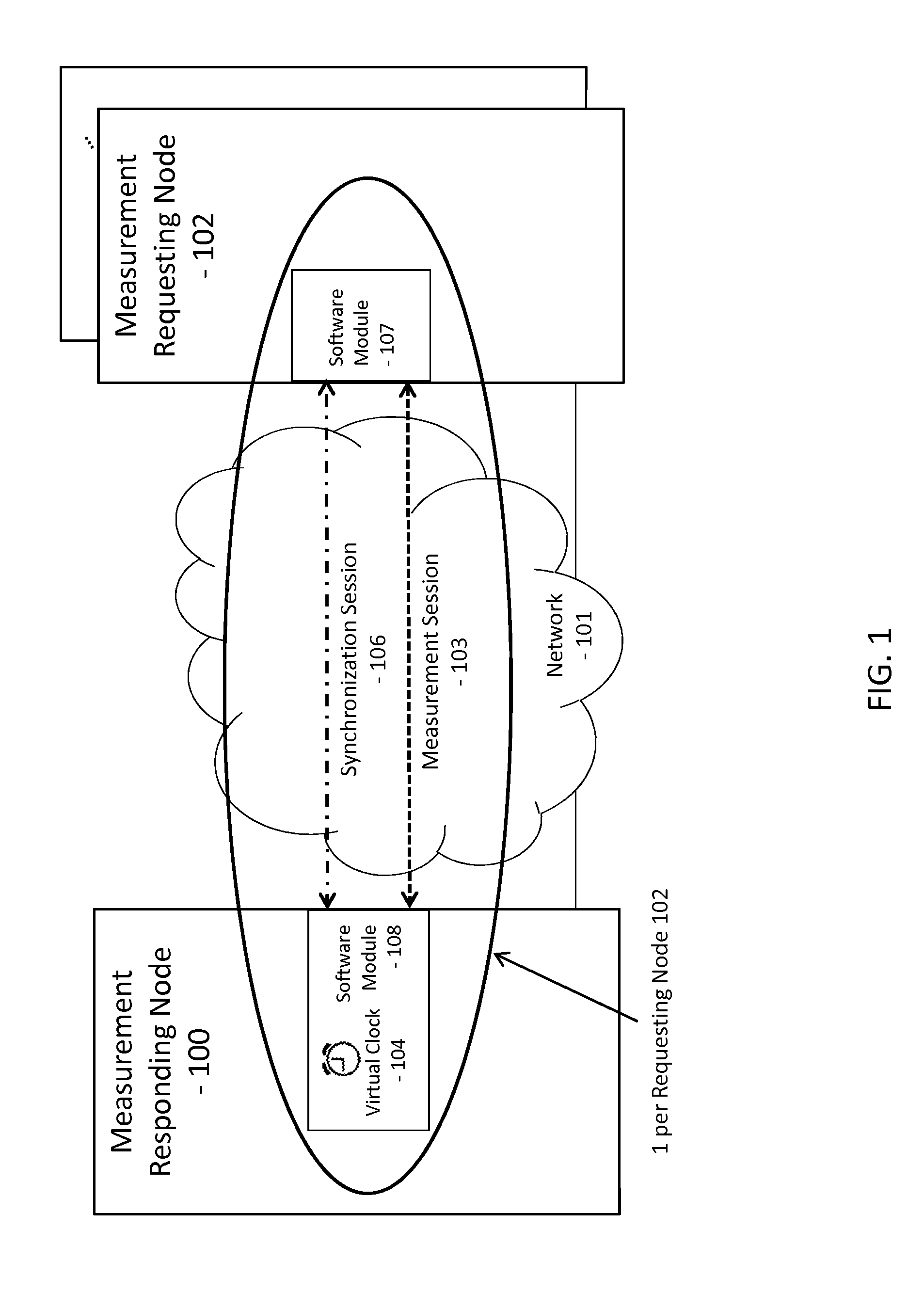
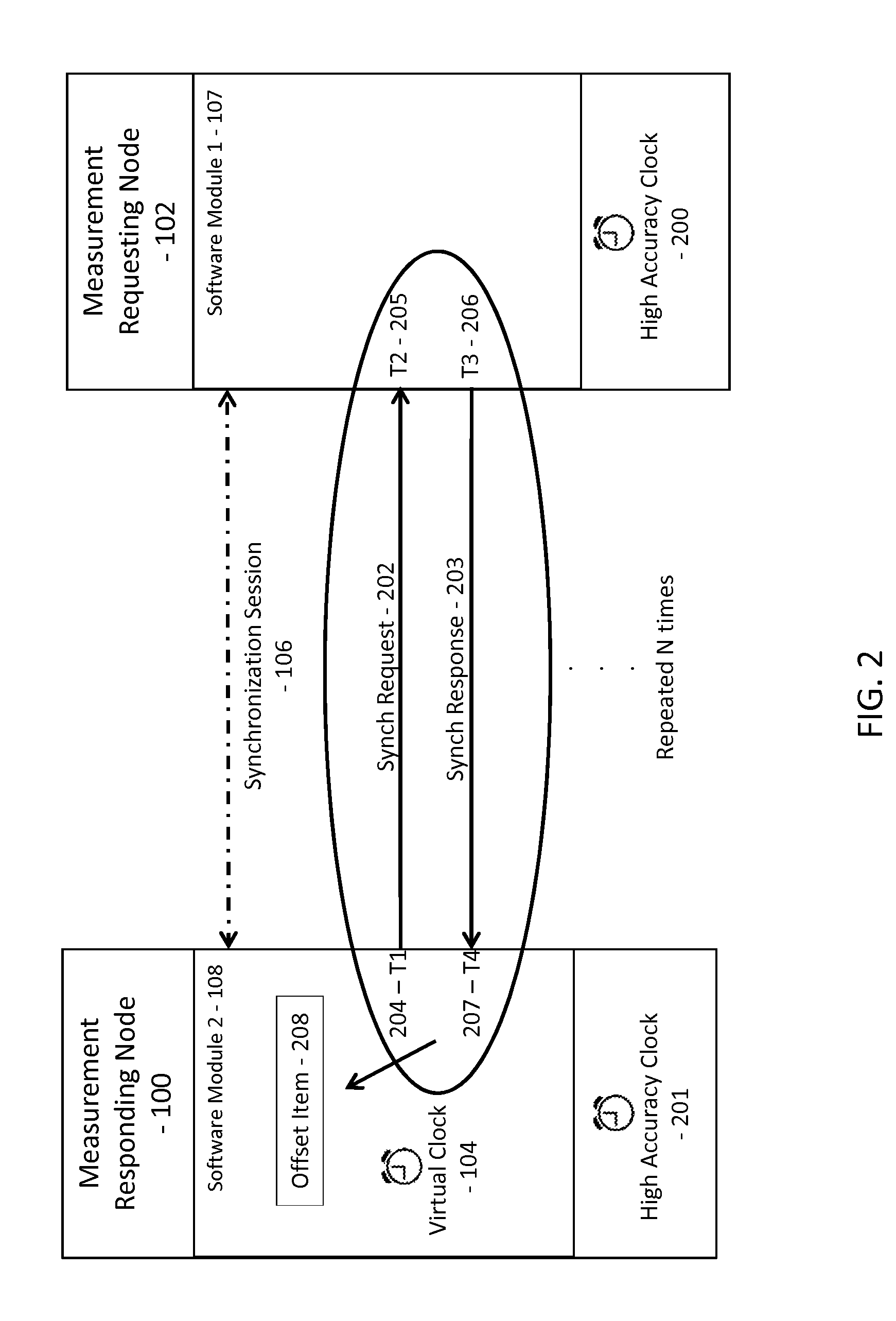
[0028]A method for indicating one-way latency in a data network, with continuous clock synchronization between a first node and a second node is disclosed. The method comprises the exchange of clock synchronization information between a pair of network nodes via a synchronization session. This synchronization session sends synchronization messages at regular intervals and is separate from other management, measurement or user traffic. Synchronization messages do not need to use the same path as other traffic between the pair of nodes. The network node is equipped with a network interface card ...
PUM
 Login to View More
 Abstract
Description
Claims
Application Information
 Login to View More