Check patentability & draft patents in minutes with Patsnap Eureka AI!

Cell retention design and process

Inactive Publication Date: 2014-09-18
GM GLOBAL TECH OPERATIONS LLC
View PDF6 Cites 4 Cited by
  • Summary
  • Abstract
  • Description
  • Claims
  • Application Information

AI Technical Summary

Benefits of technology

This patent describes a method and system for reducing the movement of fuel cells within a fuel cell stack during a disruptive event, such as an accident. The method involves injecting a curable material into the space between the edges of the fuel cells and the interior wall of the housing. This material acts as a bridge to transmit the load from the housing to the fuel cells, distributing the acceleration load more evenly. The technical effect of this method is to increase the stability and safety of fuel cell systems during such disruptions.

Problems solved by technology

In the event of high acceleration, deceleration, or impact of the vehicle, a high shearing force may cause sliding between cells of the stack.
Additionally, a stack that has been prepared for a freeze start often possesses a reduced compressive load for retention as a result of reduced membrane swell and thermal contraction, leaving the cells vulnerable to being displaced by lateral accelerations.
The primary disadvantage of retention with the end cell friction is that it is limited by the compressive load multiplied by the coefficient of friction for the interfaces.
Because the surface of the GDM is typically treated with polytetrafluoroethylene (PTFE), the coefficient of friction may be so low as to generate insufficient friction to retain the entire stack during severe accelerations.
Moreover, while the reduced mass of the module requires proportionally less retention force, the part count and complexity of the system are increased thereby adding cost and mass of the module frames to the system.

Method used

the structure of the environmentally friendly knitted fabric provided by the present invention; figure 2 Flow chart of the yarn wrapping machine for environmentally friendly knitted fabrics and storage devices; image 3 Is the parameter map of the yarn covering machine
View more

Image

Smart Image Click on the blue labels to locate them in the text.
Viewing Examples
Smart Image
  • Cell retention design and process
  • Cell retention design and process
  • Cell retention design and process

Examples

Experimental program
Comparison scheme
Effect test

Embodiment Construction

[0019]The following detailed description and appended drawings describe and illustrate various embodiments of the present disclosure. The description and drawings serve to enable one skilled in the art to make and use the invention, and are not intended to limit the scope of the invention in any manner.

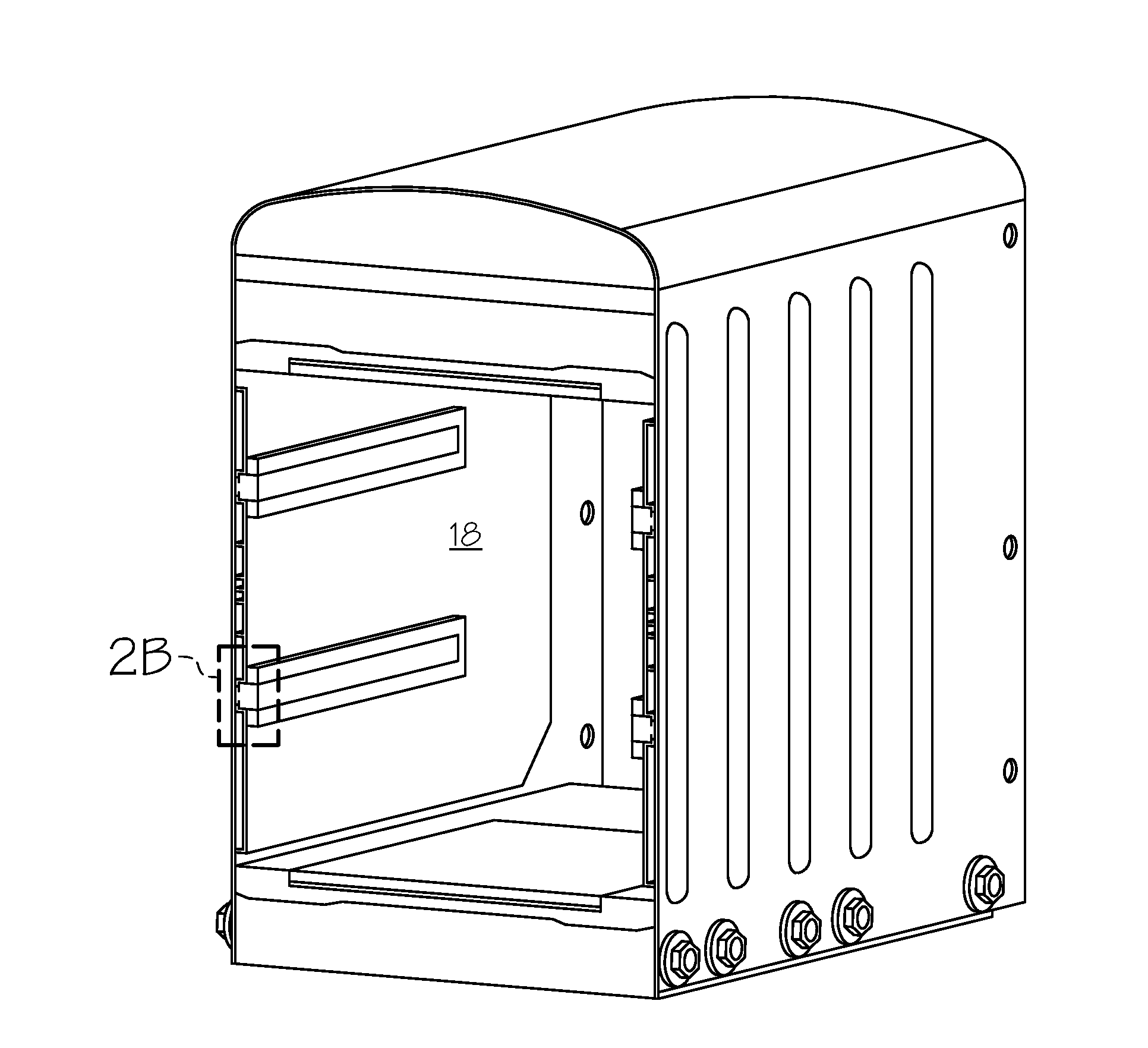
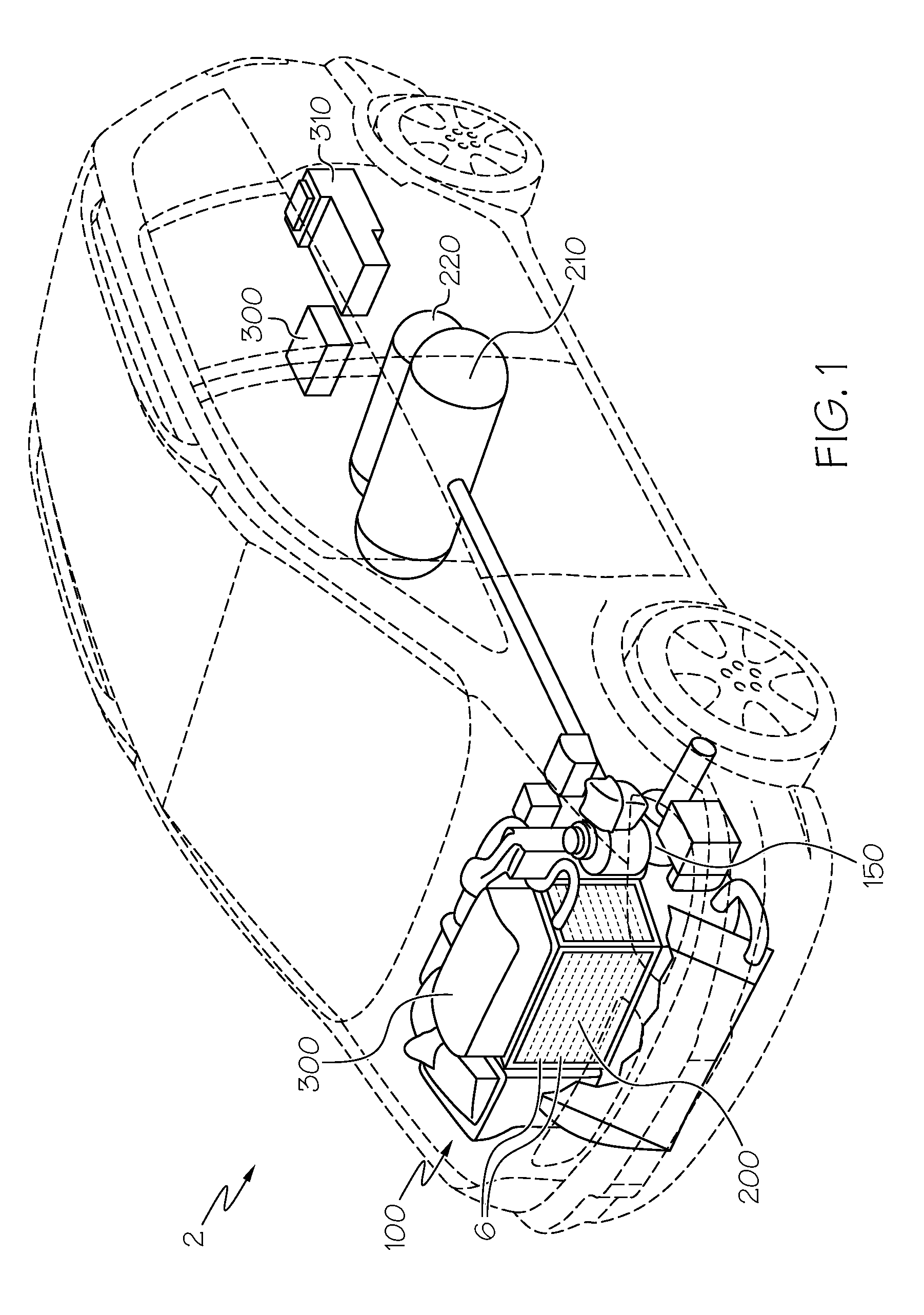
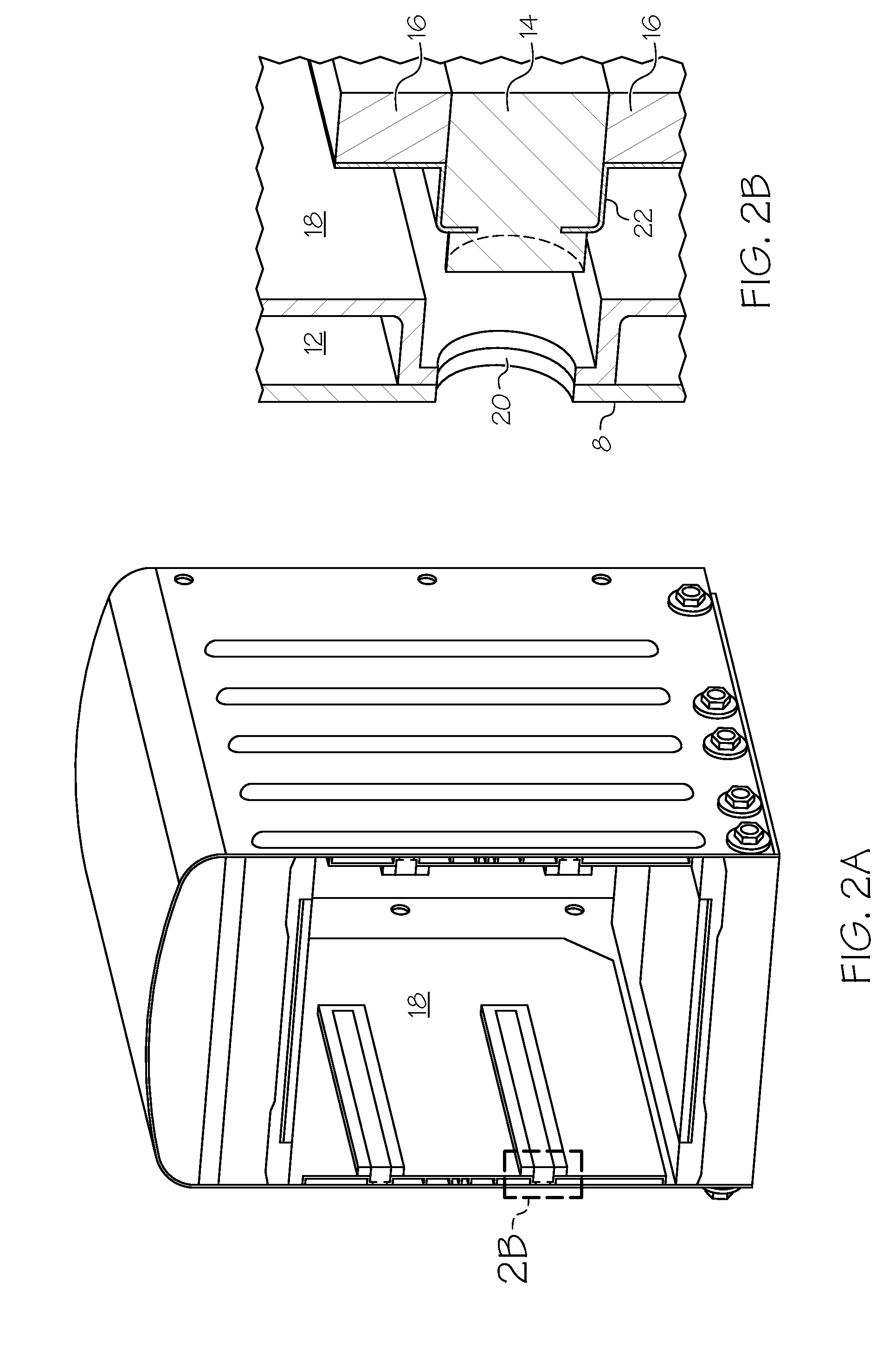
[0020]Referring first to FIG. 1, vehicle 2 is shown, according to embodiments shown and described herein. Vehicle 2 (for example, a car, bus, truck, or motorcycle) includes a fuel-cell based propulsion system 100 made up of an electric motor 150 that receives its electric power from a fuel cell stack 200 that includes numerous individual fuel cells 6. The propulsion system 100 may include one or more fuel storage gas vessels 210, 220, as well as power converters or related electronics 300, electrical storage devices (e.g., batteries 310, ultra-capacitors or the like) and controllers that provide control over its operation, and any number of valves, compressors, tubing, temperature reg...

the structure of the environmentally friendly knitted fabric provided by the present invention; figure 2 Flow chart of the yarn wrapping machine for environmentally friendly knitted fabrics and storage devices; image 3 Is the parameter map of the yarn covering machine
Login to View More

PUM

No PUM Login to View More

Abstract

A system and method for reducing the relative movement between adjacent fuel cells within a fuel cell stack includes an improved strategy for distributing an acceleration load over a fuel cell stack while maintaining stack performance after exposure to high acceleration loads. The system comprises a fuel cell stack comprising a plurality of fuel cells enclosed by a housing. A curable material occupies at least a portion of a lateral space located between the edges of each fuel cell in the stack and an interior wall of the housing. Upon occurrence of high acceleration loads within the housing, the curable material transmits the acceleration load from the housing to more evenly distribute the load to the edges of the fuel cells. A plurality of dams may be secured between the housing and the fuel cell stack forming channels for receiving the curable material.

Description

BACKGROUND OF THE INVENTION[0001]The present disclosure relates generally to an improved strategy for distributing an acceleration load over a fuel cell stack, and more particularly to a way to improve fuel cell systems to secure the position of the fuel cells within a fuel cell stack and maintain stack performance after exposure to high acceleration loads.[0002]Fuel cell systems produce electrical energy through the oxidation and reduction of a fuel and an oxidant. Hydrogen, for example, is a very appealing fuel source because it is clean and it can be used to produce electricity efficiently in a fuel cell. The automotive industry has expended significant resources in the development of hydrogen fuel cells as a source of power for vehicles. Vehicles powered by hydrogen fuel cells would be more efficient and would generate fewer emissions than today's vehicles employing internal combustion engines.[0003]In a typical fuel cell system, hydrogen or a hydrogen-rich gas is supplied as a ...

Claims

the structure of the environmentally friendly knitted fabric provided by the present invention; figure 2 Flow chart of the yarn wrapping machine for environmentally friendly knitted fabrics and storage devices; image 3 Is the parameter map of the yarn covering machine
Login to View More

Application Information

Patent Timeline
no application Login to View More
IPC IPC(8): H01M2/10
CPCH01M2/1072H01M8/2475H01M2250/20Y02E60/50H01M8/0273Y02T90/40Y02E60/10
Inventor ROCK, JEFFREY A.MARTINCHEK, DAVID A.
Owner GM GLOBAL TECH OPERATIONS LLC
Features
  • R&D
  • Intellectual Property
  • Life Sciences
  • Materials
  • Tech Scout
Why Patsnap Eureka
  • Unparalleled Data Quality
  • Higher Quality Content
  • 60% Fewer Hallucinations
Social media
Patsnap Eureka Blog
Learn More