Methods and compositions for predicting resistance to anticancer treatment
a technology of anticancer treatment and composition, applied in the field of compositions for predicting resistance to anticancer treatment, can solve the problems of inability to respond equally well to lung cancers with egfr mutations or eml4-alk translocations, tobacco smoking remains the major risk factor, and the effect of inhibitors remains unknown
- Summary
- Abstract
- Description
- Claims
- Application Information
AI Technical Summary
Benefits of technology
Problems solved by technology
Method used
Image

Examples
example 1
[0194]Identification of MED12, ARID1A and SMARCE1 as Molecular Determinants of Resistance to ALK Inhibitors in an EML4-ALK Positive NSCLC Cell Line Using a shRNA Barcode Screen
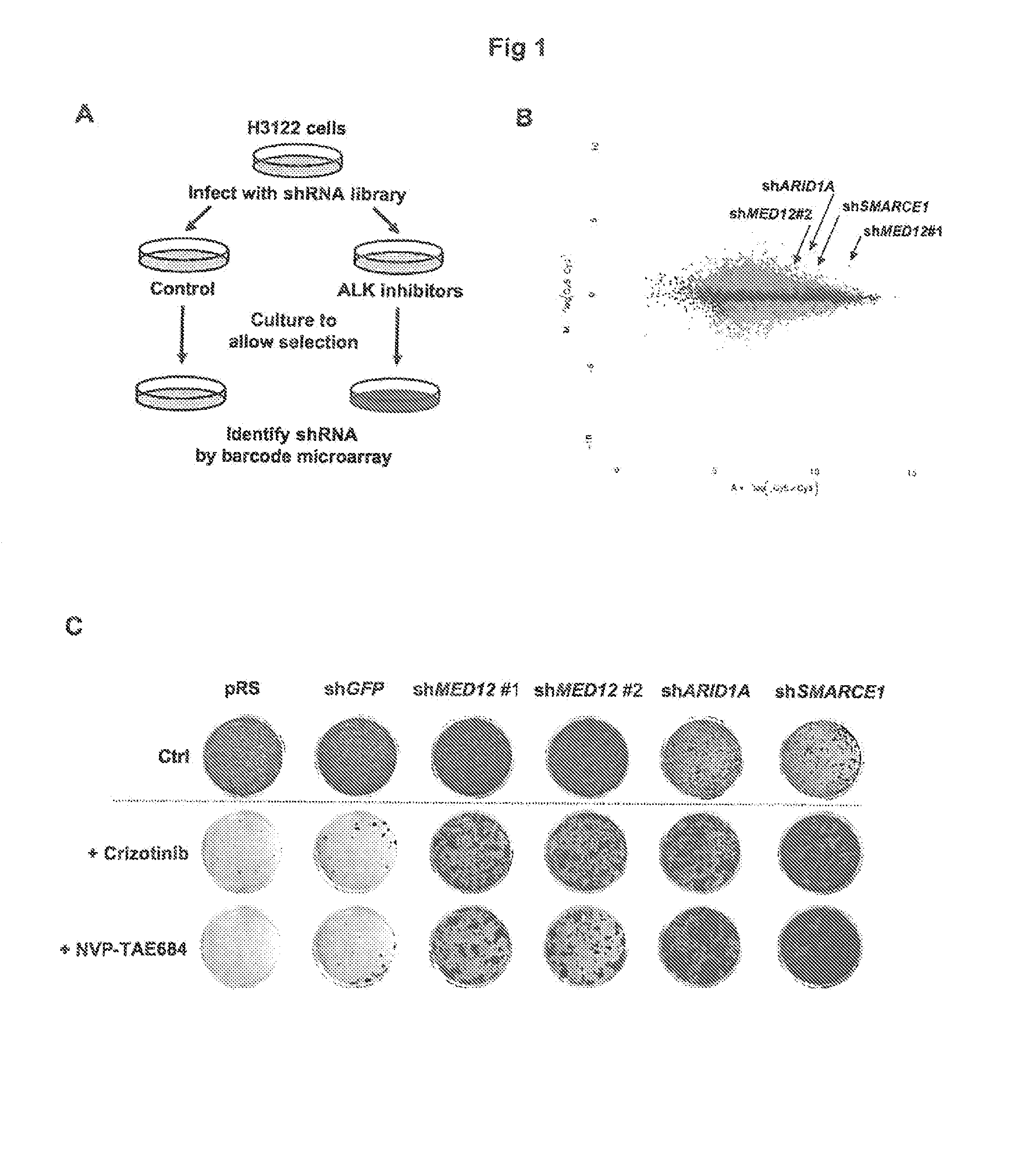
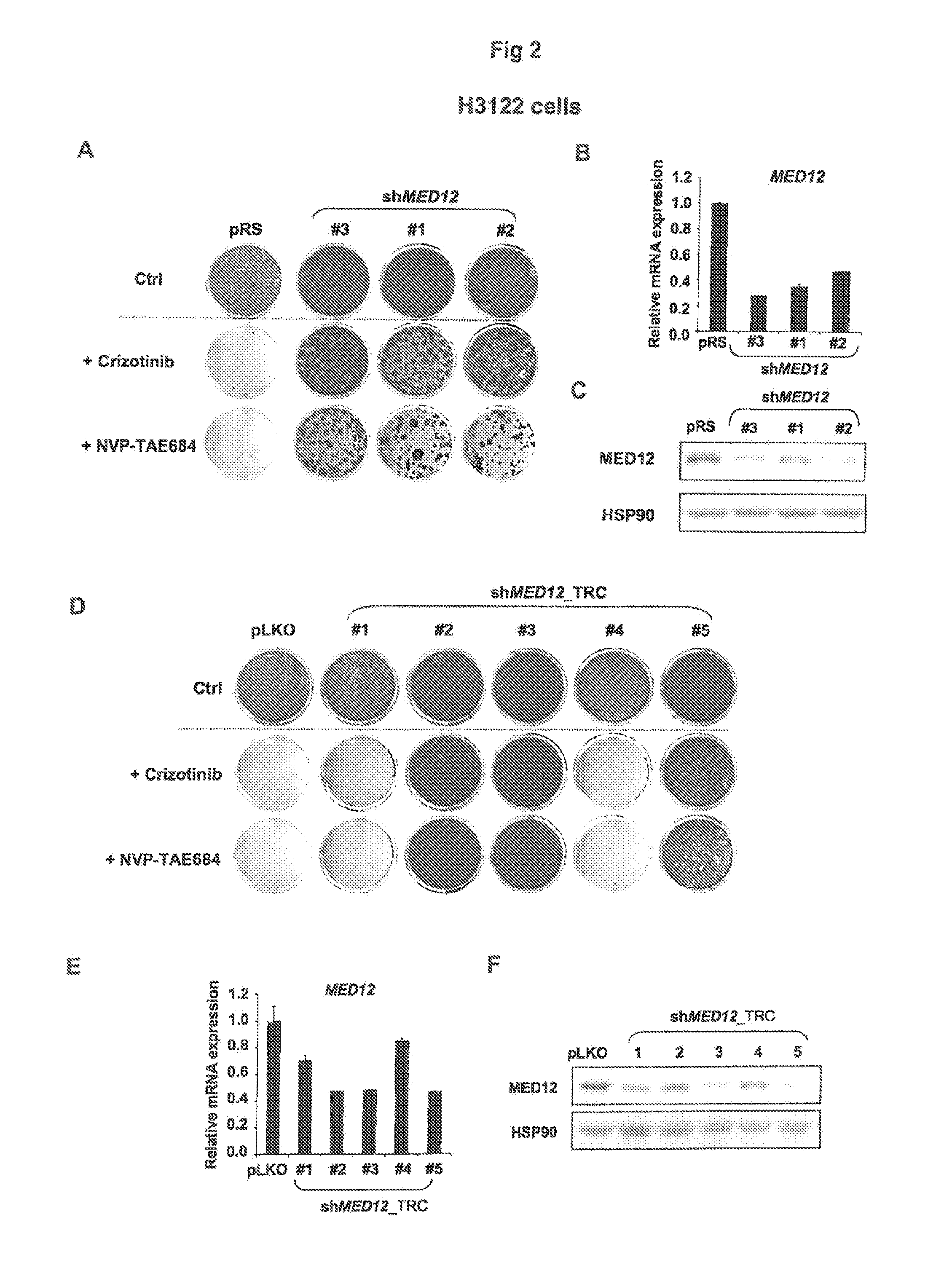
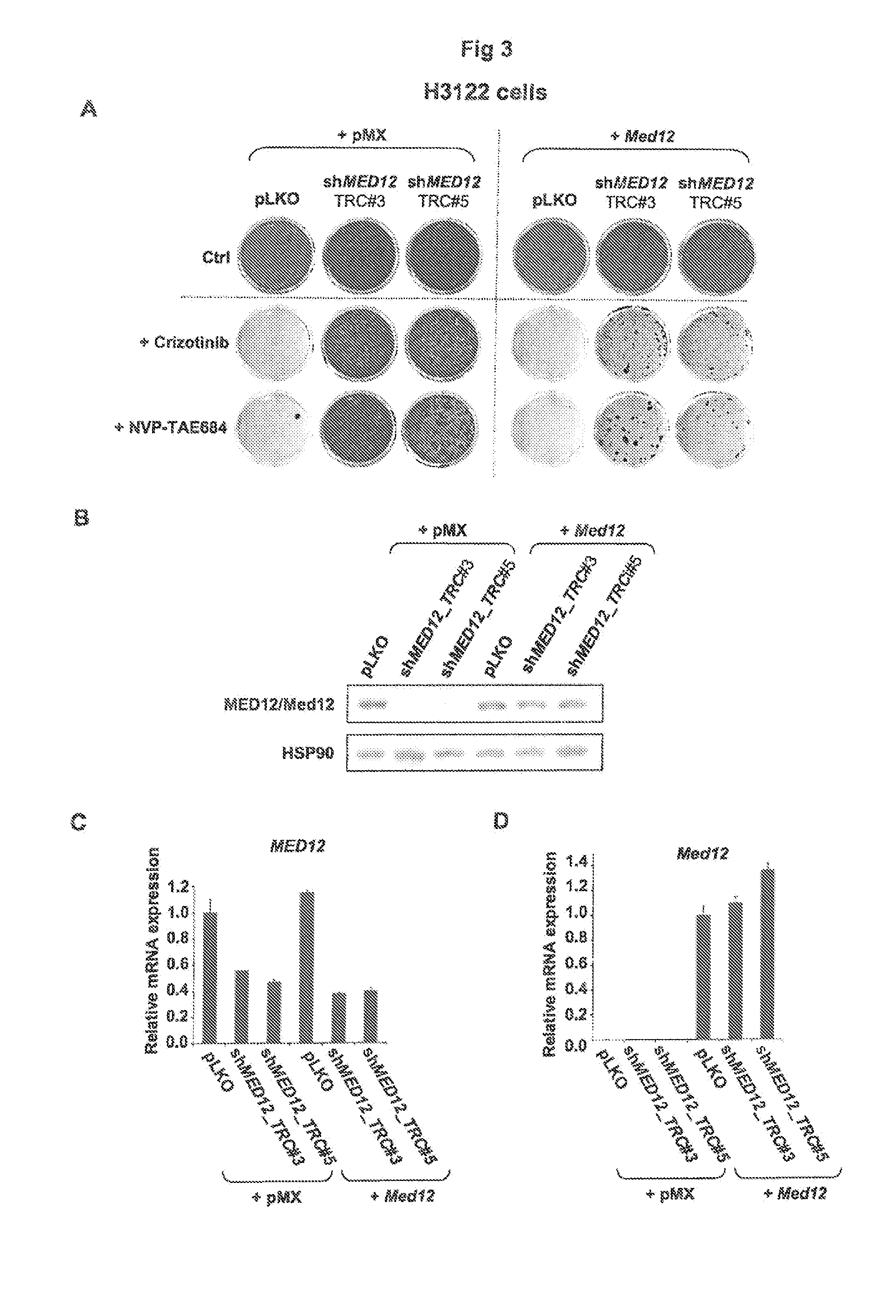
[0195]The ALK inhibitors crizotinib and NVP-TAE684 potently inhibit the human NSCLC cell lines that harbor EML4-ALK translocations (Galkin et al., 2007; Koivunen et al., 2008; Soda et al., 2007). The NSCLC cell line H3122 carries the EML4-ALK translocation and is exquisitely sensitive to ALK inhibitors. To identify novel determinants of resistance to ALK inhibitors in NSCLC cell lines, Applicants performed a large-scale RNAi-based loss-of-function genetic screen using a collection of 24,000 short hairpin (shRNA) vectors targeting 8,000 human genes (Berns et al., 2004; Brummelkamp et al., 2002). Applicants used a barcoding technology to identify genes whose suppression causes resistance to ALK inhibitors (Brummelkamp et al., 2006; Holzel et al.). The entire shRNA library was introduced into H3122 cells by retro...
example 2
[0270]BT474 cells stably expressing either shctrl, shTSC2 or three independent shARID1A vectors were exposed to increasing amounts of the mTOR inhibitor AZD8055. After three hours, cell lysates were prepared and PI3K pathway members were immunoblotted. BT474 cells expressing the three independent shARID1A vectors maintained higher levels of phosphorylated AKT (p473-AKT) and phosphorylated S6RP (p235 / 236-S6RP) in the presence of increasing amounts of the mTOR inhibitor AZD8055 (FIG. 18).
[0271]Accordingly, in certain embodiments, ARID1A loss may confer resistance to PI3K / mTOR inhibitors by enhancing PI3K / mTOR pathway activation. Applicants' data suggest a link between mutation of ARID1A, commonly found in human cancer, and activation of PI3K / mTOR signaling. In other embodiments, ARID1A may serve as a biomarker for responsiveness to PI3K / mTOR targeting agents.
PUM
| Property | Measurement | Unit |
|---|---|---|
| temperature | aaaaa | aaaaa |
| temperature | aaaaa | aaaaa |
| pH | aaaaa | aaaaa |
Abstract
Description
Claims
Application Information
 Login to View More