
Double-layer stent
a stent and double-layer technology, applied in the field of tubular prostheses, can solve the problems of false aneurysms, vascular obstruction, difficulty in controlling bleeding at the access site, and general reduction of the long-term durability of the graft material, and achieve the effect of facilitating faster haemostatic sealing of the inner stent and/or increasing the blood-imperviousness of the inner stent and/or the rate of haemostatic sealing
- Summary
- Abstract
- Description
- Claims
- Application Information
AI Technical Summary
Benefits of technology
Problems solved by technology
Method used
Image

Examples
Embodiment Construction
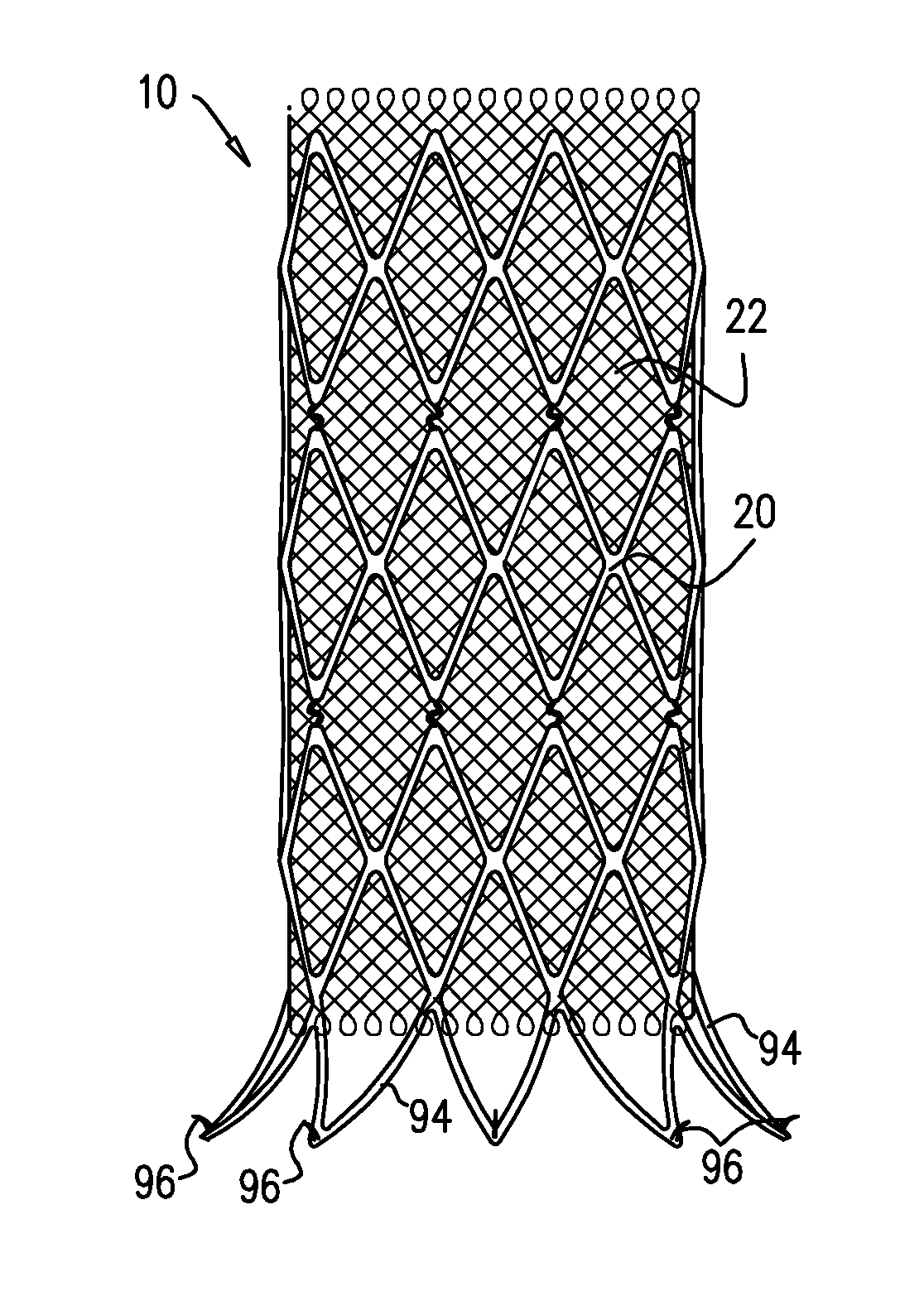
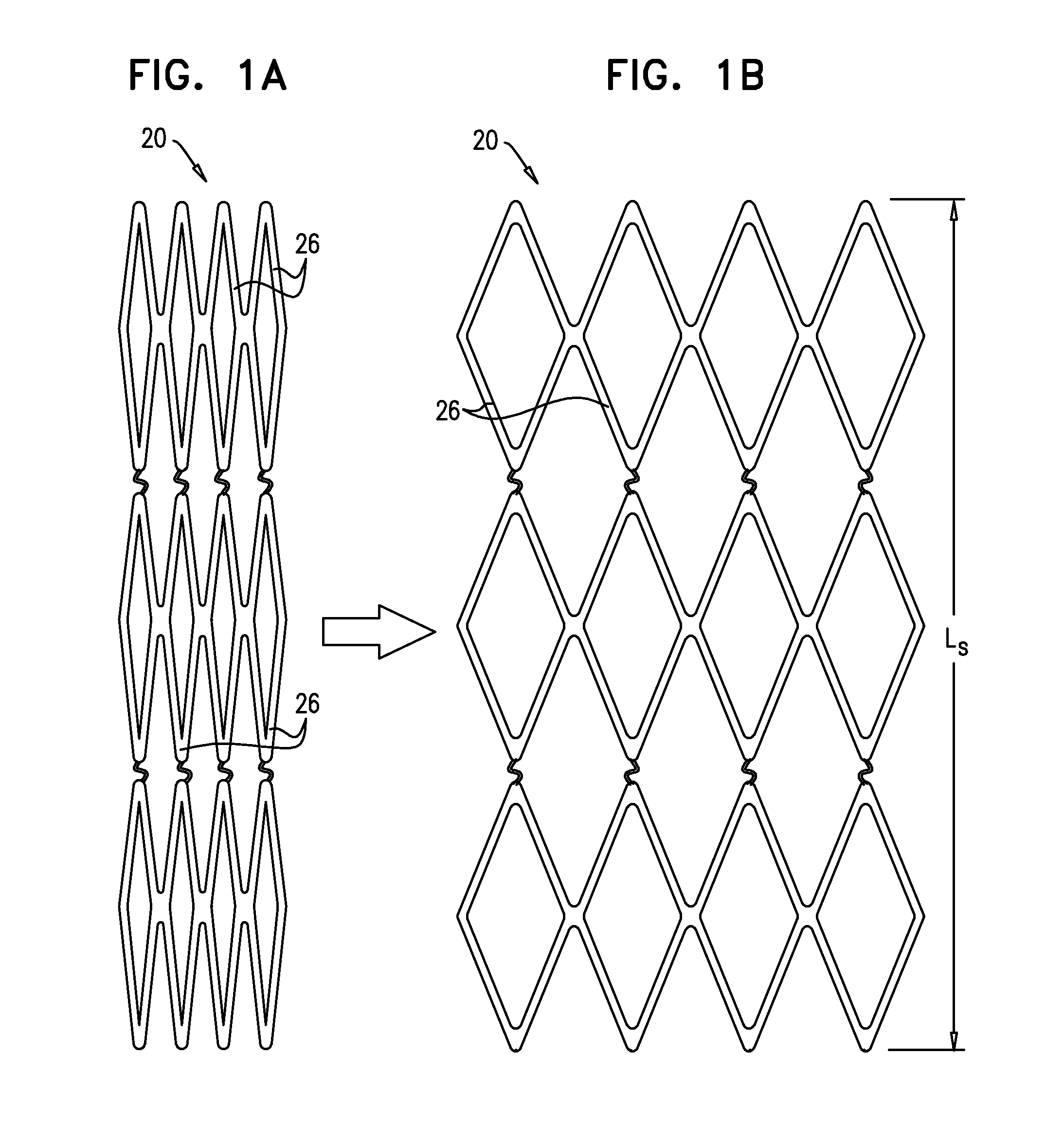
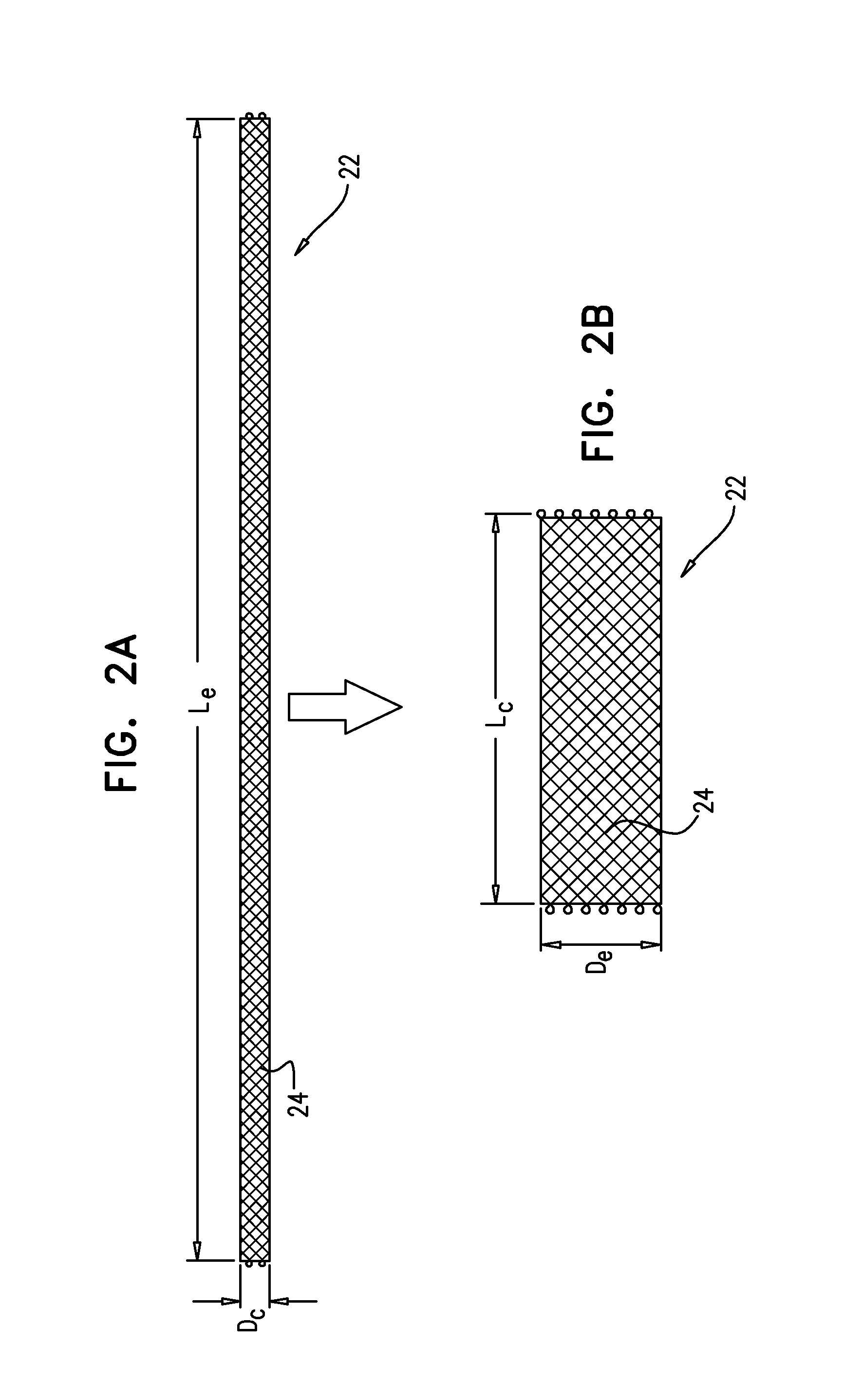
[0069]FIGS. 1A-B, 2A-B, and 3 are schematic illustrations of a multi-component endovascular stent system 10, in accordance with an application of the present invention. FIGS. 1A-B and 2A-B show disassembled components of the stent system, and FIG. 3 shows the stent system assembled. Stent system 10 comprises an outer generally tubular stent 20, shown alone in FIGS. 1A-B, and an inner generally tubular stent 22, shown alone in FIGS. 2A-B (it is noted that FIGS. 1A-B and 2A-B are not drawn to the same scale). Stent system 10 is assembled in situ by nesting inner stent 22 in outer stent 20, as shown in FIG. 3. In general, outer stent 20 provides anchoring (fixation and migration resistance) for stent system 10 within an aneurysmal body lumen, such as an aneurysmal blood vessel, while inner stent 22 provides a generally blood-impervious fluid flow path through stent system 10. Outer stent 20 is sufficiently rigid to provide strength for stent system 10.
[0070]Outer stent 20 is configured...
PUM
 Login to View More
 Abstract
Description
Claims
Application Information
 Login to View More