

Articulating and Expandable Vertebral Implant
a vertebral implant and expandable technology, applied in the field of articulating and expanding vertebral implants, can solve the problems of reducing disc height, affecting the function of discs, and affecting the stability of adjacent vertebrae of the spine, and achieving the effect of increasing the distance between the first and second endplates
- Summary
- Abstract
- Description
- Claims
- Application Information
AI Technical Summary
Benefits of technology
Problems solved by technology
Method used
Image

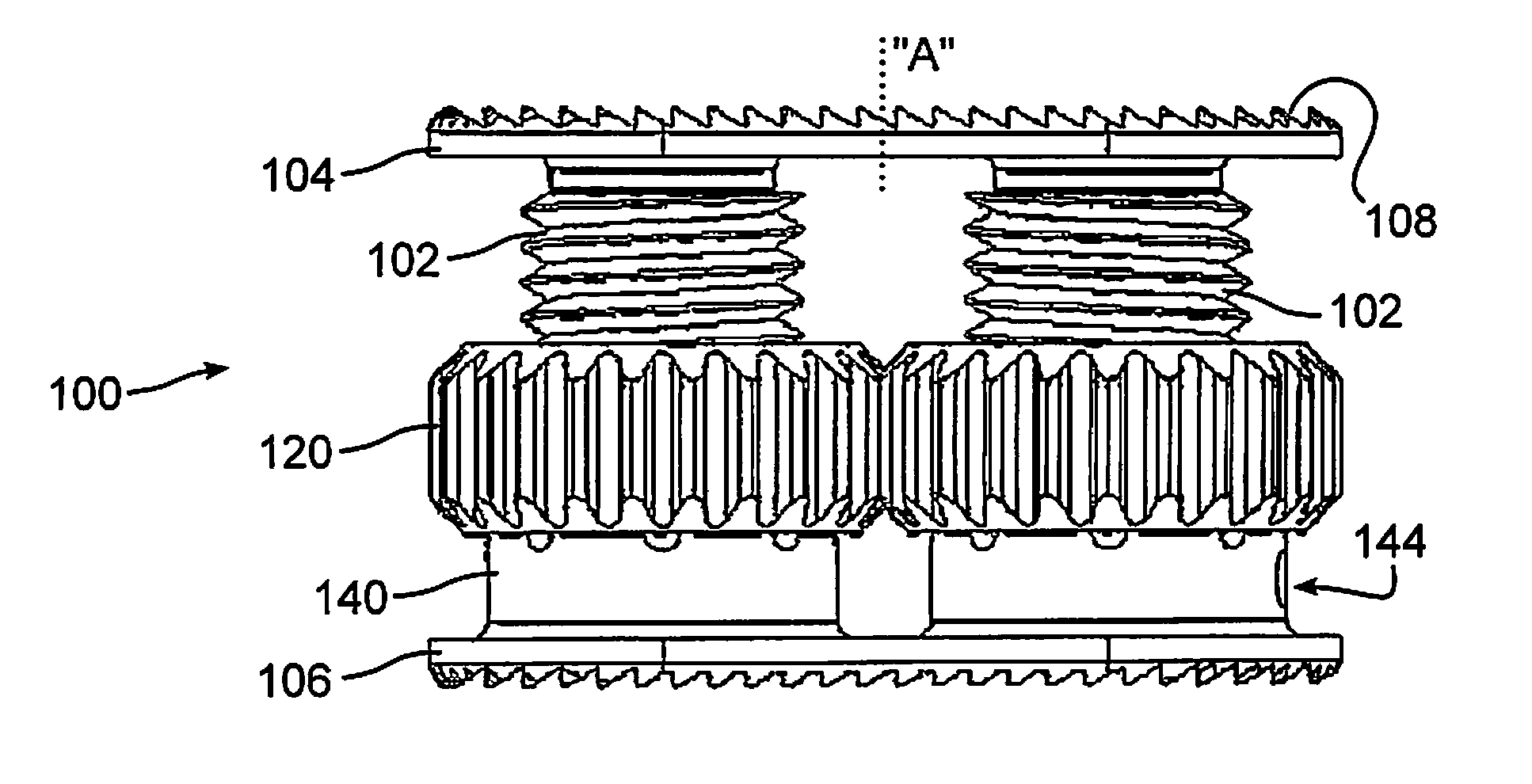
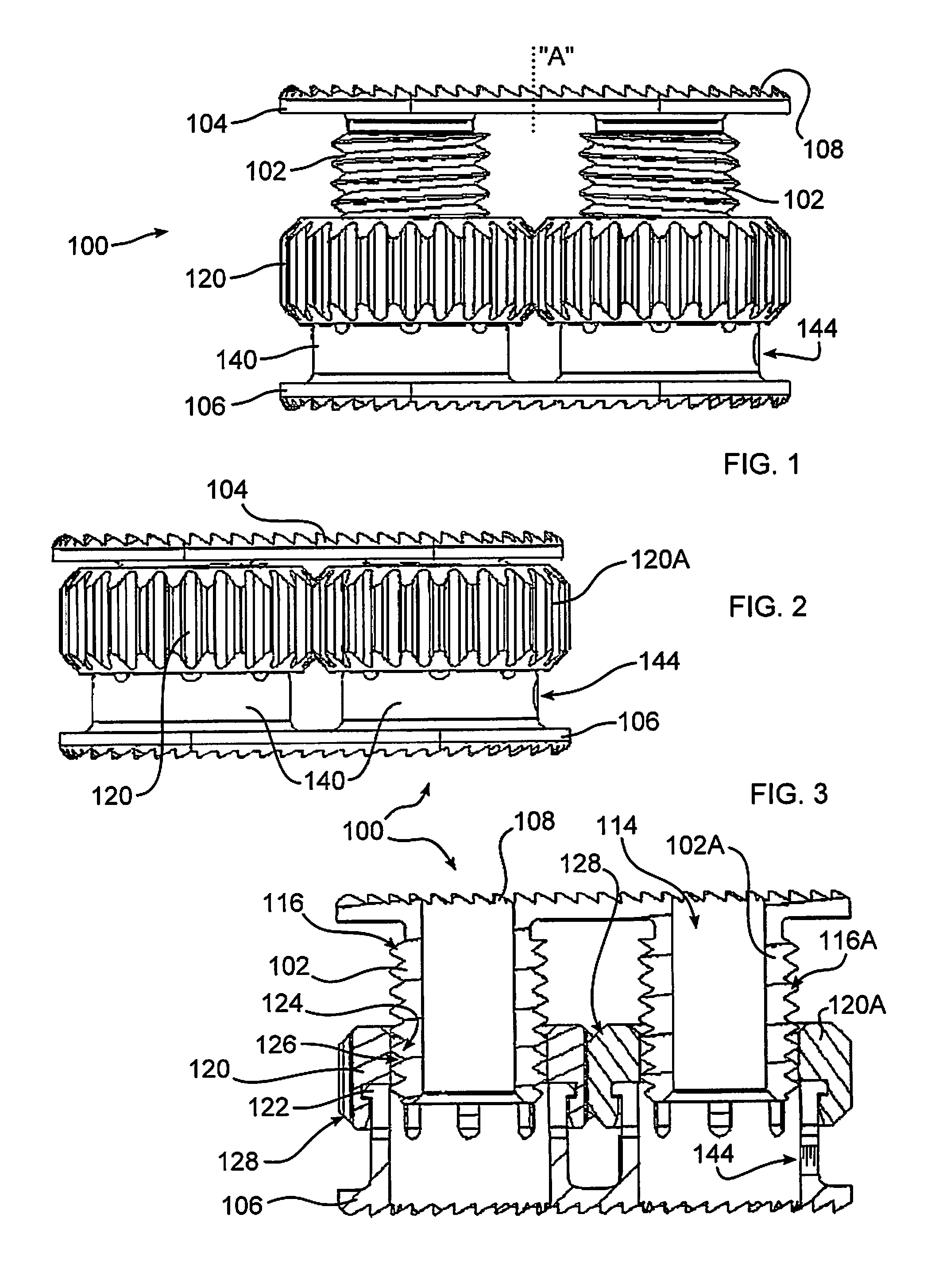
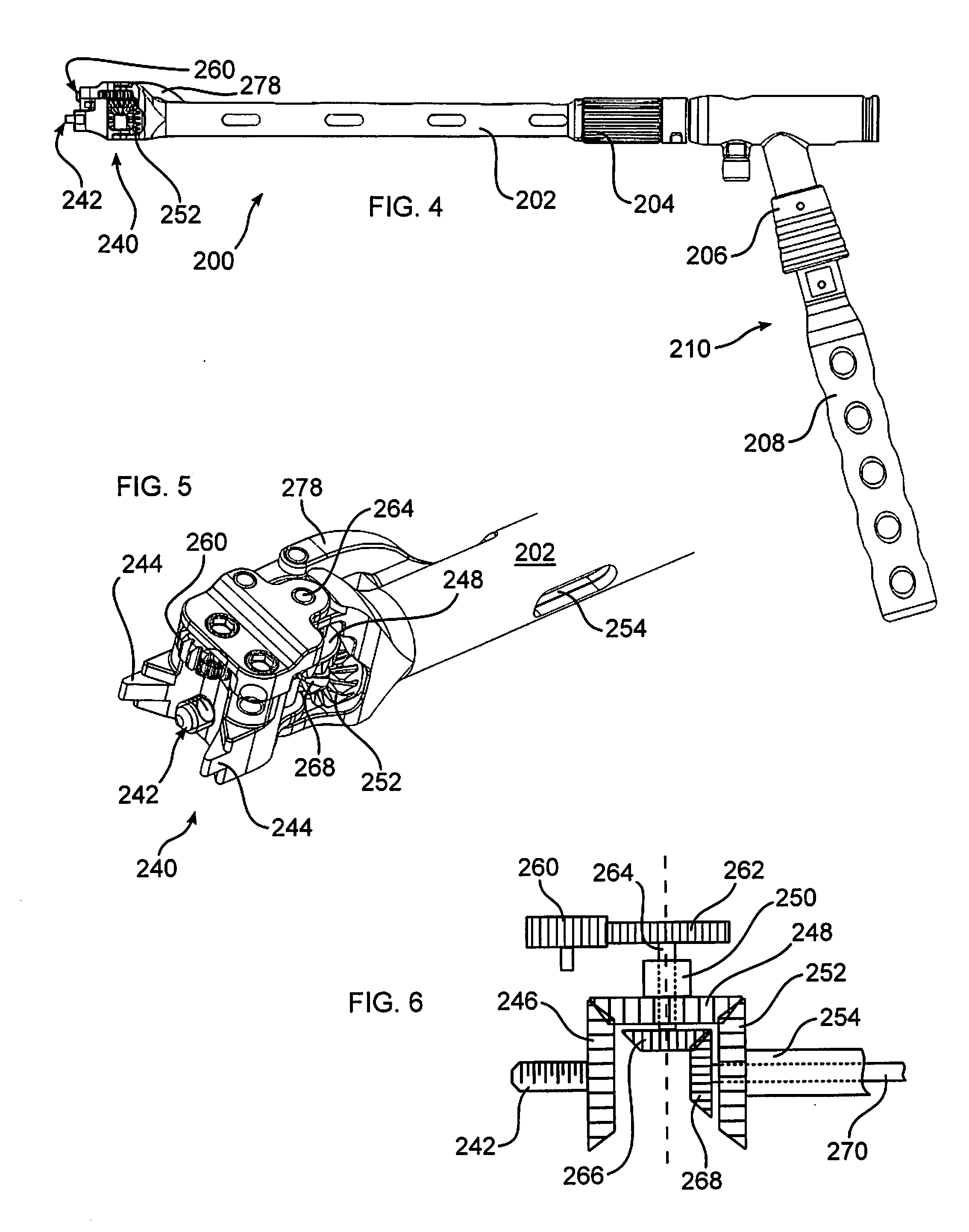
Examples
Embodiment Construction
[0036]As required, detailed embodiments are disclosed herein; however, it is to be understood that the disclosed embodiments are merely examples and that the systems and methods described below can be embodied in various forms. Therefore, specific structural and functional details disclosed herein are not to be interpreted as limiting, but merely as a basis for the claims and as a representative basis for teaching one skilled in the art to variously employ the present subject matter in virtually any appropriately detailed structure and function. Further, the terms and phrases used herein are not intended to be limiting, but rather, to provide an understandable description of the concepts.
[0037]The terms “a” or “an”, as used herein, are defined as one or more than one. The term plurality, as used herein, is defined as two or more than two. The term another, as used herein, is defined as at least a second or more. The terms “including” and “having,” as used herein, are defined as comp...
PUM
 Login to View More
 Abstract
Description
Claims
Application Information
 Login to View More