Methods and systems for multiple module power regulation in a modular chassis

a technology of modular chassis and power regulation, applied in the field of modular information handling systems, to achieve the effect of substantially reducing or eliminating the disadvantages and problems of traditional approaches to power management and regulation in modular chassis

US20150241945A1Active Publication Date: 2015-08-27DELL PROD LP
14 Cites 7 Cited by

Patent Information

Authority / Receiving Office
US · United States
Current Assignee / Owner
Publication Date
2015-08-27

Smart Images

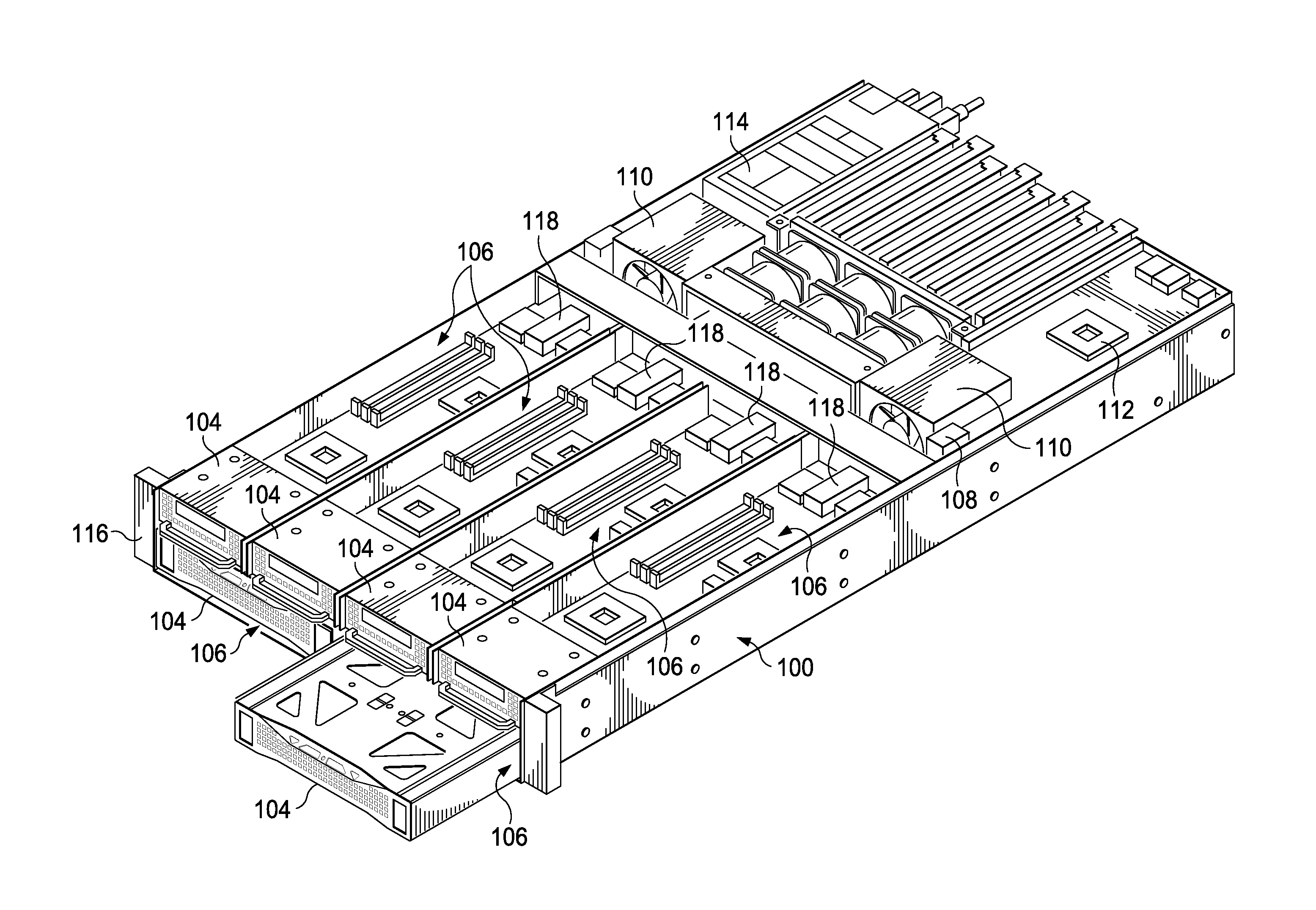
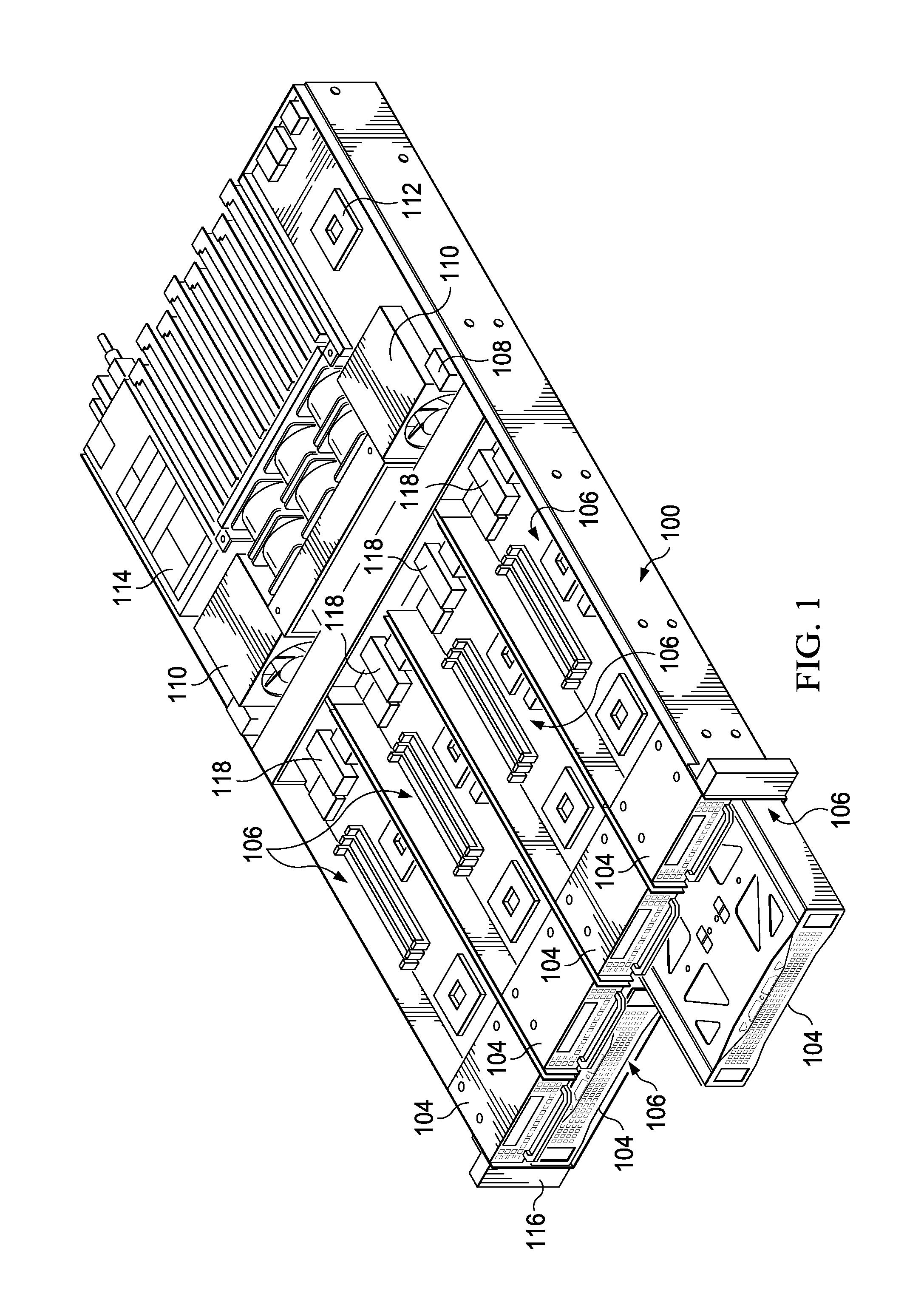
  • Figure 1
    Figure 1
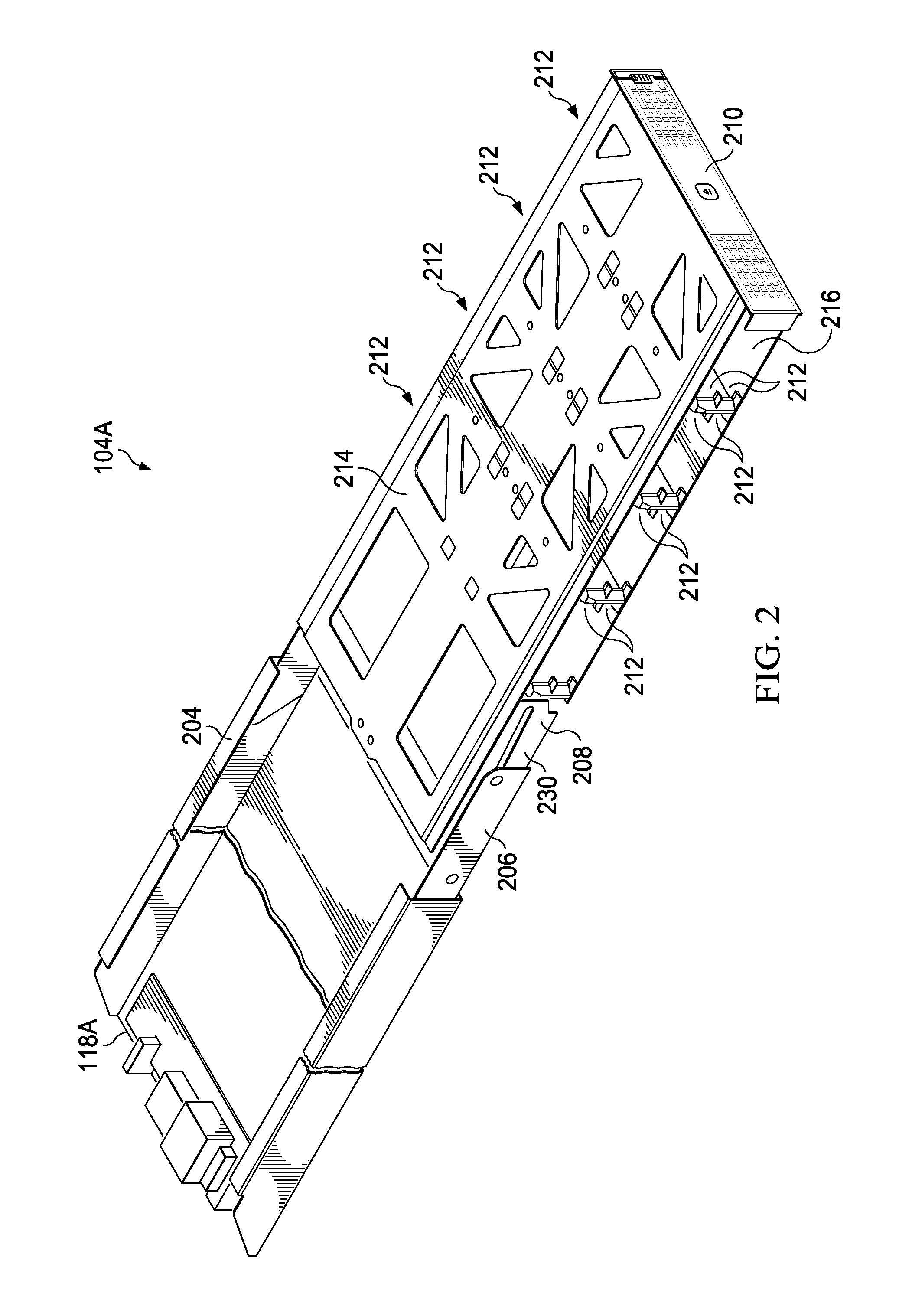
  • Figure 2
    Figure 2
  • Figure 3
    Figure 3
Patent Text Reader

Abstract

A controller may be communicatively coupled to a power supply and may be configured to receive a status signal indicative of whether a level of power delivered by the power supply exceeds a threshold power level. The controller may also be configured to, in response to the status signal indicating the level of power delivered by the power supply exceeds the threshold power level, cause a module power limit of at least one of a plurality of modules disposed in a chassis to decrease, wherein the module power limit of a module defines a maximum amount of power the module may consume from the power supply. The controller may also be configured to, in response to the status signal indicating the level of power delivered by the power supply does not exceed the threshold power level, cause the module power limit to increase.
Need to check novelty before this filing date? Find Prior Art

Description

TECHNICAL FIELD

[0001] The present disclosure relates to modular information handling systems. More specifically, embodiments of the disclosure provide systems and methods for deploying network switch configuration information for a modular chassis drawer for carrying one or more information handling systems configured to be disposed in a chassis configured to receive the modular chassis drawer.BACKGROUND

[0002] As the value and use of information continues to increase, individuals and businesses seek additional ways to process and store information. One option available to users is information handling systems. An information handling system generally processes, compiles, stores, and / or communicates information or data for business, personal, or other purposes thereby allowing users to take advantage of the value of the information. Because technology and information handling needs and requirements vary between different users or applications, information handling systems may also vary...

Examples

Embodiment Construction

[0018]Preferred embodiments and their advantages are best understood by reference to FIGS. 1-7, wherein like numbers are used to indicate like and corresponding parts.

[0019]For the purposes of this disclosure, an information handling system may include any instrumentality or aggregate of instrumentalities operable to compute, classify, process, transmit, receive, retrieve, originate, switch, store, display, manifest, detect, record, reproduce, handle, or utilize any form of information, intelligence, or data for business, scientific, control, entertainment, or other purposes. For example, an information handling system may be a personal computer, a personal digital assistant (PDA), a consumer electronic device, a network storage device, or any other suitable device and may vary in size, shape, performance, functionality, and price. The information handling system may include memory, one or more processing resources such as a central processing unit (CPU) or hardware or software cont...