Analyte sensor
- Summary
- Abstract
- Description
- Claims
- Application Information
AI Technical Summary
Benefits of technology
Problems solved by technology
Method used
Image



Examples
Embodiment Construction
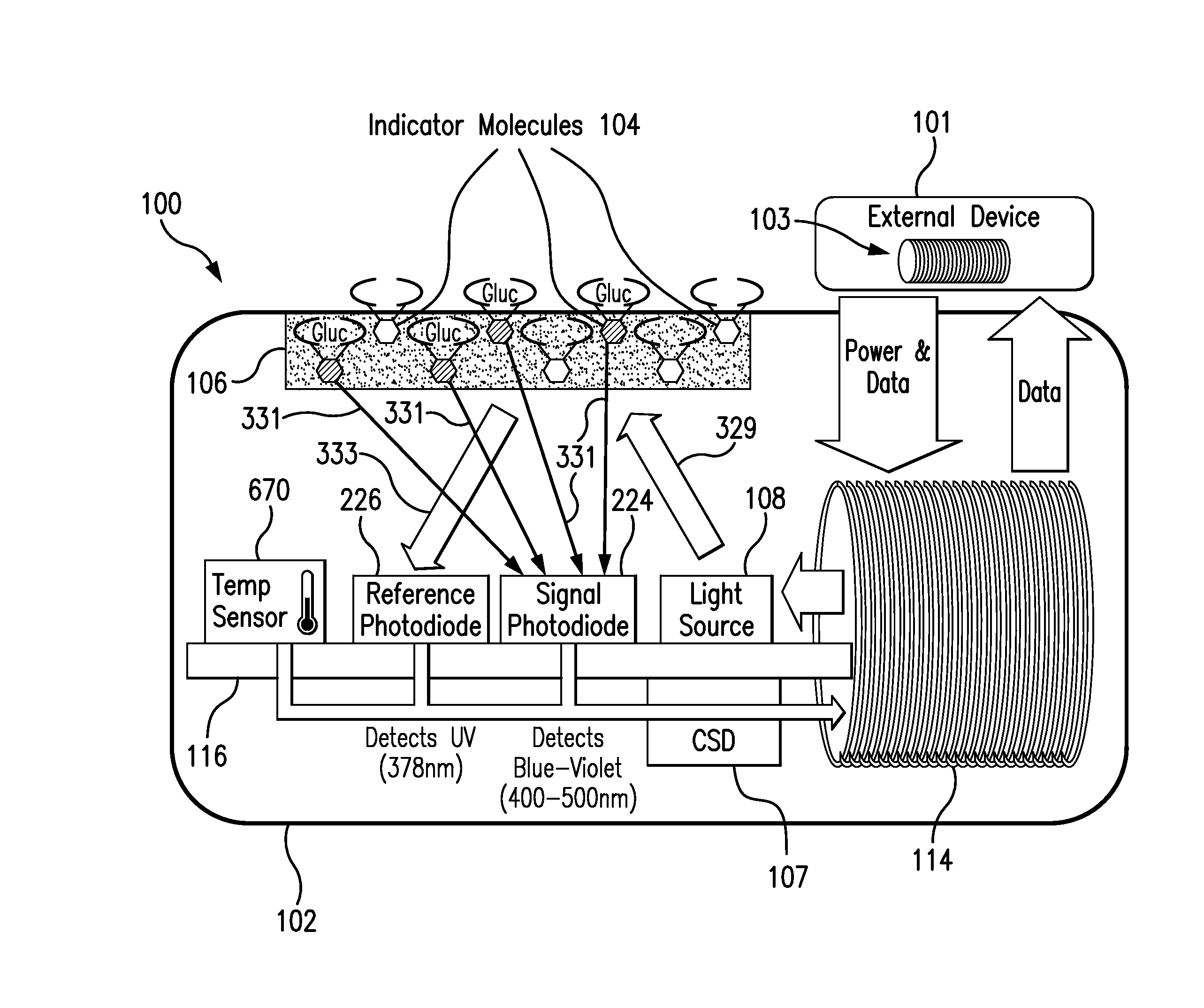
[0031]FIG. 1 is a schematic view of an analyte monitoring system embodying aspects of the present invention. As illustrated in FIG. 1, the system may include an analyte sensor 100 and an external device 101. In some non-limiting embodiments, the sensor 100 may be a fully implantable analyte sensor. The sensor 100 may be implanted in a living animal (e.g., a living human). The sensor 100 may be implanted, for example, in a living animal's arm, wrist, leg, abdomen, peritoneum, intravenously, or other region of the living animal suitable for sensor implantation. For example, in one non-limiting embodiment, the sensor 100 may be implanted beneath the skin (i.e., in the subcutaneous or peritoneal tissues). The sensor 100 may be configured to measure an analyte (e.g., glucose, oxygen, cardiac markers, low-density lipoprotein (LDL), high-density lipoprotein (HDL), or triglycerides) in a medium (e.g., interstitial, intravascular, or intraperitoneal fluids) within the living animal.
[0032]The...
PUM
 Login to View More
 Abstract
Description
Claims
Application Information
 Login to View More
 - R&D
- Intellectual Property
- Life Sciences
- Materials
- Tech Scout
- Unparalleled Data Quality
- Higher Quality Content
- 60% Fewer Hallucinations
Browse by: Latest US Patents, China's latest patents, Technical Efficacy Thesaurus, Application Domain, Technology Topic, Popular Technical Reports.
© 2025 PatSnap. All rights reserved.Legal|Privacy policy|Modern Slavery Act Transparency Statement|Sitemap|About US| Contact US: help@patsnap.com