

Compositions and methods for sample preparation
a technology of composition and method, applied in the field of composition and method for disrupting cells, can solve problems such as damage to dna samples, and achieve the effect of less affinity for nucleic acids
- Summary
- Abstract
- Description
- Claims
- Application Information
AI Technical Summary
Benefits of technology
Problems solved by technology
Method used
Image

Examples
example 1
Basic Reaction
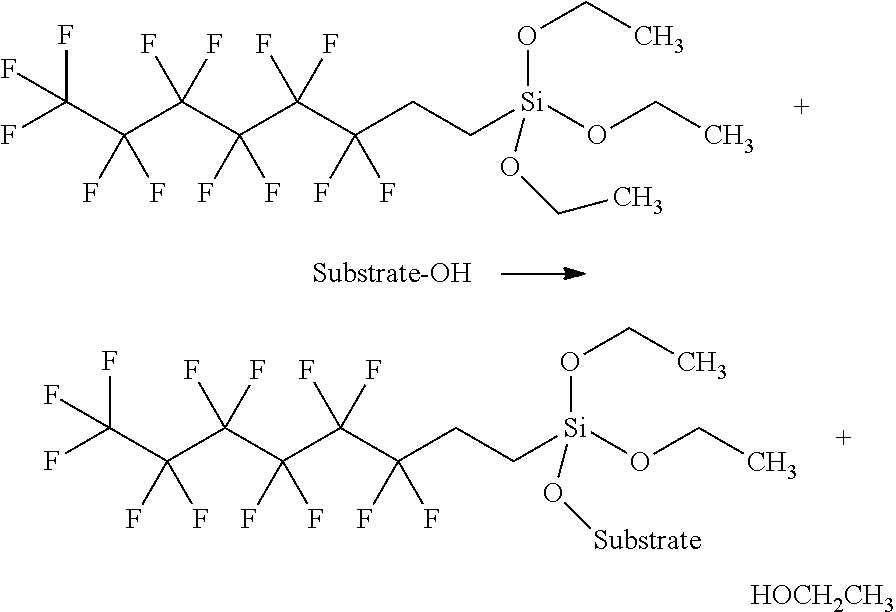
[0032]To an existing tube of beads used for cell lysis (e.g. a tube containing ZY beads) add perfluorooctyltriethoxysilane. In one embodiment, to 900 mg of beads, 100 microliters of perfluorooctyltriethoxysilane is added. Agitate components. Allow reaction to proceed for 30 minutes to 1 hour at room temperature. Use beads without further purification.
example 2
Purification
[0033]To an existing tube of beads used for cell lysis (e.g. a tube containing ZY beads) add perfluorooctyltriethoxysilane. In one embodiment, to 900 mg of beads, 100 microliters of perfluorooctyltriethoxysilane is added. Allow the reaction to proceed for 30 minutes to 1 hour at room temperature. Agitate components. Remove excess reagent and byproducts through heating with reduced pressure or lyophilization.
example 3
Increased Reaction Time
[0034]To an existing tube of beads used for cell lysis (e.g. a tube containing ZY beads) add perfluorooctyltriethoxysilane. In one embodiment, to 900 mg of beads, 100 microliters of perfluorooctyltriethoxysilane is added. Allow the reaction to proceed overnight at room temperature. Agitate components. Remove excess reagent and byproducts through heating with reduced pressure or lyophilization.
PUM
 Login to View More
 Abstract
Description
Claims
Application Information
 Login to View More