
Use of eribulin and poly (adp ribose) polymerase (PARP) inhibitors as combination therapy for the treatment of cancer
Patent Information
- Authority / Receiving Office
- US · United States
- Patent Type
- Applications(United States)
- Current Assignee / Owner
- Publication Date
- 2017-04-13
Smart Images
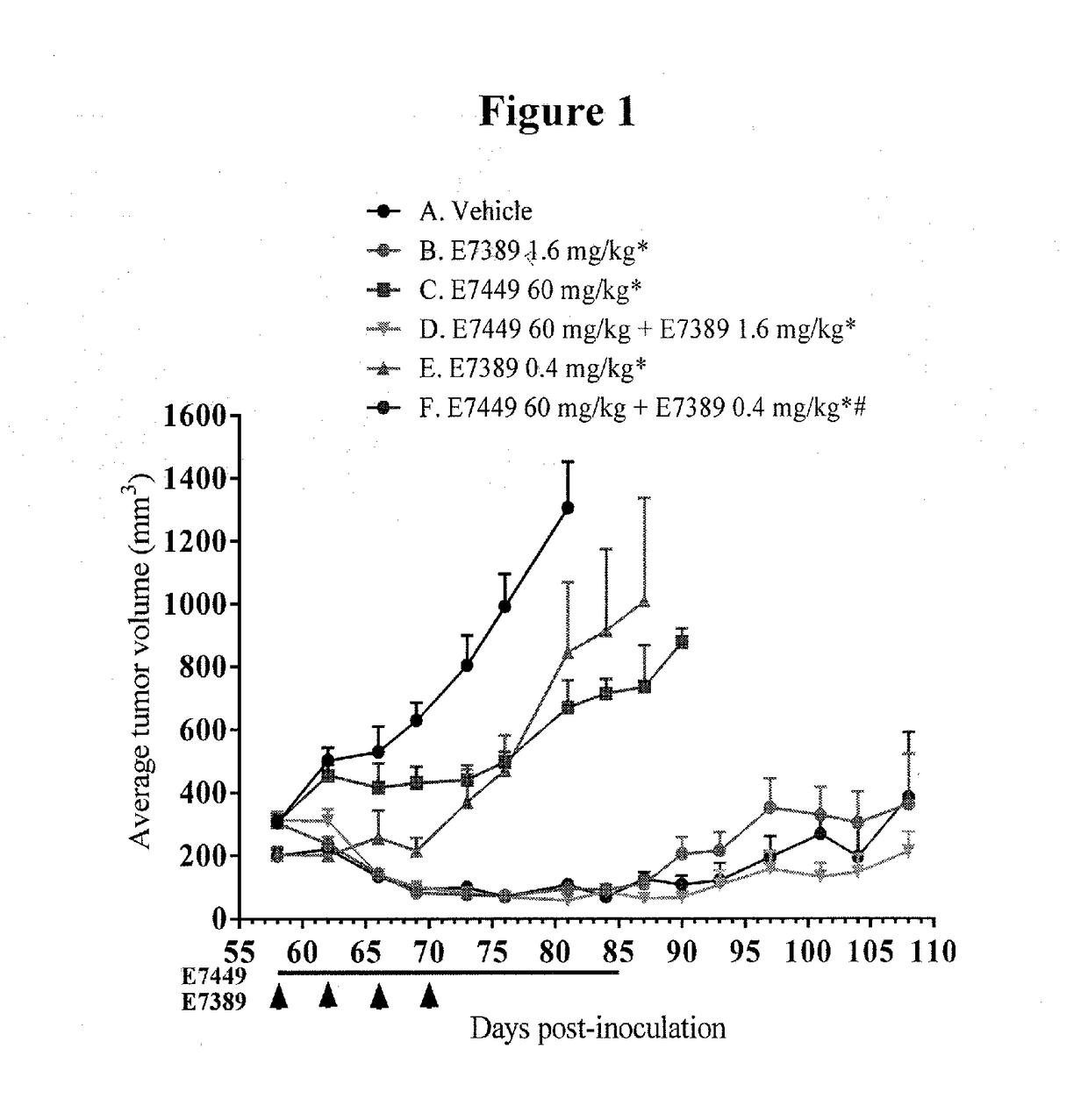
Figure 1 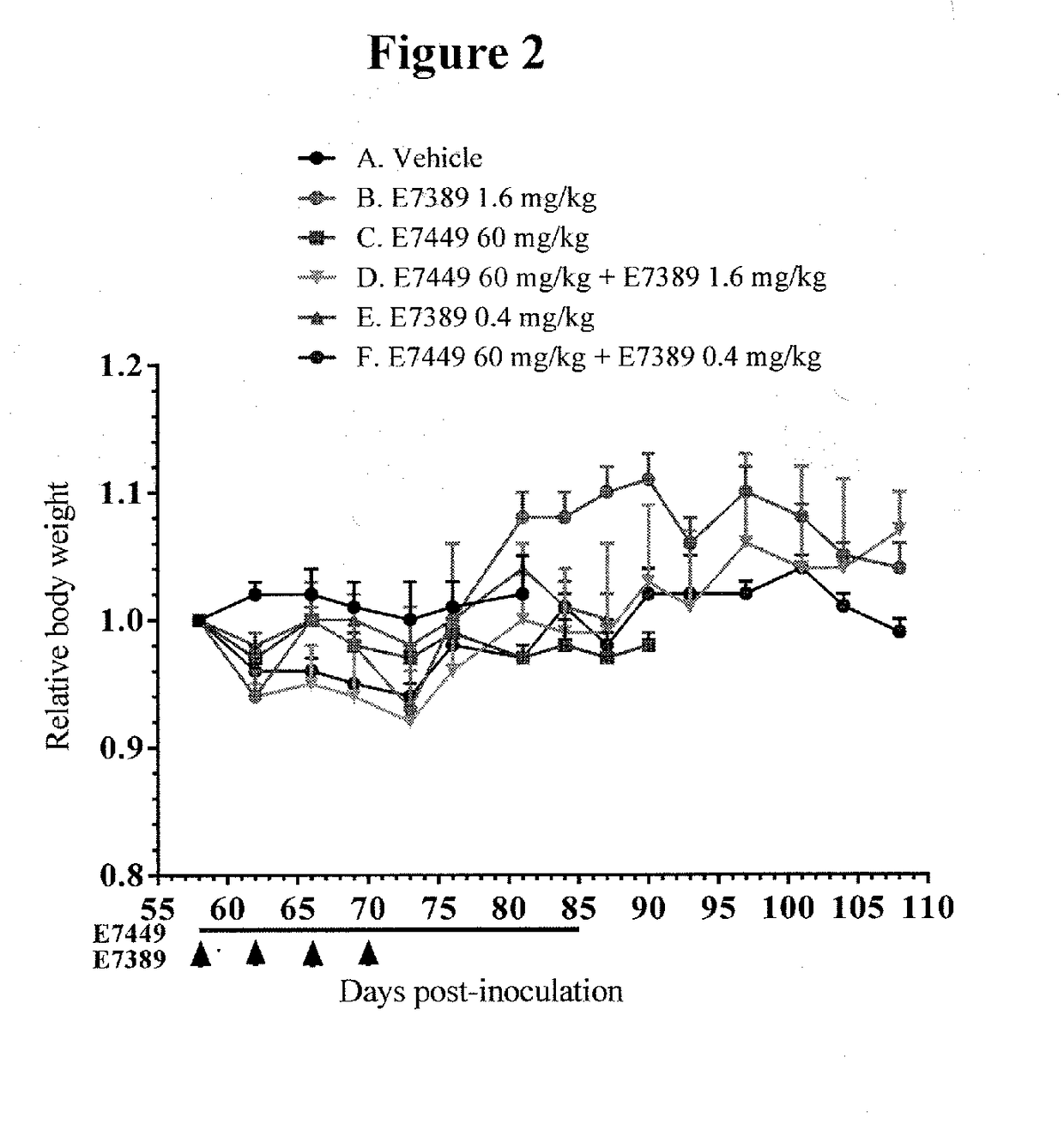
Figure 2 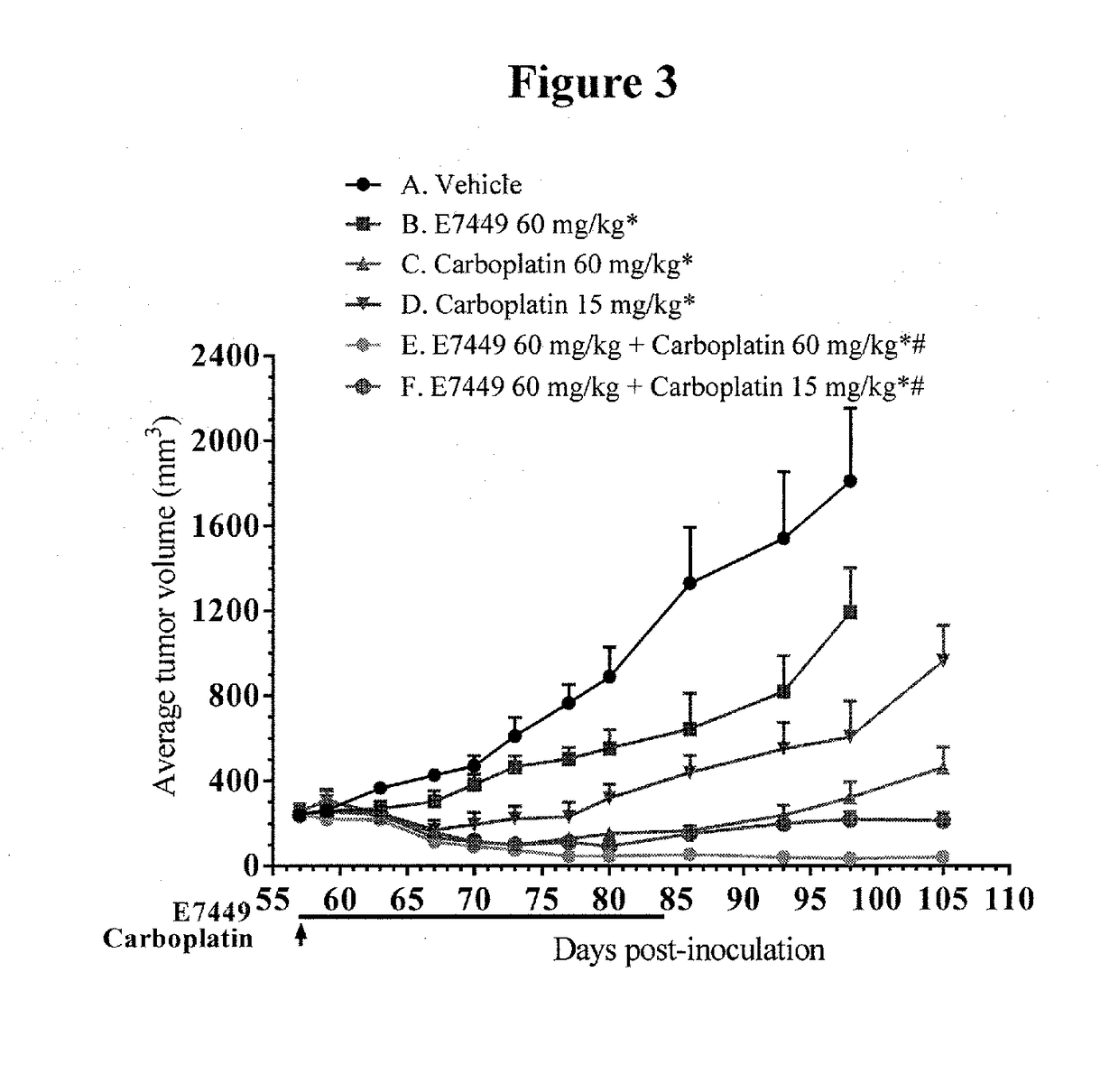
Figure 3
Abstract
Description
BACKGROUND OF THE INVENTION
[0001] Cancer is a term used to describe a wide variety of diseases that are each characterized by the uncontrolled growth of a particular type of cell. It begins in a tissue containing such a cell and, if the cancer has not spread to any additional tissues at the time of diagnosis, may be treated by, for example, surgery, radiation, or another type of localized therapy. However, when there is evidence that cancer has metastasized from its tissue of origin, different approaches to treatment are typically used. Indeed, because it is not possible to determine with certainty the extent of metastasis, systemic approaches to therapy are usually undertaken when any evidence of spread is detected. These approaches involve the administration of, for example, chemotherapeutic drugs that interfere with the growth of rapidly dividing cells, such as cancer cells. Other approaches involve the use of immunotherapy, in which an immune response against cancerous cells in a...
Examples
experimental examples
Example 1
Effect of E7449 in Combination with Eribulin Mesylate and / or Carboplatin on Growth of Subcutaneous Human Breast Cancer MDA-MB-436 Xenografts in SCID Mice
Summary
[0064]The effect of E7449 in combination with E7389 (eribulin mesylate) and / or carboplatin was examined in subcutaneous human breast cancer MDA-MB-436 xenografts in SCID mice. Three separate studies were performed. In the first study, treatment groups included E7449 (60 mg / kg) and E7389 (0.4 or 1.6 mg / kg) as single agents and 2 groups treated with the combination. E7449 was orally administered once daily at 60 mg / kg for 28 days and E7389 was intravenously administered at 0.4 or 1.6 mg / kg once every 4 days, 4 times. In the second study, treatment groups included E7449 (60 mg / kg) and carboplatin (15 or 60 mg / kg) as single agents and 2 groups treated with the combination. E7449 was orally administered once daily at 60 mg / kg for 28 days and carboplatin was intravenously administered at 15 or 60 mg / kg once, on the first d...
example 2
Effect of E7449 in Combination with Eribulin Mesylate on Growth of Subcutaneous Human Breast Cancer MDA-MB-468 Xenografts in Athymic Mice
Summary
[0089]The effect of E7449 in combination with E7389 (eribulin mesylate) was examined in a subcutaneous human breast cancer MDA-MB-468 xenograft model in athymic mice. Treatment groups included E7449 (100 mg / kg) and E7389 (0.1 or 0.4 mg / kg) as single agents and 2 groups treated with the drug combinations. E7449 was orally administered once daily at 100 mg / kg for 28 days and E7389 was intravenously administered at 0.1 or 0.4 mg / kg once every 4 days, 3 times. E7449 as a single agent lacked significant antitumor activity in this model. Dose-dependent tumor regression was observed following treatment with E7389 alone at the 0.1 and 0.4 mg / kg doses. All mice treated with E7389 at 0.4 mg / kg were tumor-free at study termination. Addition of E7449 to E7389 at 0.1 mg / kg resulted in a statistically significant delayed time to tumor progression. Since m...
example 3
Effect of E7449 in Combination with Eribulin Mesylate or Carboplatin on Growth of Subcutaneous Human Breast Cancer MDA-MB-231 Xenografts in Athymic Mice
Summary
[0105]The effect of E7449 in combination with E7389 (eribulin mesylate) or carboplatin was examined in subcutaneous human breast cancer MDA-MB-231 xenografts in athymic mice. Two separate studies were performed. In the first study, treatment groups included E7449 (100 mg / kg) and E7389 (0.05 or 0.1 mg / kg) as single agents and 2 groups treated with the combination of E7449 and E7389. E7449 was orally administered once daily at 100 mg / kg for 28 days and E7389 was intravenously administered at 0.05 or 0.1 mg / kg once every 4 days, 4 times. In the second study, treatment groups included E7449 (60 or 100 mg / kg) and carboplatin (15 or 60 mg / kg) as single agents and 3 groups treated with both agents in combination. E7449 was orally administered once daily at 60 or 100 mg / kg for 28 days and carboplatin was intravenously administered at ...