
Hybrid power source and control moment gyroscope
a technology of control moment and power source, which is applied in the field of self-guided aerial vehicles, can solve the problems of physical limitation of the amount of payload that a respective vehicle is capable of carrying, the inability to carry a specific amount of payload, and the inability to provide the necessary power supply
- Summary
- Abstract
- Description
- Claims
- Application Information
AI Technical Summary
Benefits of technology
Problems solved by technology
Method used
Image

Examples
Embodiment Construction
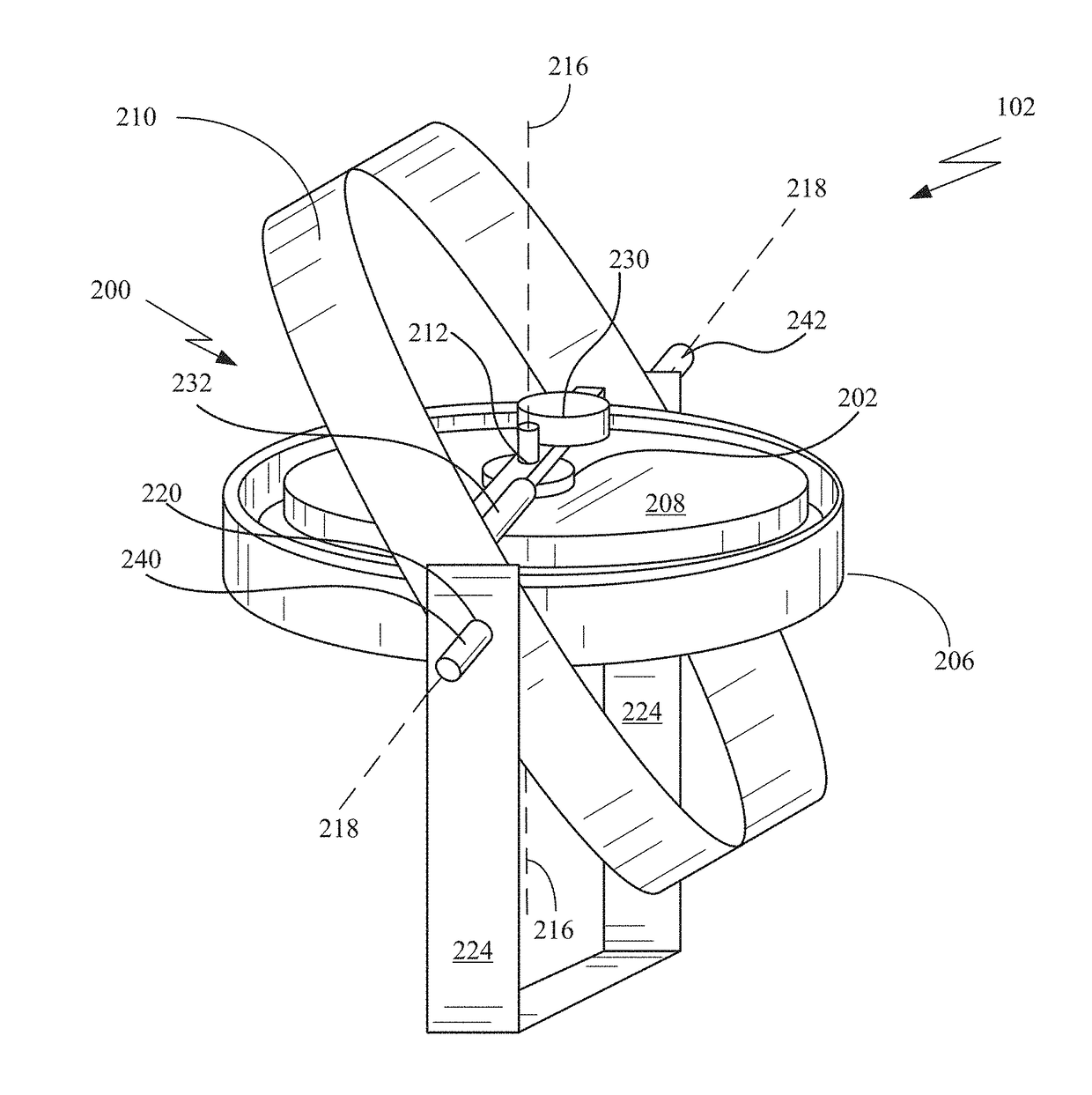
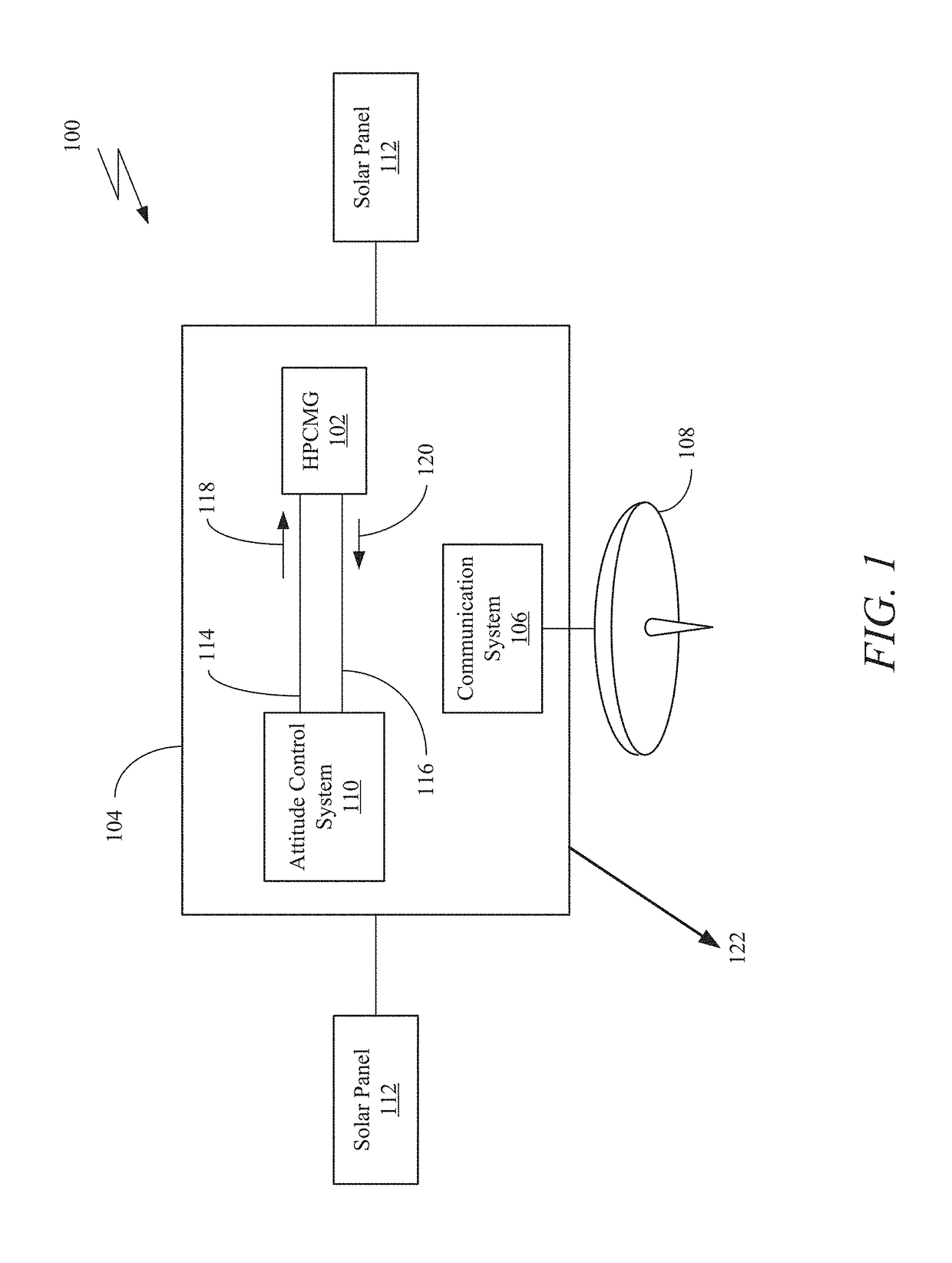
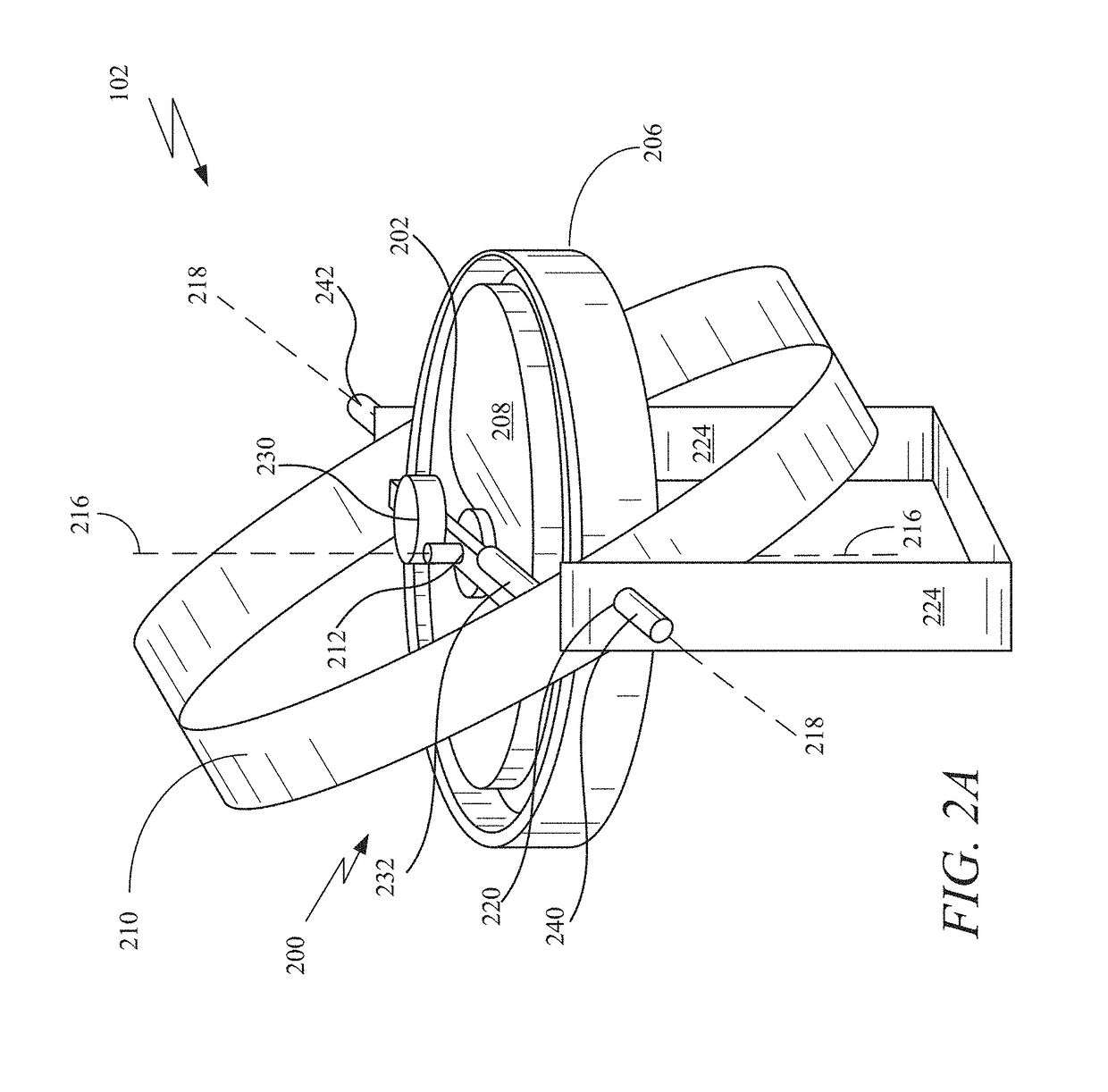
[0020]A hybrid power source and control moment gyroscope (“HPCMG”) is disclosed. The HPCMG includes a control moment gyroscope (“CMG”), a first conductive bearing, and a second conductive bearing. The CMG includes a first transverse gimbal assembly, a central mass that produces a voltage potential, and a second gimbal assembly rotationally connected to the first transverse gimbal assembly. The first transverse gimbal assembly is rotationally connected to the central mass at a first position of the transverse gimbal assembly and a second position of the transverse gimbal assembly along a first axis of rotation and the central mass is configured to spin about the first axis of rotation and the first transverse gimbal assembly is configured to rotate about a second axis of rotation at a first position of the second gimbal assembly. The first conductive bearing rotationally connects the central mass with the first position of the first transverse gimbal assembly along the first axis of ...
PUM
 Login to View More
 Abstract
Description
Claims
Application Information
 Login to View More