
Method and device for eye metric acquisition
a technology for eye metric and acquisition method, applied in the direction of process and machine control, process control, instruments, etc., to achieve the effect of robust metric acquisition
- Summary
- Abstract
- Description
- Claims
- Application Information
AI Technical Summary
Benefits of technology
Problems solved by technology
Method used
Image

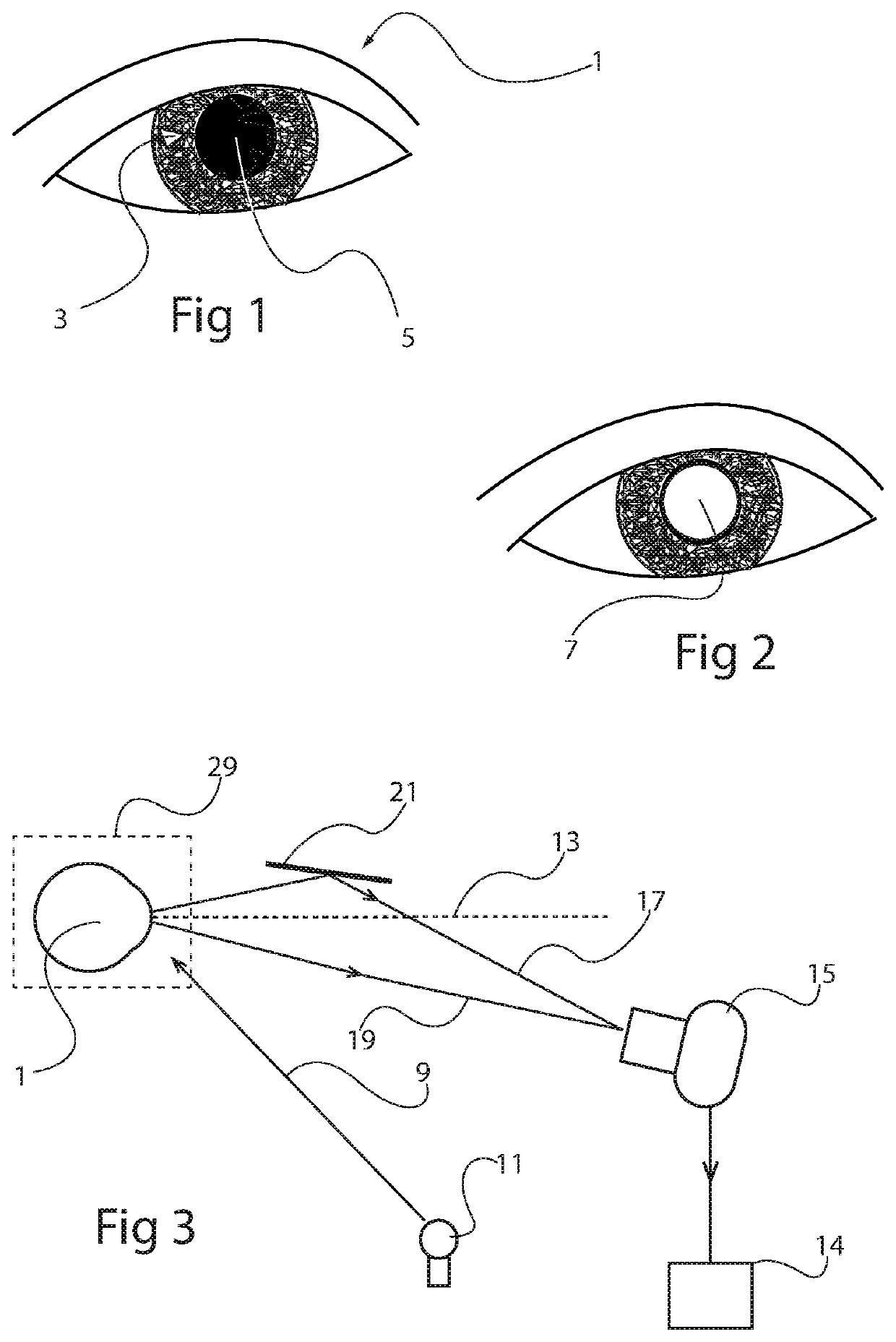
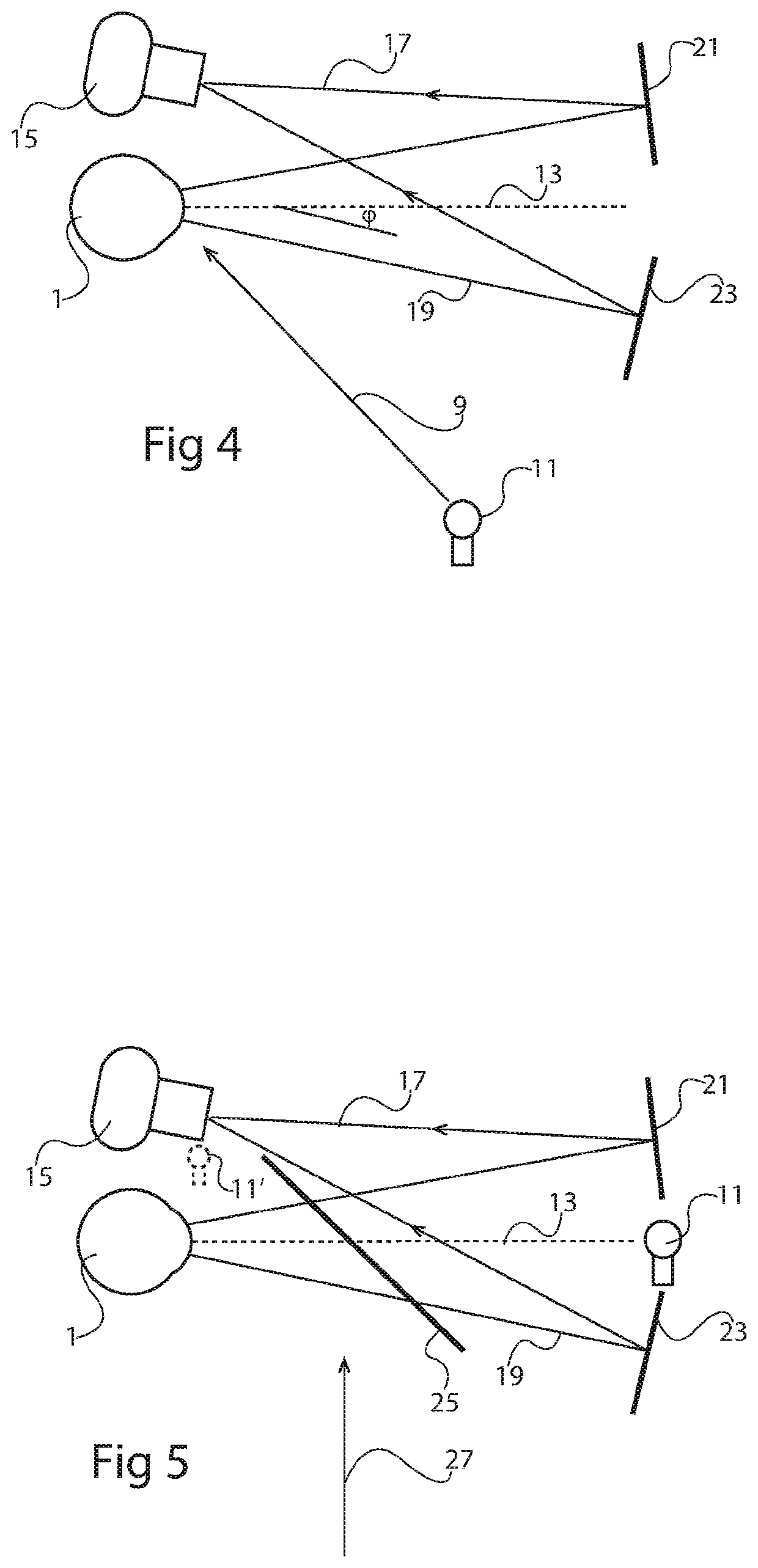
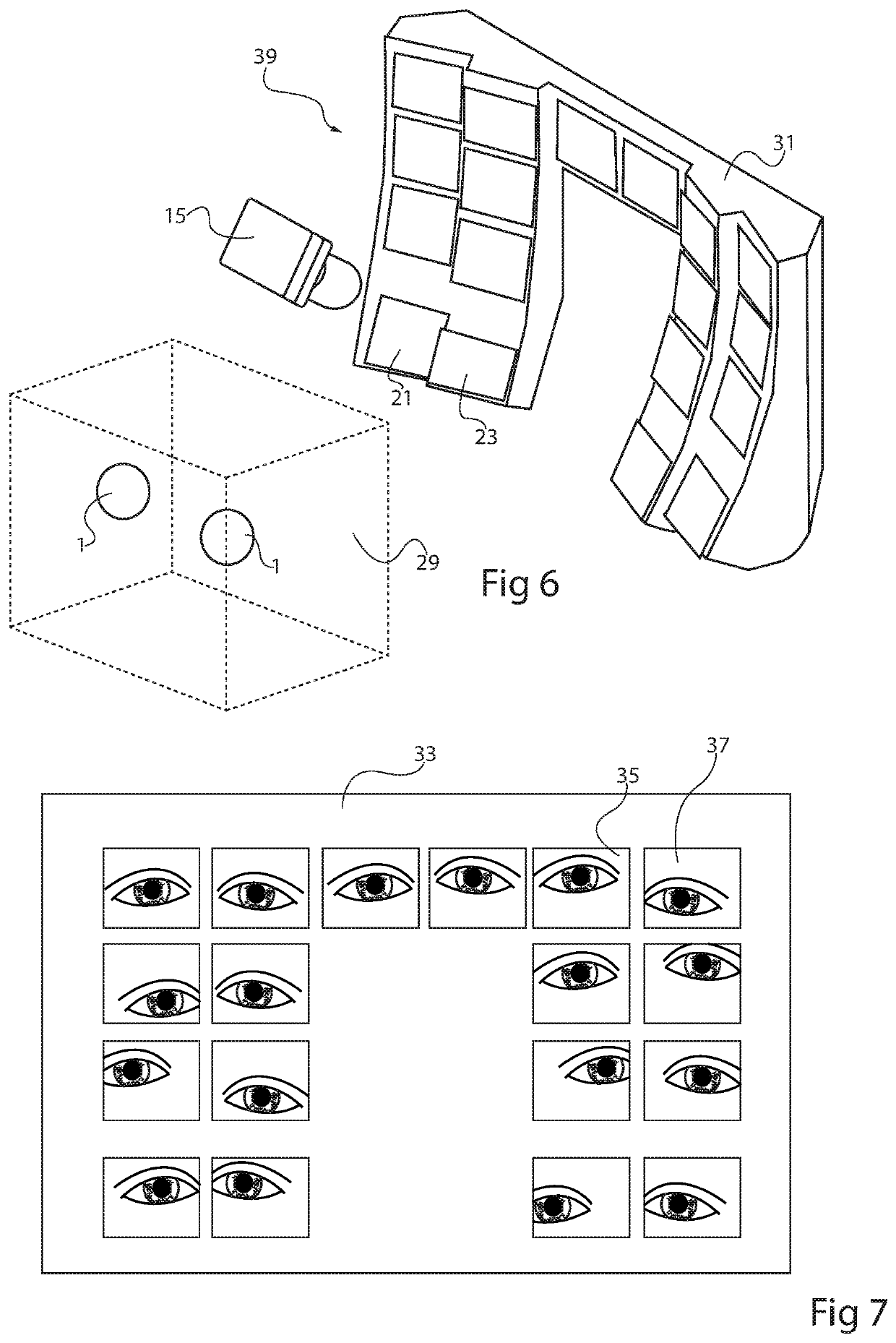
Examples
Embodiment Construction
[0027]The present disclosure relates in general to devices and methods for acquisition of an eye metric. Such acquisition may be accomplished by emitting light, by means of a light source towards an eye, capturing an image of the eye to provide image data, and an analyzing the data to extract at least one metric therefrom. Exemplary applications where such eye metric acquisition takes place is eye tracking and autorefraction.
[0028]By eye tracking is meant the measuring of a gaze vector, i.e. the direction in which an eye is looking, or the motion of an eye relative to the head. Eye trackers may be used for instance in behavioral studies, e.g. to determine how a person reacts to certain stimuli, or as an input devide, allowing a user to control a computer using eye movements. Eye movements take place as a series of saccades. By a saccade is meant the quick eye movement between two successive fixations of the eye. A human saccade take often last between 20 and 100 ms, and can reach a ...
PUM
 Login to View More
 Abstract
Description
Claims
Application Information
 Login to View More