
Predictive Modeling
a prediction and modeling technology, applied in the field of prediction modeling, can solve the problems of becoming a tedious and time-consuming task, and achieve the effects of reducing the repetitive nature of replicating geometries, improving productivity, and increasing efficiency
- Summary
- Abstract
- Description
- Claims
- Application Information
AI Technical Summary
Benefits of technology
Problems solved by technology
Method used
Image

Examples
Embodiment Construction
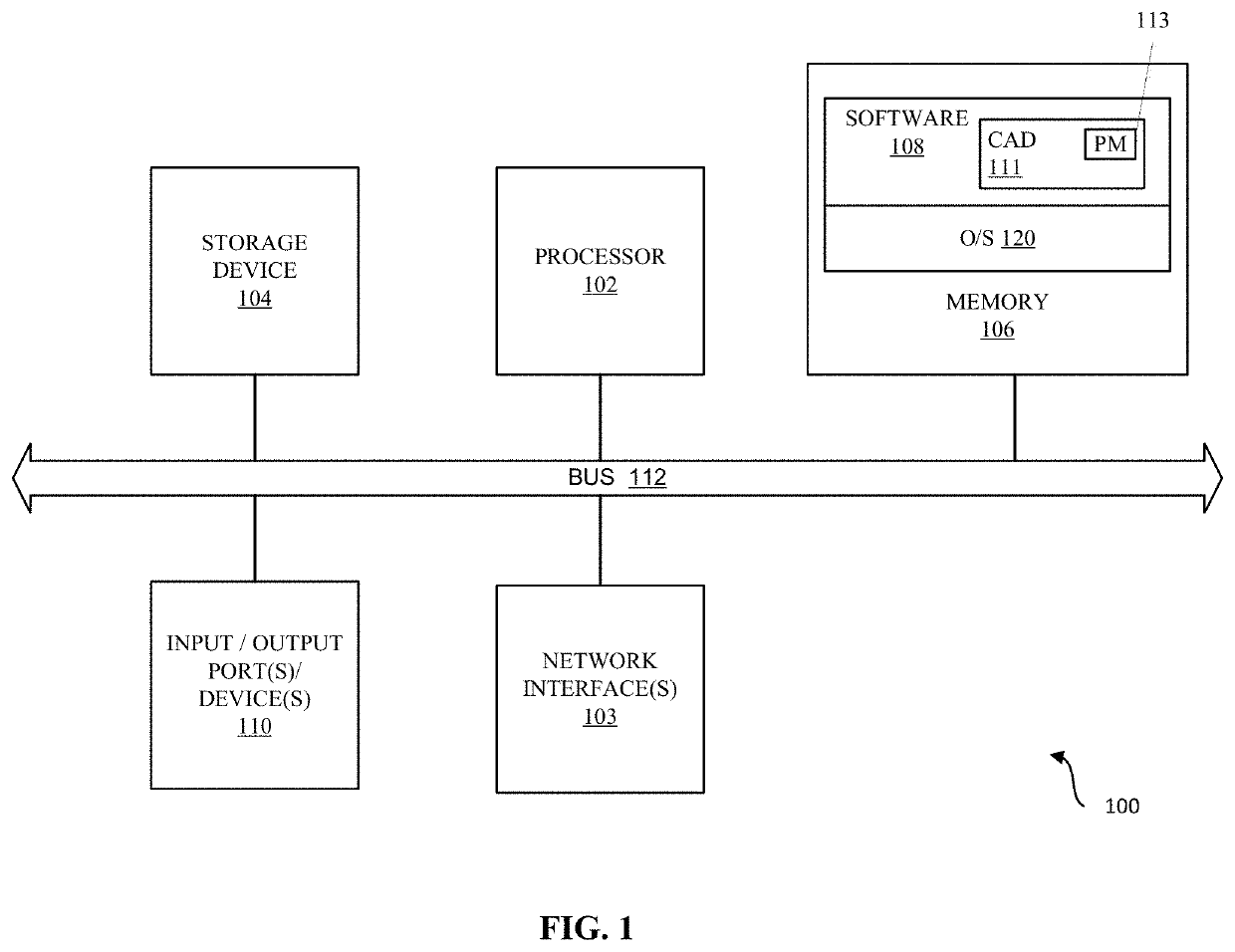
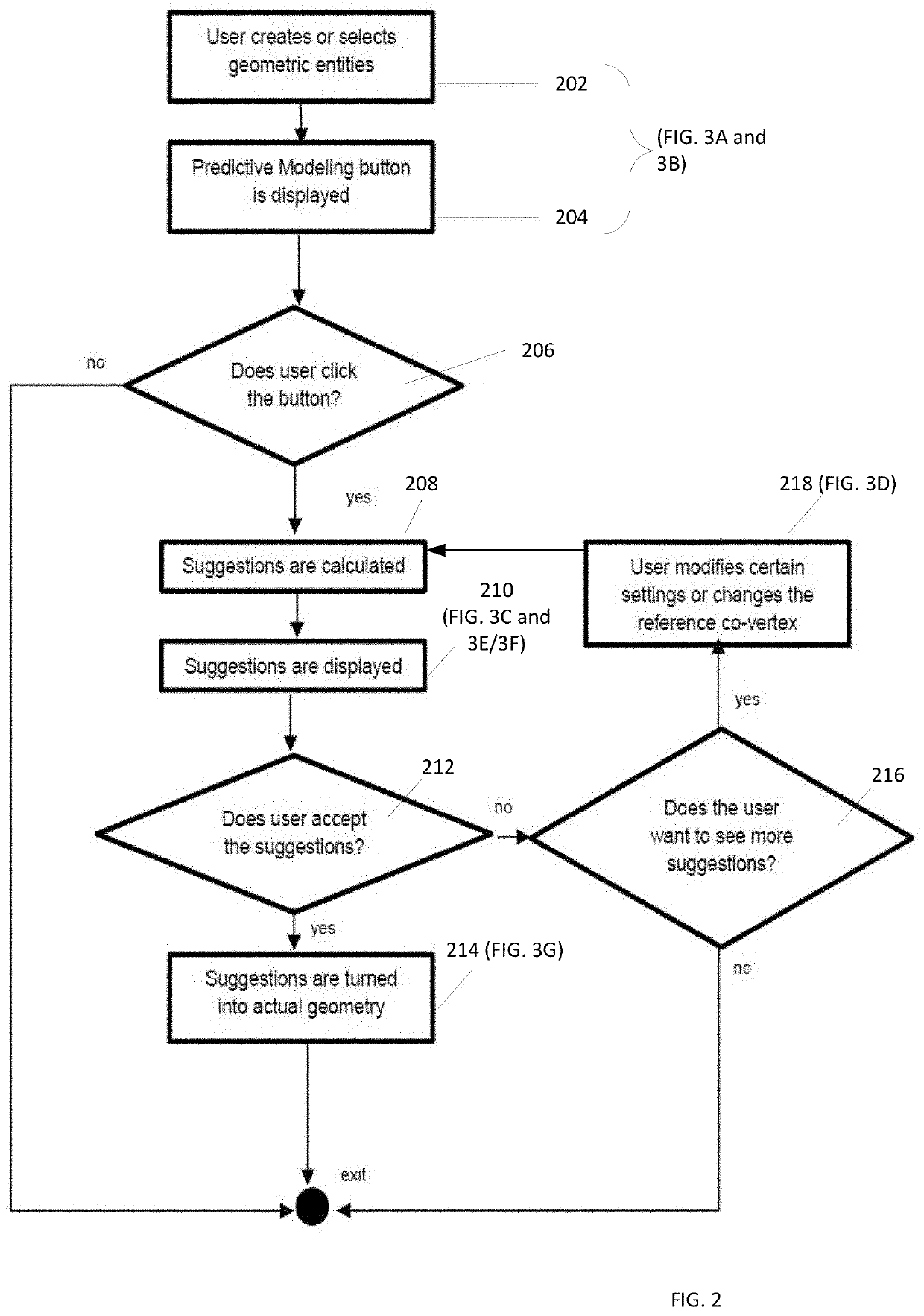
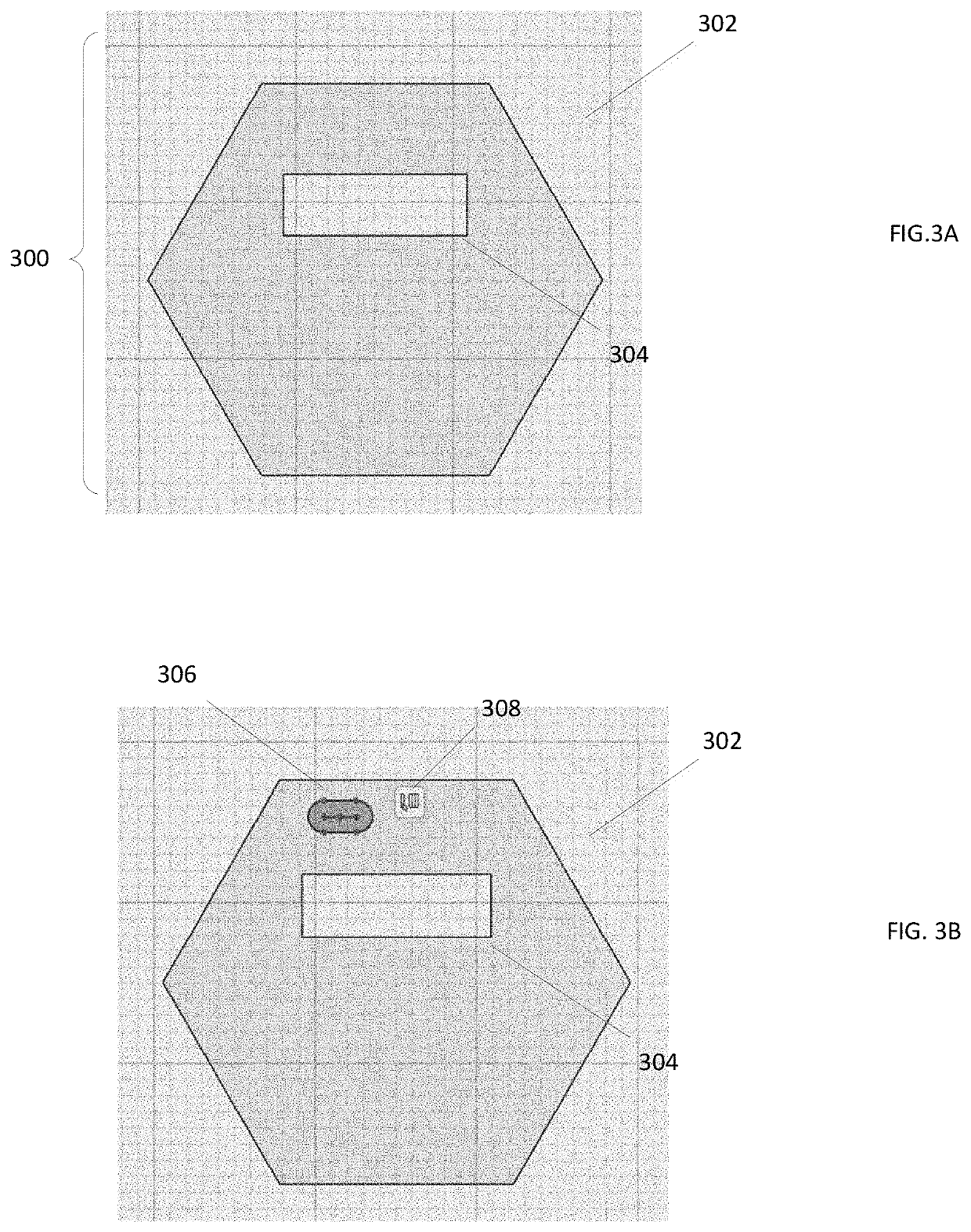
[0021]CAD users sometimes have a need to create multiple versions of the same geometric feature in a design. In some instances, the CAD user creates an original version of the geometric feature and then wishes to create other versions of the same geometric feature in different regions of the design that have the same or similar geometric characteristics as the region of the original version. For example, the CAD user might create a design that includes a solid rectangular cuboid body with a hole extending through the body near one corner of the body. The CAD user might then intend to add three more holes extending through the body—one at each of the other corners of the rectangular cuboid body—each hole being dimensionally identical to the original hole and oriented relative to its respective corner in a similar manner as the original hole. Without the system(s) and technique(s) disclosed herein, the CAD user might need to create and position each hole individually; a tedious and ti...
PUM
 Login to View More
 Abstract
Description
Claims
Application Information
 Login to View More