

Internet address structure analysis, and applications thereof
a technology of internet address and structure analysis, applied in the direction of transmission, electrical equipment, etc., can solve the problem of increasing complexity of understanding the structure of internet address
- Summary
- Abstract
- Description
- Claims
- Application Information
AI Technical Summary
Benefits of technology
Problems solved by technology
Method used
Image

Examples
Embodiment Construction
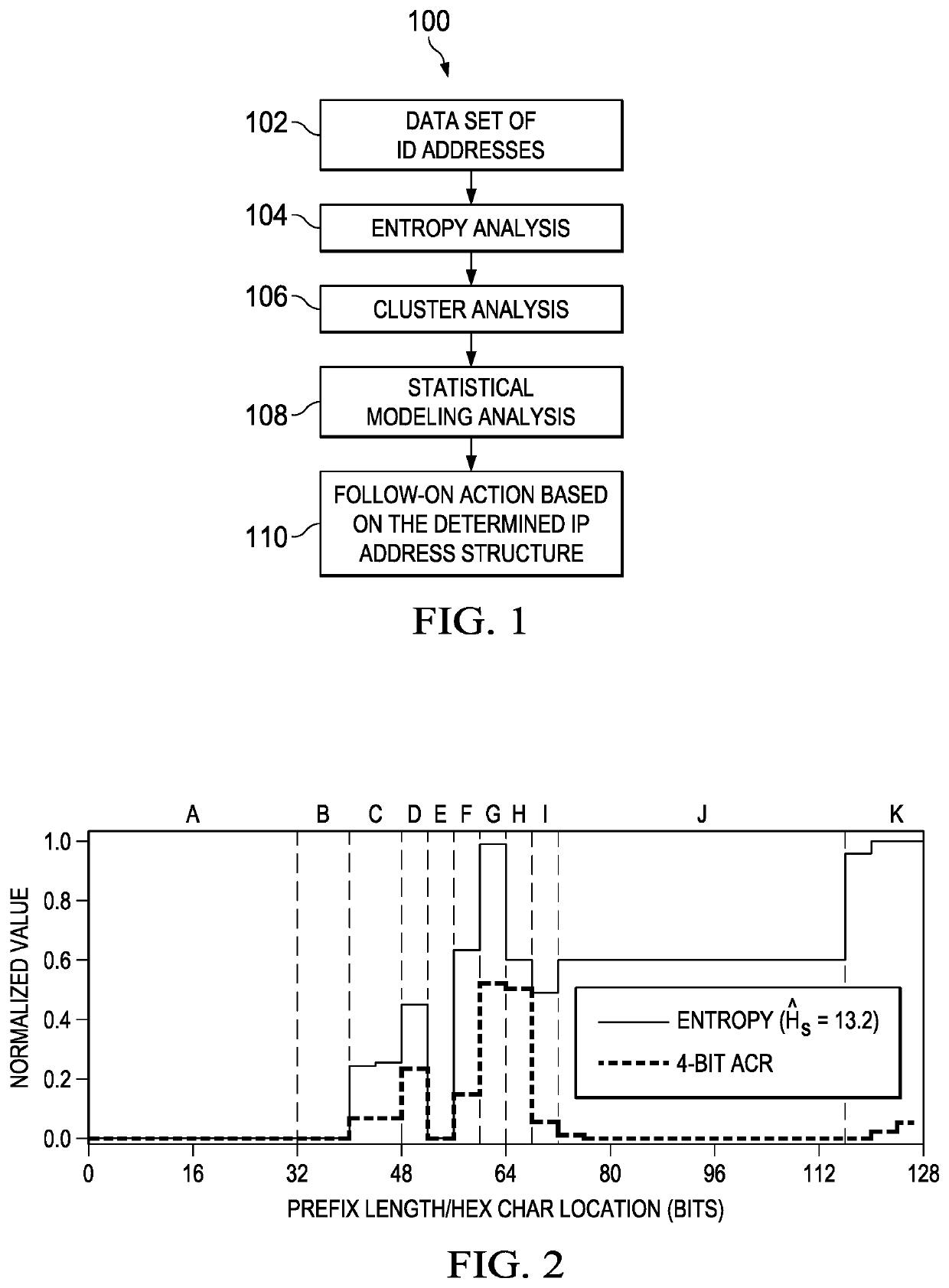
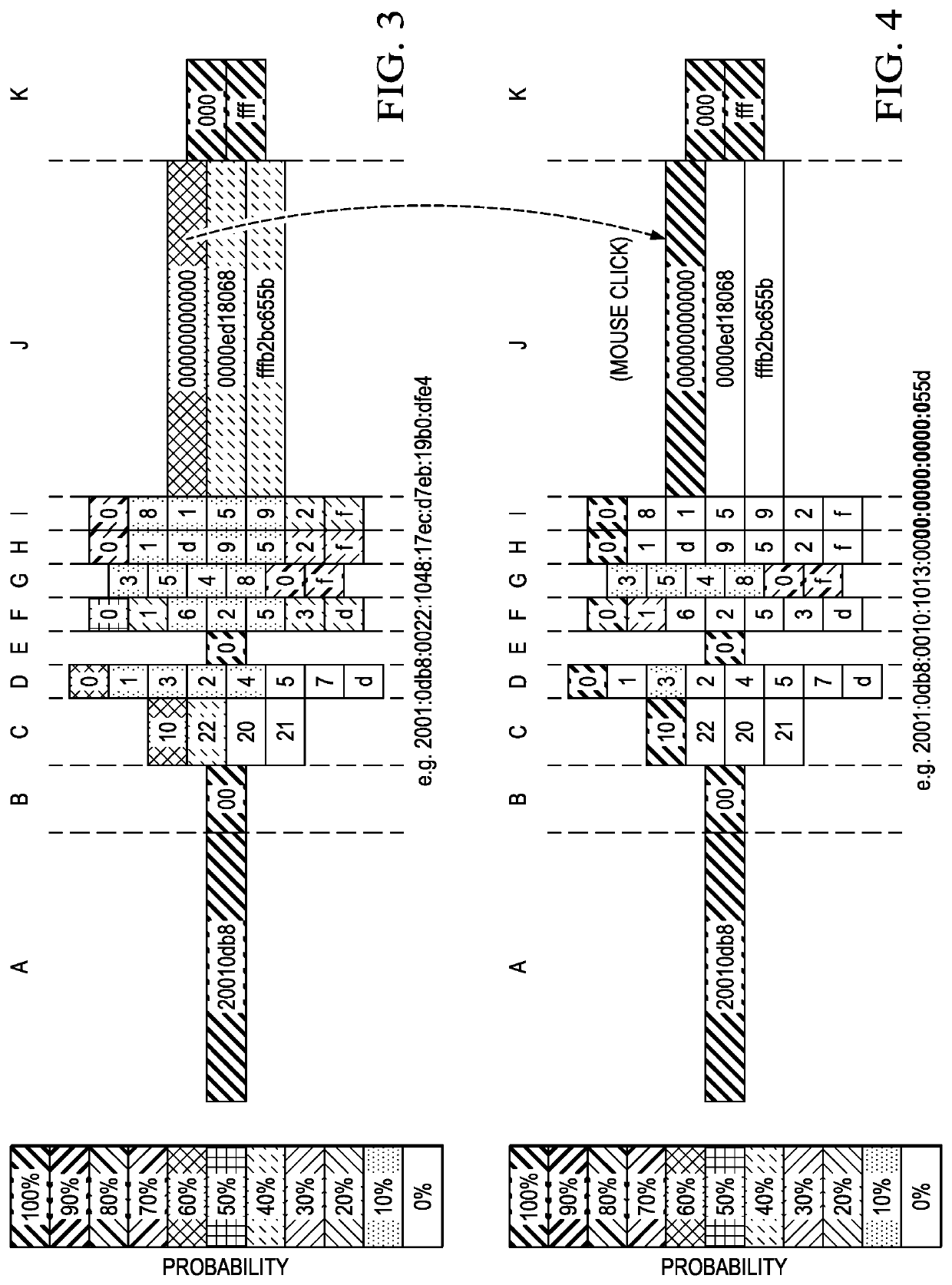
[0017]As described above, the approach herein provides an automated system that discovers aspects of networks' IPv6 address layout based on observations of a subset of that network's active addresses. The system may be implemented in one or more computing machines, e.g., associated with a content delivery network (CDN). As depicted in FIG. 1, the system 100 receives a sample set 102 of IP addresses. The sample set may be obtained by standard network data collection means, such as server logs, passive DNS, traceroute, etc. that are utilized in a CDN. Other sources of this network address data, e.g., any Internet service logging system, a network element or other middlebox traffic trace system, etc., may be used. Typically, the data set of IP addresses is obtained by passive observation of one or more network elements, such as routers, switches, taps, and the like. The data set may be pre-processed (e.g., aggregated by type, anonymized, etc.) and then supplied for analysis.
[0018]In pa...
PUM
 Login to View More
 Abstract
Description
Claims
Application Information
 Login to View More