
Diagnostic apparatus for analyzing arterial pulse waves
a technology of diagnostic equipment and pulse waves, which is applied in the direction of catheters, instruments, angiography, etc., can solve the problems of difficult to fully master techniques, limited diagnosis by ayurveda methods to those with extreme finger tip sensitivity, and inability to make accurate diagnoses
Patent Information
- Authority / Receiving Office
- US · United States
- Patent Type
- Patents(United States)
- Current Assignee / Owner
- Publication Date
- 2001-07-17
- Estimated Expiration
- Not applicable · inactive patent
Smart Images
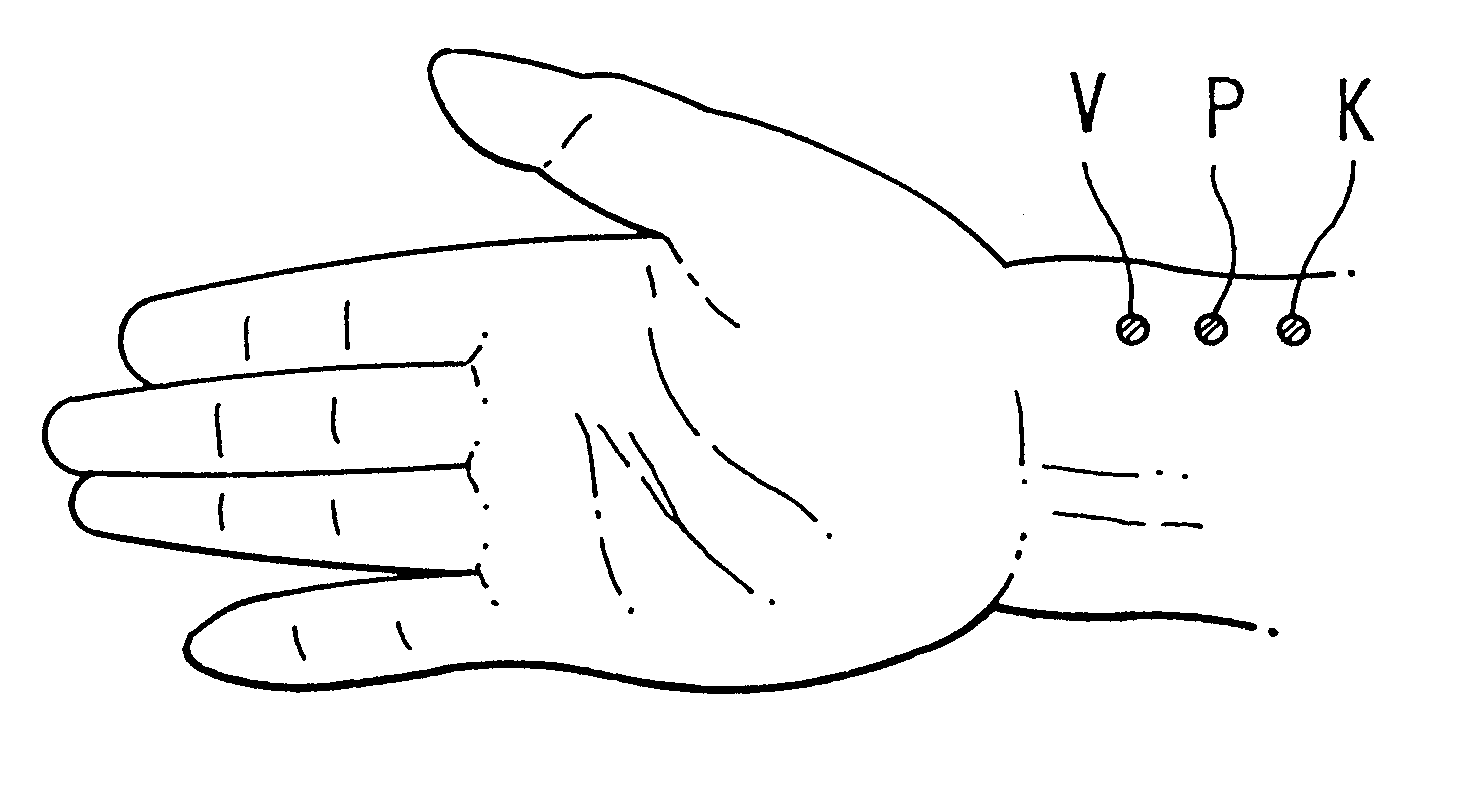
Figure 1 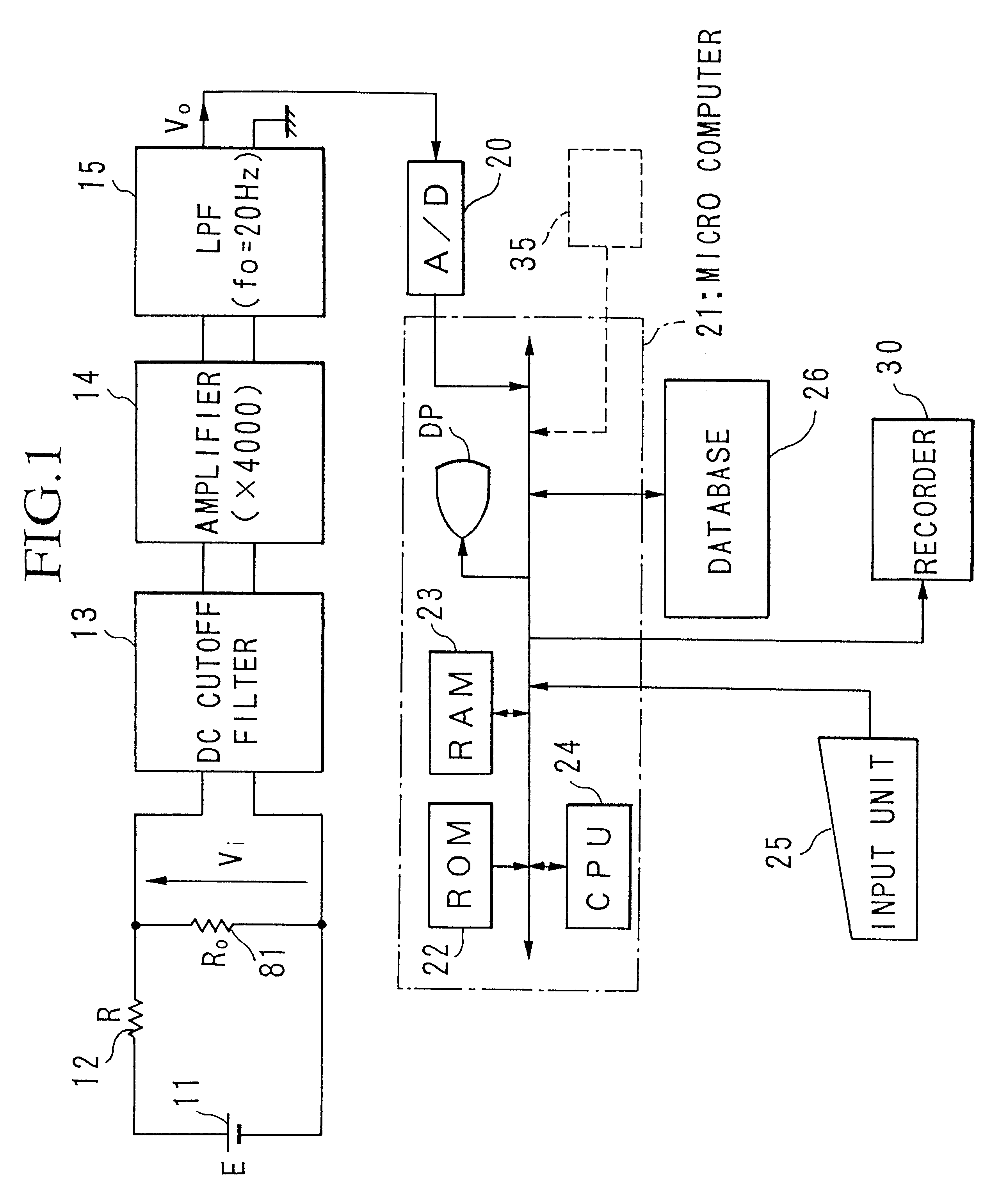
Figure 2 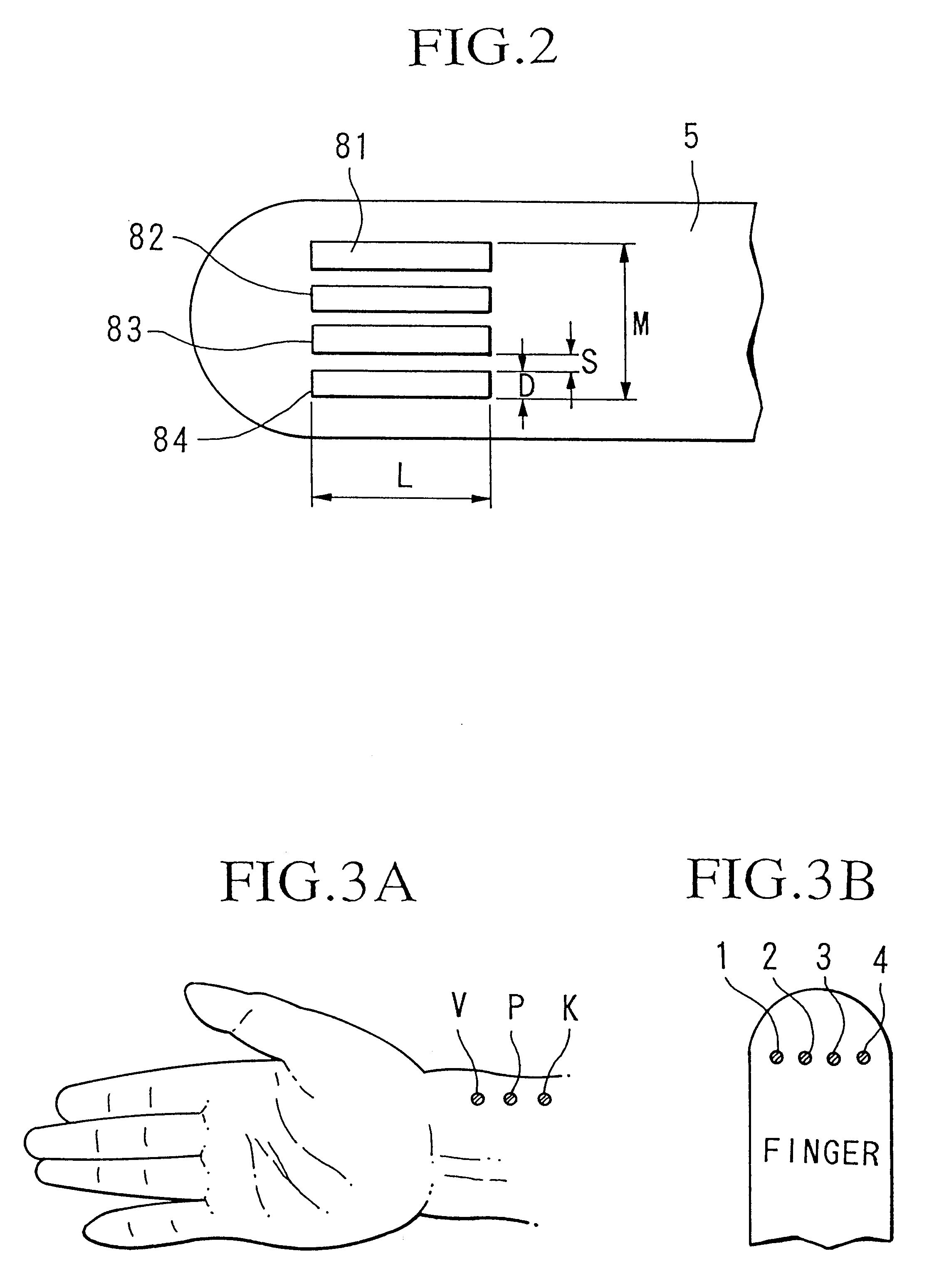
Figure 3
Abstract
Description
1. Technical FieldThe present invention relates to a diagnostic apparatus for performing diagnostics based on parameters and data obtained from the pulse waves generated by a living body, and to a pulse wave analyzing apparatus for generating the parameters and data representing the pulse waves of the living body.2. Background ArtThe traditional medicine, for example, the Chinese medicine has long practiced pulse taking at three locations (Chun, Guan, and Chi) on an arm along the radial artery. Also, there is a method for taking pulses automatically with three piezoelectric elements which are respectively pressed at the three points. (Japanese Patent Application (JPA), Second Publication, S57-52054). Further, to equalize the finger pressure at the piezoelectric elements, it is known that air pressure is used to press down the piezoelectric elements (JPA, First Publication, H04-9139).On the other hand, a technique called Ayurveda has been known in traditional Indian medicine from anc...
Examples
first embodiment
The first embodiment is not limited to the above diagnostic apparatus. For example, a number of variations such as given below are also possible.
Variation (i)
In the first embodiment, the frequency spectrum by FFT were used as waveform parameters. However, instead of this, each value of the elements of a lumped four parameter circuit model simulating the arterial system may be used. The electrical model will be described below.
Variation (ii)
Waveform spectrum obtained by discrete FFT, or waveform spectrum obtained by the so-called maximum entropy method technique may be used for the parameter.
Variation (iii)
In the above embodiment, the radial arterial pulse waves were used. However, it is possible to utilize parameters for brain waves or finger tip pulse waves. Moreover, parameters for the accelerating wave of the finger tip pulse wave may be utilized. The main point is that the present invention is applicable provided there is some wave motion which reflects the condition of the livi...
second embodiment
In the following, a pulse wave analysis apparatus will be explained.
Chapter 2-1: Structure of the Embodiment
FIG. 10 shows a block diagram of the pulse wave analysis apparatus in accordance with the second embodiment of the invention.
This embodiment computes the circulatory dynamic function of an examinee based on information obtained from evaluation of the circulatory dynamic parameters of a human body with a non-invasive sensor. The actual details of the circulatory dynamic parameters will be explained later.
In FIG. 10, the reference numeral 201 refers to a pulse wave detection apparatus, 202 is a stroke volume determination device. The pulse wave detection apparatus 201 determines the radial artery waveform via the pulse wave sensor S1 worn on the examiner's hand (or on the wrist of an examinee), as shown in FIG. 11, and also determines the blood pressure of the examinee via a cuff belt S2 worn on the upper arm section of the examinee. The waveform of the radial artery is correct...
third embodiment
Next, a diagnostic apparatus according to the present invention will be explained. This apparatus first determines the distortions of the detected pulse waveforms obtained from an examinee.
The distortion in the waveforms refers to deviations from the "normal" pulse waveform shape of a living body, and the waveform shape is obviously closely related to the conditions of the living body, and therefore, computations of distortions in the waveforms serve as an excellent guide to diagnostics.
As will be described later in this Chapter, the waveform distortions are also related to the circulatory dynamic parameters described in Chapter 2, and therefore, computations of the waveform distortions will also serve as indicators for circulatory dynamic parameters, and will enable diagnosis to be performed based on computed distortions.
In this Chapter, the relationship between waveform distortions and waveform types / circulatory dynamic properties will be explained first, followed by the presentat...