

Process for producing synthetic naphtha fuel and synthetic naphtha fuel produced by that process
a technology of synthetic naphtha and process, which is applied in the production of liquid carbonaceous fuels, fuel additives, liquid hydrocarbon mixtures, etc., can solve the problems of low cold flow properties, products difficult to use, and a low degree of c. cloud point of the fuel composition
Inactive Publication Date: 2002-11-05
SASOL TEKHNOLODZHI PROPRIEHJTEHRI LTD +1
View PDF7 Cites 51 Cited by
- Summary
- Abstract
- Description
- Claims
- Application Information
AI Technical Summary
Problems solved by technology
Primary FT products provide notoriously poor cold flow properties, making such products difficult to use where cold flow properties are vital, e.g. diesel fuels, lube oil bases and jet fuel.
Using the synthetic naphtha as Cloud Point depressor may result in at least 2.degree. C. depression in Cloud Point of the fuel composition.
Using the synthetic naphtha as Cloud Point depressor may result in at least 3.degree. C. depression in Cloud Point for the fuel composition.
Using the synthetic naphtha as Cloud Point depressor may result in at least 4.degree. C. depression in Cloud Point for the fuel composition, or more typically at least 8.degree. C. depression.
Using the synthetic naphtha as Cloud Point depressor may result in at least 13.degree. C. depression in Cloud Point for the fuel composition, or more typically at least 18.degree. C. depression.
A very high conversion will result in a high yield of gases and low yield of naphtha fuels.
Although it is possible to hydroisomerise the material contained in the condensate stream, the applicant has found that this leads to a small, but significant loss of material in the naphtha boiling range to lighter material.
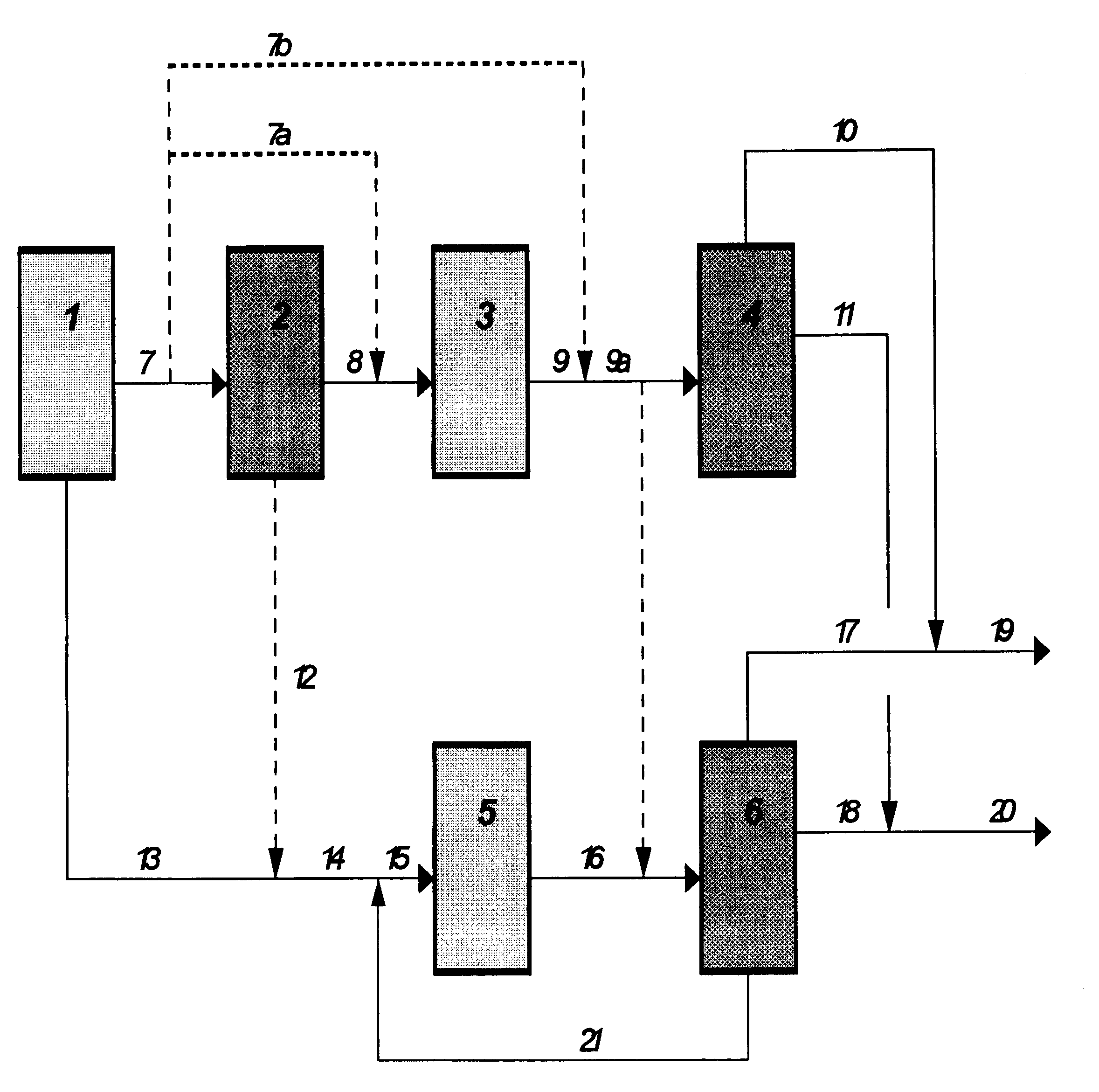
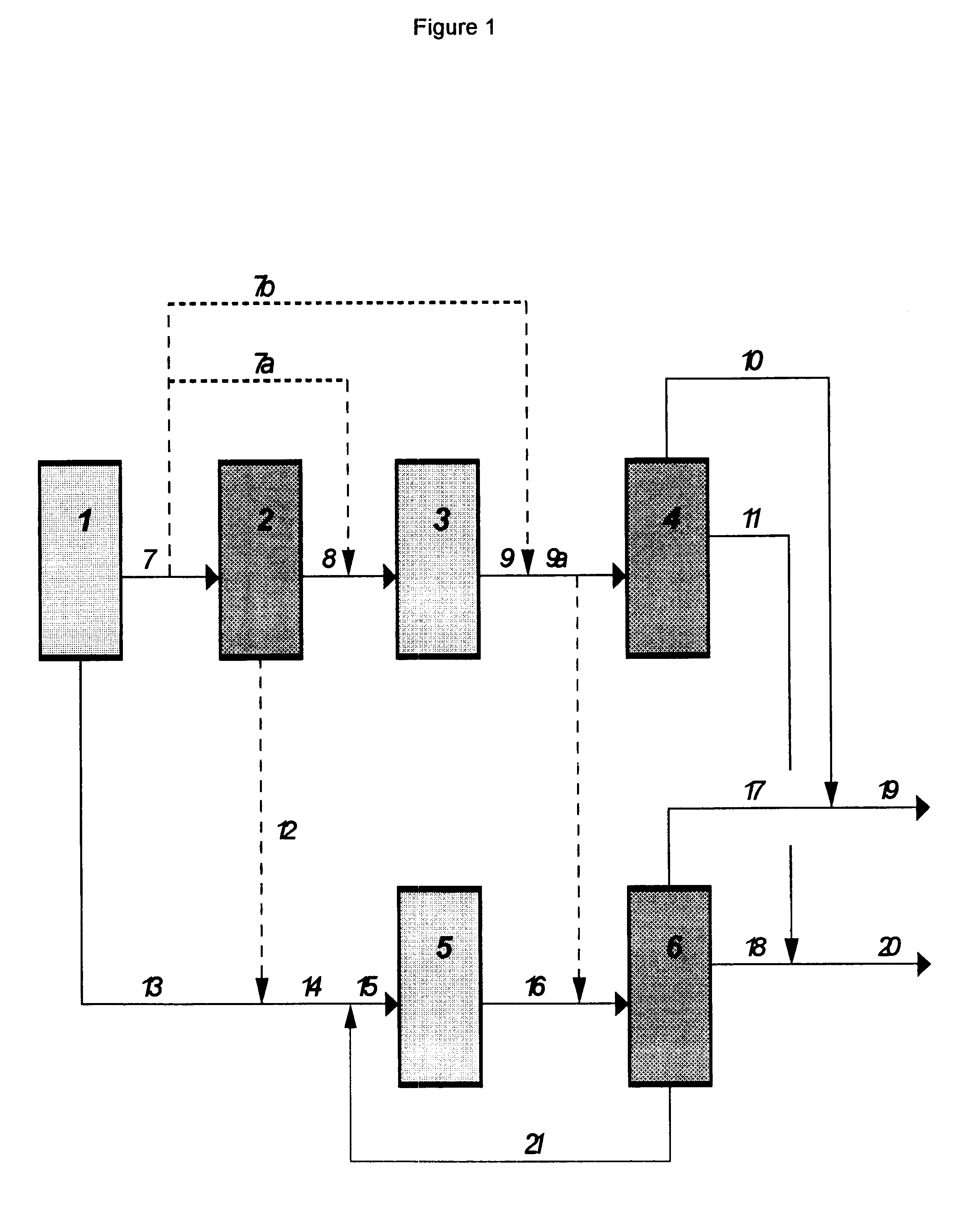
However, the specific process conditions for the Work-up of FT primary products, the possible process configurations of which are outlined in Table 4, were obtained after extensive and laborious experimentation and design.
Method used
the structure of the environmentally friendly knitted fabric provided by the present invention; figure 2 Flow chart of the yarn wrapping machine for environmentally friendly knitted fabrics and storage devices; image 3 Is the parameter map of the yarn covering machine
View moreImage
Smart Image Click on the blue labels to locate them in the text.
Smart ImageViewing Examples

Examples
Experimental program
Comparison scheme
Effect test
example 2
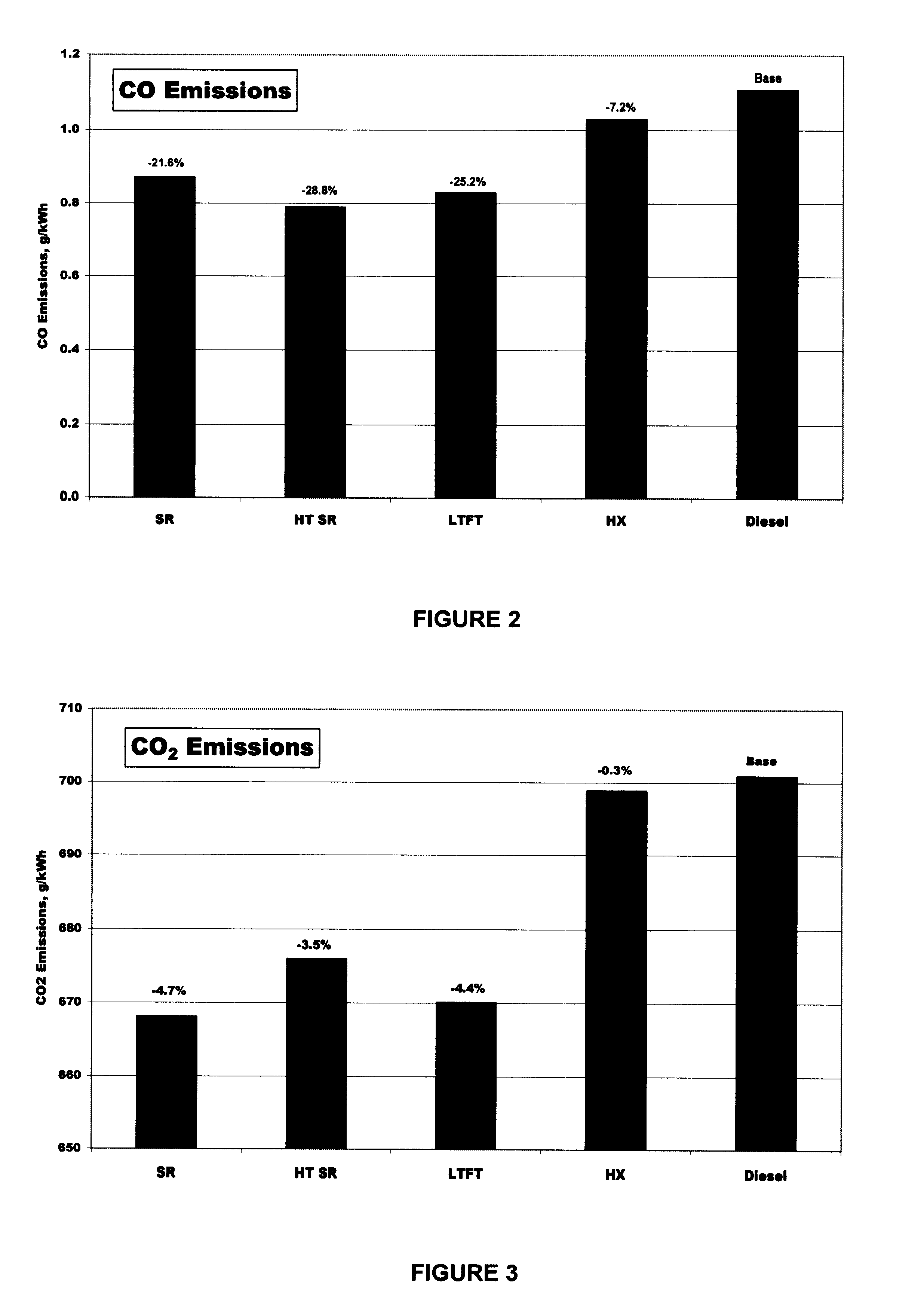
A Hydrogenate Straight Run (HT SR) naphtha was produced by hydrotreating and fractionation of the light FT Condensate. This product had the fuel characteristics indicated in Table 5.
example 3
A Hydrocracked (HX) naphtha was produced by hydrocracking and fractionation of the heavy FT wax. This product had the fuel characteristics indicated in Table 5.
example 4
A LTFT Naphtha was produced by blending of the naphthas described in examples 2 and 3. The blending ratio was 50:50 by volume. This product had the fuel characteristics indicated in Table 5.
the structure of the environmentally friendly knitted fabric provided by the present invention; figure 2 Flow chart of the yarn wrapping machine for environmentally friendly knitted fabrics and storage devices; image 3 Is the parameter map of the yarn covering machine
Login to View More PUM
| Property | Measurement | Unit |
|---|---|---|
| boiling point | aaaaa | aaaaa |
| boiling point | aaaaa | aaaaa |
| boiling point | aaaaa | aaaaa |
Login to View More
Abstract
The invention provides a process for the production of a synthetic naphtha fuel suitable for use in compression ignition (CI) engines, the process including at least the steps of hydrotreating at least a fraction of a Fischer-Tropsch (FT) synthesis reaction product of CO and H2, or a derivative thereof, hydrocracking at least a fraction of the FT synthesis product or a derivative thereof, and fractionating the process products to obtain a desired synthetic naphtha fuel characteristic. The invention also provides a synthetic naphtha fuel made by the process as well as a fuel composition and a Cloud Point depressant for a diesel containg fuel composition, said fuel composition and said depressant including the synthetic naphtha of the invention.
Description
This invention relates to naphtha fuels useable in Compression Ignition (CI) combustion engines as well as to a process for production of such naphtha fuels. More particularly, this invention relates to naphtha fuels produced from a mainly paraffinic synthetic crude which is produced by the reaction of CO and H.sub.2, typically by the Fischer-Tropsch (FT) process.BACKGROUND TO THE INVENTIONProducts of a FT hydrocarbon synthesis process, particularly the products of a cobalt and / or iron based catalytic process, contain a high proportion of normal paraffins. Primary FT products provide notoriously poor cold flow properties, making such products difficult to use where cold flow properties are vital, e.g. diesel fuels, lube oil bases and jet fuel. It is known in the art that octane number and cetane number are normally inversely related i.e. a higher octane number is typically associated with a lower cetane number. It is also known that naphtha fractions intrinsically have low cold flow...
Claims
the structure of the environmentally friendly knitted fabric provided by the present invention; figure 2 Flow chart of the yarn wrapping machine for environmentally friendly knitted fabrics and storage devices; image 3 Is the parameter map of the yarn covering machine
Login to View More Application Information
Patent Timeline
 Login to View More
 Patent Type & AuthorityPatents(United States)
IPC IPC(8): C10L1/08C10L1/00C10G65/00C10G65/14C10G2/00C10G65/12C10G67/02C10G69/14C10L10/12C10L10/14
CPCC10G2/00C10G2/30C10G2/32C10G65/14C10L1/08C10G2400/04Y10S208/95C10G2300/1022C10G2300/1033C10G2300/1055C10G2300/202C10G2300/301C10G2300/304C10G2300/307C10G2300/80C10G2400/02C10G2400/18
InventorDANCUART, LUIS PABLO
OwnerSASOL TEKHNOLODZHI PROPRIEHJTEHRI LTD