[0010]In one preferred embodiment an intelligent
multimedia electronic catalog (e-catalog or
third generation catalog) for network infrastructure products is provided. The complexity of network infrastructure products,
workflow, distribution, procurement and life cycle maintenance requires more
documentation and tools than conventional maintenance, repair and operation (MRO) catalogs. Network infrastructure products have numerous technical documents which must be available during the design, procurement, installation, test and maintenance cycle. Network infrastructure products also require configuration information for design and procurement. Tools must be built into the
electronic catalog to assist in this process.
Technical specifications differ between products, thus requiring comparison tools for price / performance analysis.
Technical information regarding these products must be developed by experts with industry specific
domain knowledge. Network infrastructure products have unique use models due to the numerous organizations involved in their life cycle and the associated complex
workflow. Electronic catalogs must provide for rapid development times as eCommerce requires fast reactions to changing
market conditions.
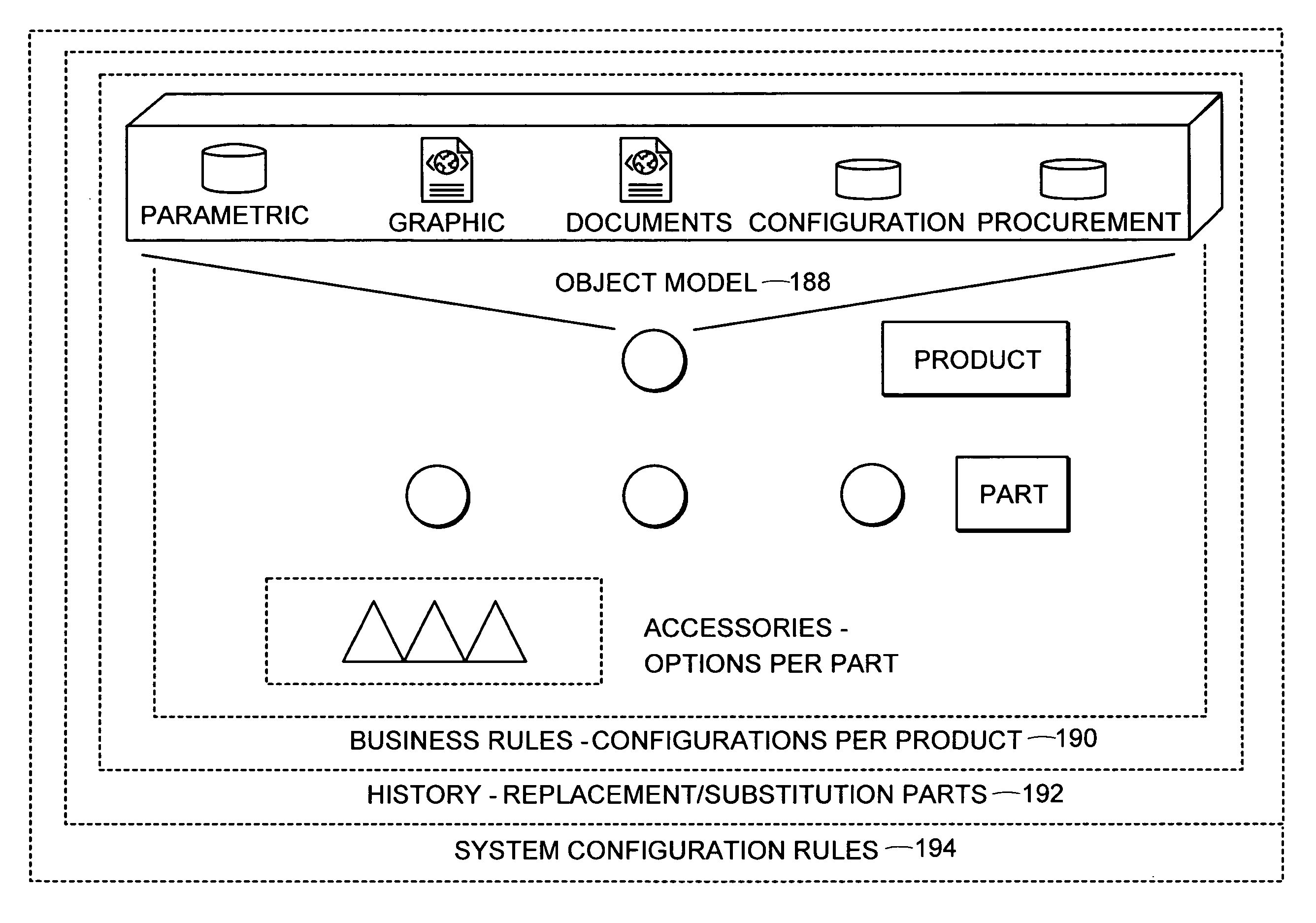
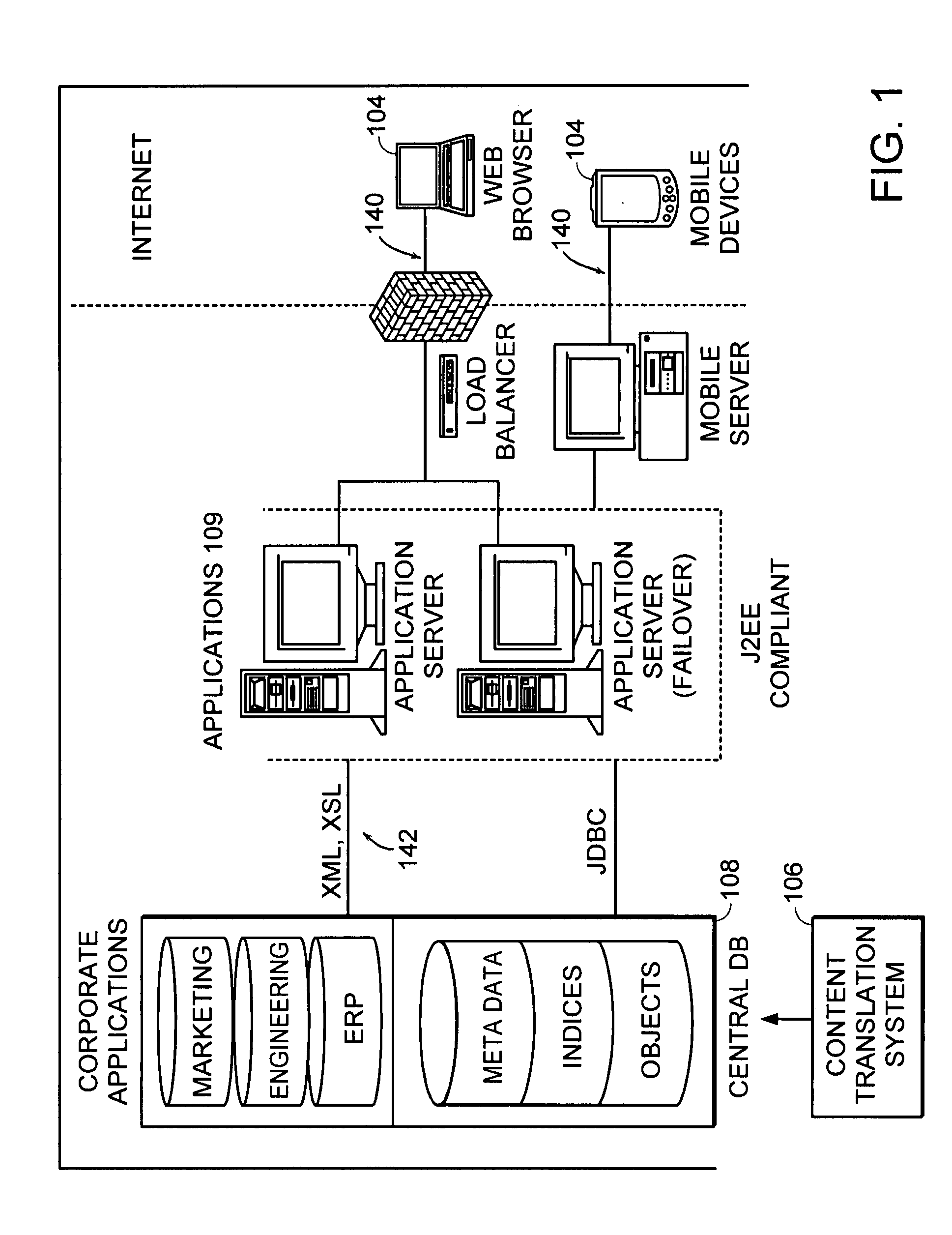
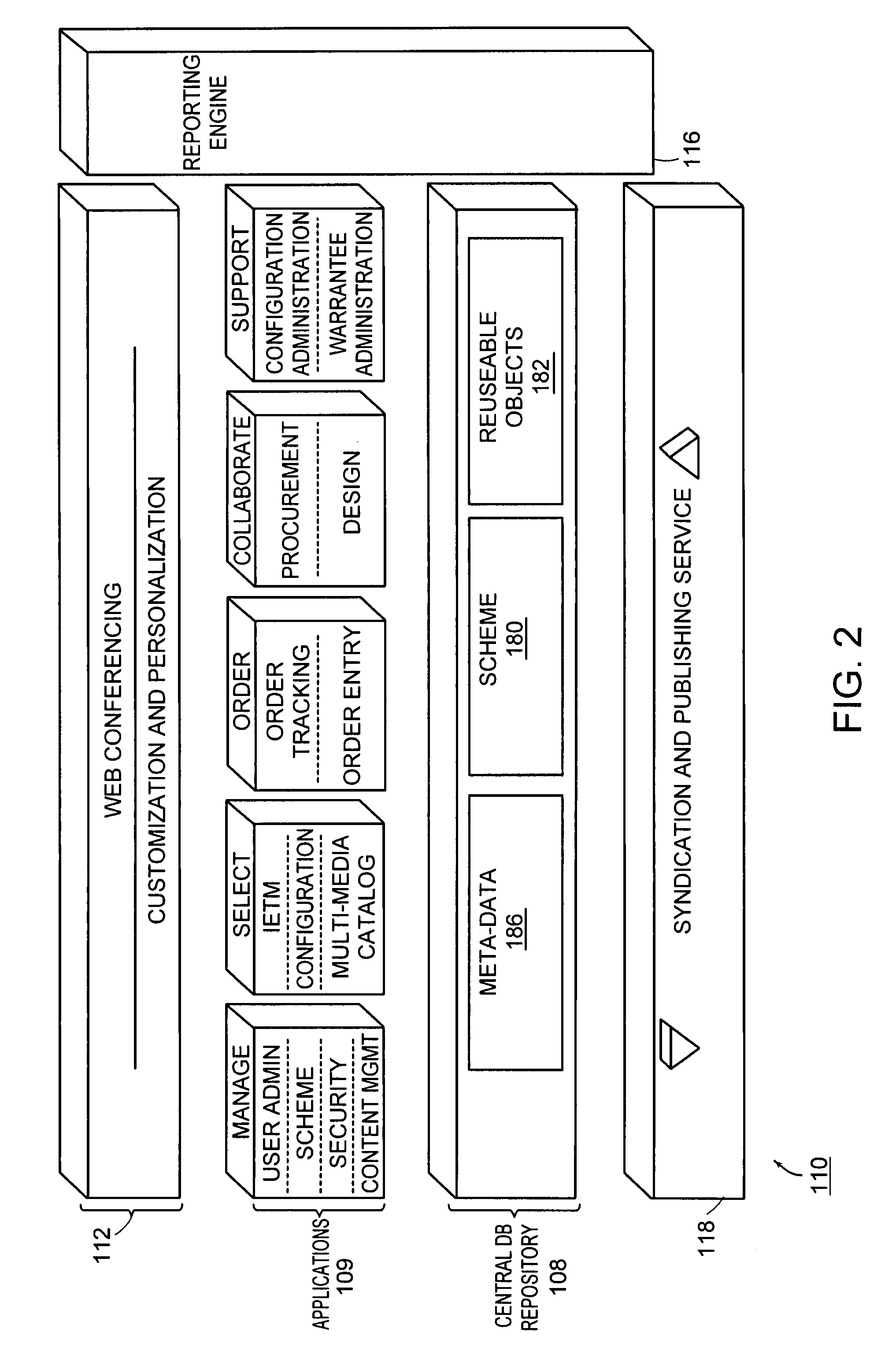
[0011]The present invention provides an intelligent product catalog system for electronic creation, management and viewing of product information using a
multimedia display system. A central
database repository for storing the product information provides for an unlimited number of product attributes and dynamic reconfiguration of the product information. The central
database repository comprises a meta
data system, a scheme system and an
object model system. A plurality of applications access the central
database repository, the applications being automatically adaptive to the dynamic reconfiguration of the product information. A
user interface provides display, sorting and filtering of the product information including the unlimited number of product attributes. Specific products, comprising components, are selected based upon the product information, the selected products compose a system. The display of product and system data is dynamically rerendered to reflect added product options. The scheme system provides configuration rules for configuring products based on the product information. The configuration rules provide for presenting only valid configurations of product options for the products. The configuration rules provide budget based
configuration analysis such only the addition of product options that are within a predefined limit are presented. The budget is based upon at least one of: dimensions, weight, temperature,
power consumption, air flow and cost. The configuration rules provide for presenting completed product
bill of materials information prior to the
bill of materials information entering an
order entry system. The configuration rules provide for presenting only options that do not conflict with other options already selected for the product. A reporting engine tracks and records activity of actual
product selection criteria used during a user session. A syndication and publication system provides for exporting of custom formatted product information. Exporting can be done periodically and at predefined intervals. The display includes an intelligent
bill of materials displaying selected products and selected options for displaying products associated with a system, the display providing
drill down for detailed information on the product. One preferred embodiment of the present invention provides a system for the creation of an intelligent multimedia e-catalog for network infrastructure products.
[0012]Electronic catalogs of the prior art offer limited
graphics and descriptions with some linking (e.g.,
HTML Web pages). Some catalogs are implemented using simple products and offer more advanced static
graphics (e.g., GIF), description and a limited database for parts. In contrast, the present invention provides dynamic
graphics, unlimited attributes for describing product information (including the ability to define hierarchies of product descriptions), configuration rules, consistent object models and an intelligent bill of materials
decomposition process.



 Login to View More
  Login to View More