
Localized network authentication and security using tamper-resistant keys
- Summary
- Abstract
- Description
- Claims
- Application Information
AI Technical Summary
Benefits of technology
Problems solved by technology
Method used
Image

Examples
Embodiment Construction
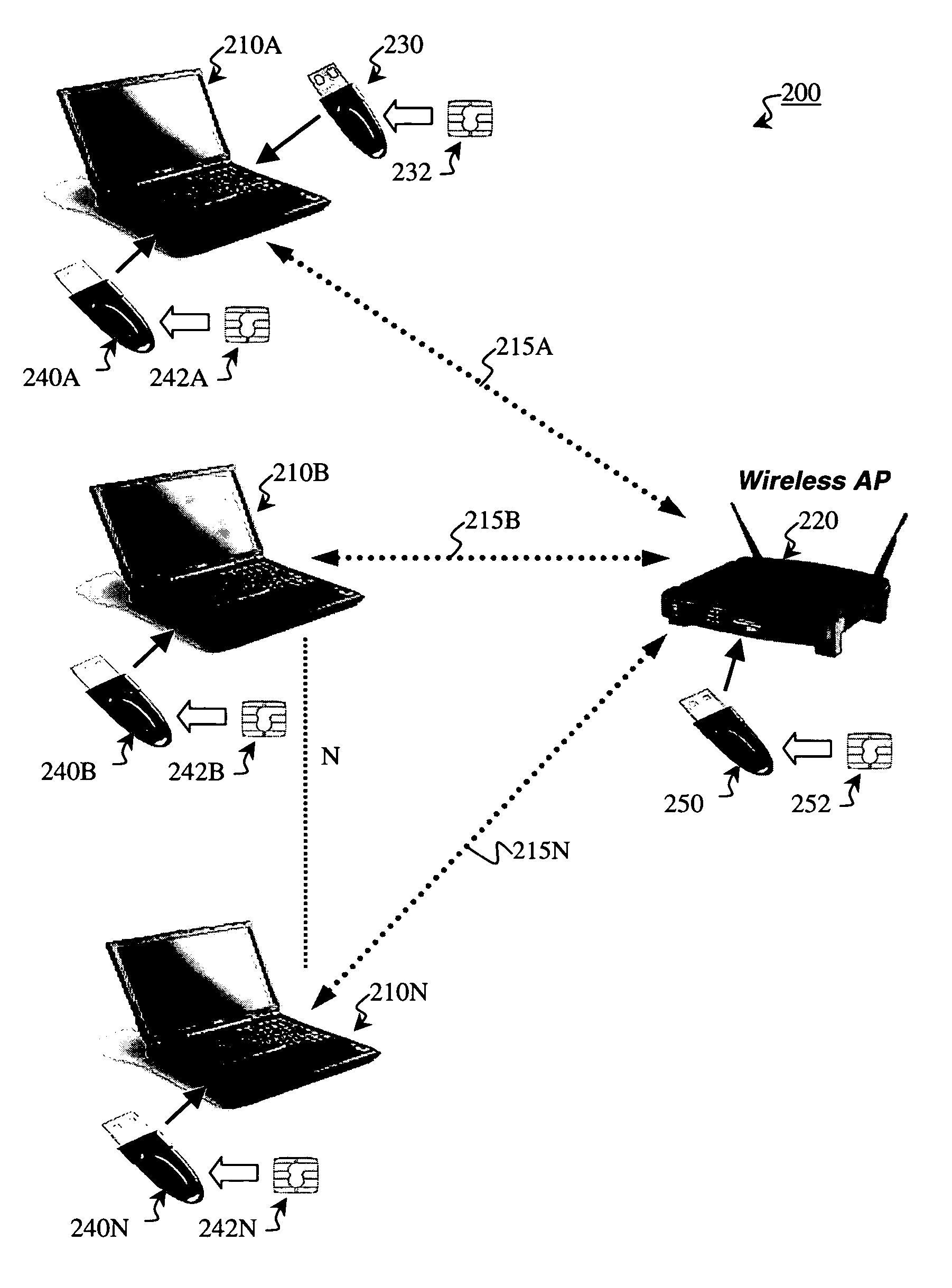
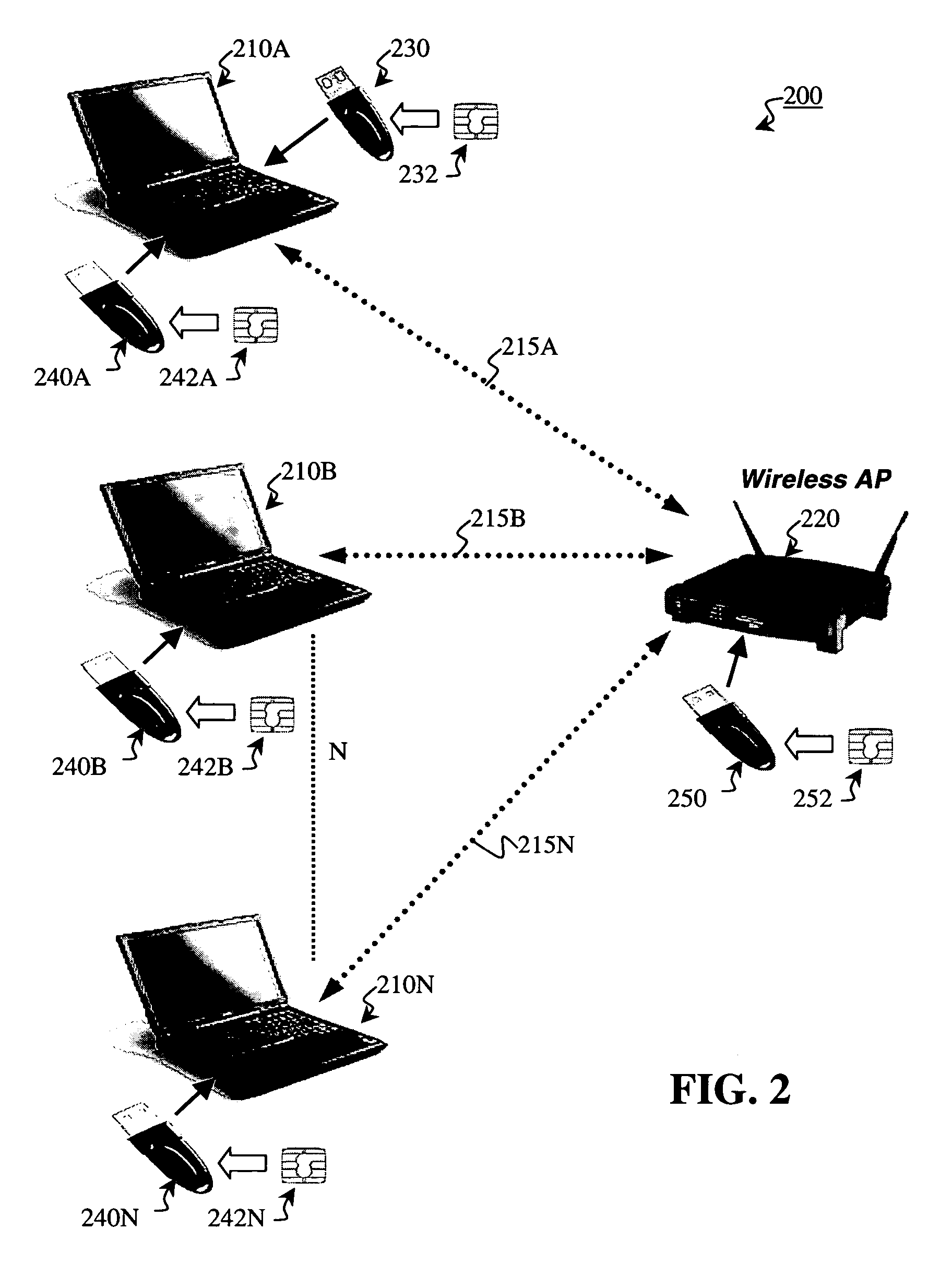
[0037]Preferred embodiments of the present invention and their advantages may be understood by referring to FIGS. 2-12, wherein like reference numerals refer to like elements, and are described in the context of a Wi-Fi network. Nevertheless, the present invention is applicable to both wired or wireless communication networks in general. For example, the present invention enables secure end-to-end access between a client and any computer residing on a network backbone. Often there may not be a wireless component anywhere in such a situation.
[0038]The present invention enhances and safeguards Wi-Fi networks by implementing a secure, local, edge method and system (the implementation of which is herein referred to as communicating in a “secure” mode) employing a combination of software routines and physical keys in the form of easy-to-use adapters that attach to existing computing devices and wireless access points via an available USB port. These physical keys are secure, tamper-resis...
PUM
 Login to View More
 Abstract
Description
Claims
Application Information
 Login to View More