[0032]The main advantage of the present invention over the direct contact steam generation of the prior art is the ability to use low quality water and fuel, the ability to avoid liquid discharge waste, and the ability to remove a solid waste byproduct, when all water has been converted to steam and fuel has been converted to gas. In the present invention, solids concentration increases inside the steam generator, where it reaches a maximum concentration as a solid. The extraction of the produced solid waste as part of the steam generation process is advantageous as it eliminates the need for additional treatment facilities to treat the water prior to use in the steam generator, to convert a wastewater flow into solid form and to reduce its volume (like evaporators and crystallizers). The disposal of solid waste in landfills is more economic and environmentally friendly.
[0033]Furthermore, the proposed apparatus and method allows direct use of coal for heavy oil recovery, eliminating the burning of natural gas to produce steam and the converting of coal to methane for natural gas in heavy oil recovery. The present invention minimizes the use of the clean and valuable natural gas resource by replacement with coal or other low quality fuels. Additionally, harmful CO2 gas emissions are injected into the underground reservoir and out of the atmosphere.
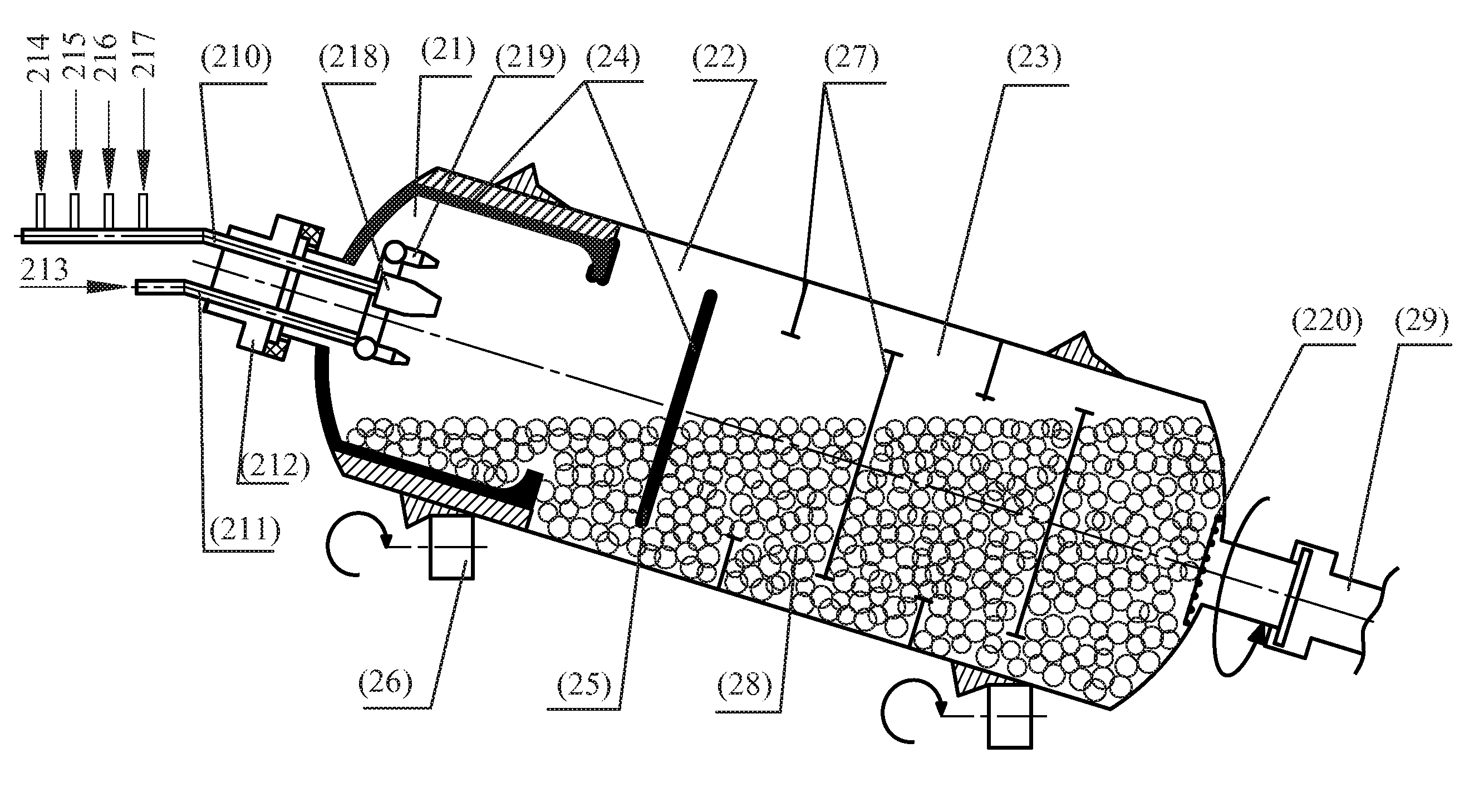
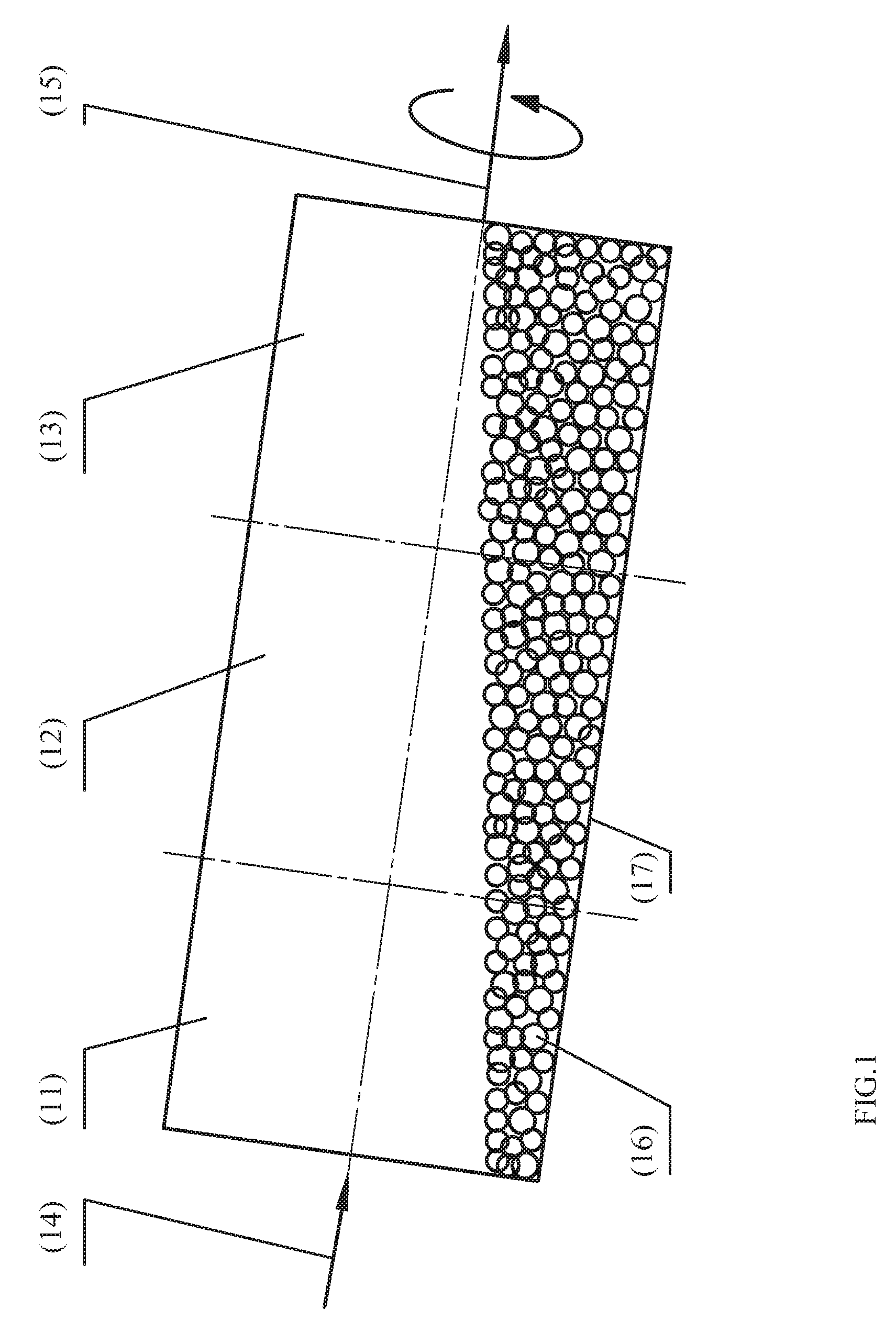
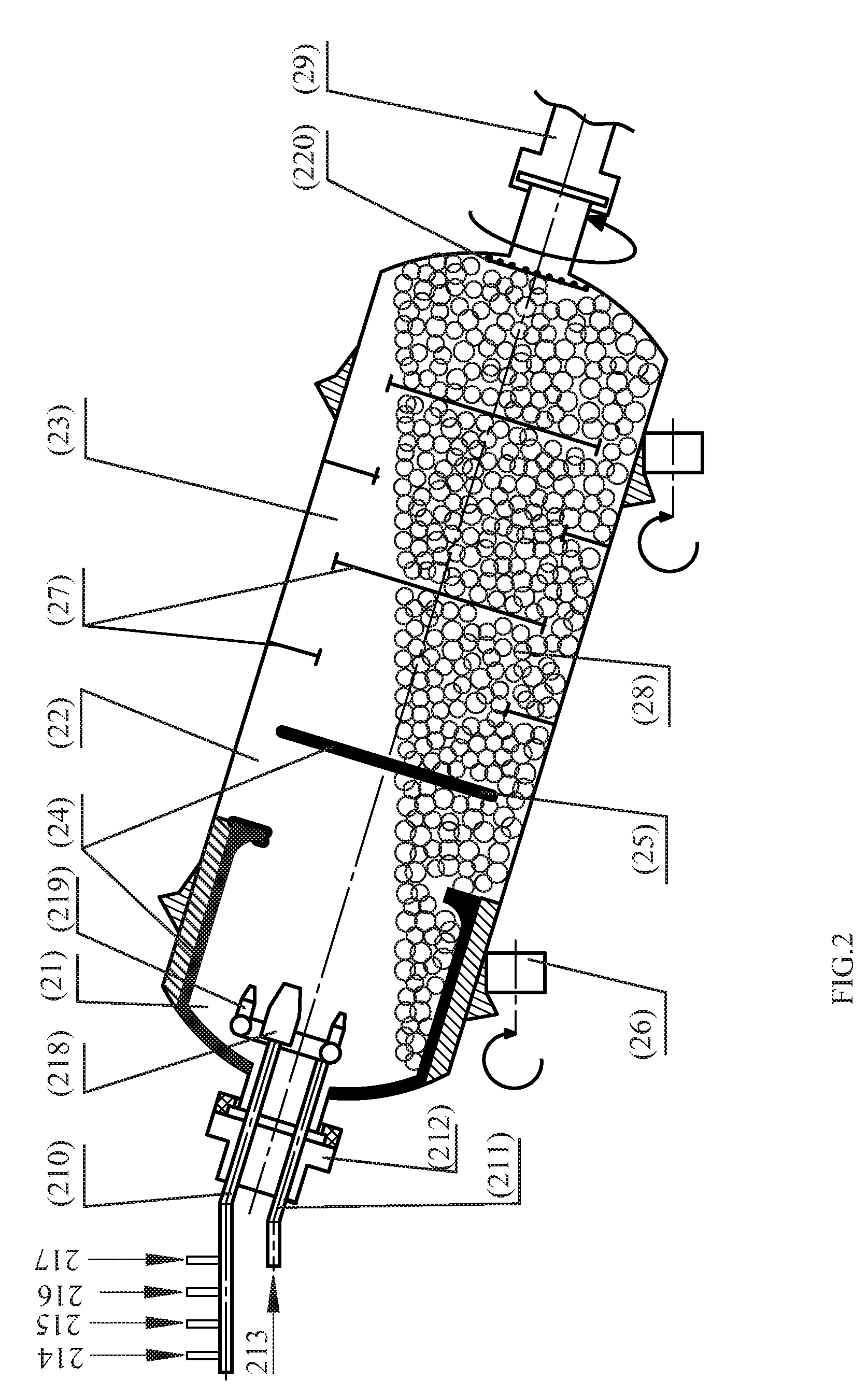
[0034]The present invention is a reaction chamber apparatus for producing a steam and CO2 mixture without generating liquid waste. The apparatus includes a rotatable vessel in a direct contact steam generator. The rotatable vessel has a combustion section and a steam producing section and is partially filled with spherical bodies. The combustion section and the steam producing section are partially separated by a partition or by location in the rotating chamber. A homogenizing section is located at an end of the steam producing section opposite the combustion section. The homogenizing section may have at least one partition wall guiding the flow of gases. The vessel has at least one opening or a fixed collector at the bottom of the vessel to allow for the discharge of solids.
[0035]In an alternative embodiment of the present invention, the reaction chamber apparatus includes a fixed combustion vessel and a rotatable steam generating vessel. The combustion vessel and steam generating vessel are in communication with one another. The steam generating vessel is partially filled with spherical bodies. The steam generating vessel has at least one partition wall guiding the flow of gases. Both the steam generating vessel and the combustion vessel have a solids discharge outlet at the bottom of the vessels. The solids discharge outlet is sized such that the spherical bodies will not be discharged from the interior of the vessel.
[0036]The present invention is also a process for producing a steam and CO2 mixture, comprising the steps of mixing a low quality fuel with an oxidation gas, combusting the mixture under high pressure and temperature in a vertical rotating drum with spherical bodies to grind the solids resulting from the combustion step, and injecting low quality water containing organic or inorganic materials so as to control combustion temperature and to generate steam in the rotating drum. The waste solids generated by the combustion and steam generation are driven by gravity to regenerated surfaces at the bottom of the rotating drum. The regenerated surfaces are the freely rotating spherical bodies partially filling the rotating vessel. The spherical bodies grind solids deposits and build-ups in the rotating chamber. The fuel is selected from a group consisting of coal, heavy bitumen, vacuum residuals, asphaltin, and coke. The oxidation gas is selected from a group consisting of oxygen, oxygen-enriched air, and air. The spherical bodies improve mixing and heat transfer. Some of the oxidizer is supplied separately with the low quality water, creating a secondary exothermic reaction with partially combusted gases.
[0037]The step of combustion includes converting the fuel to a gas and by products in solid or liquid form, such as slag, fly ash and char. The step of steam generation includes converting water from a liquid phase to a gas phase, the gas phase containing steam and CO2. Solids are also separated from the gas phase.


 Login to View More