
Methods and systems for assisted direct start control
a technology of assisted direct start and start control, which is applied in the direction of engine starters, machines/engines, mechanical equipment, etc., can solve the problems of delaying the restart quality, affecting the quality of the restart, and causing the vehicle to lurch forward, so as to reduce the noise, reduce the exhaust emission, and save fuel
- Summary
- Abstract
- Description
- Claims
- Application Information
AI Technical Summary
Benefits of technology
Problems solved by technology
Method used
Image

Examples
Embodiment Construction
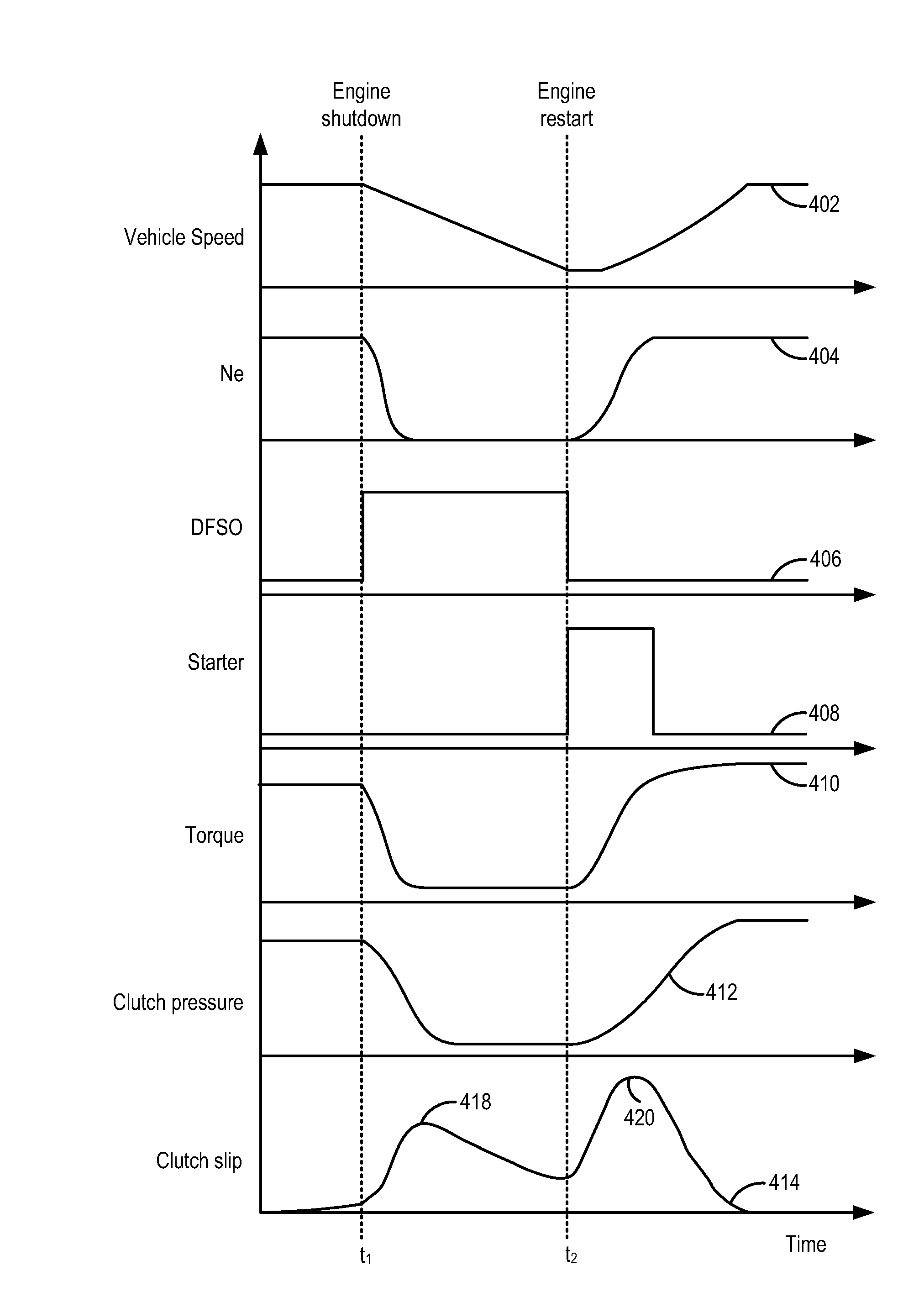
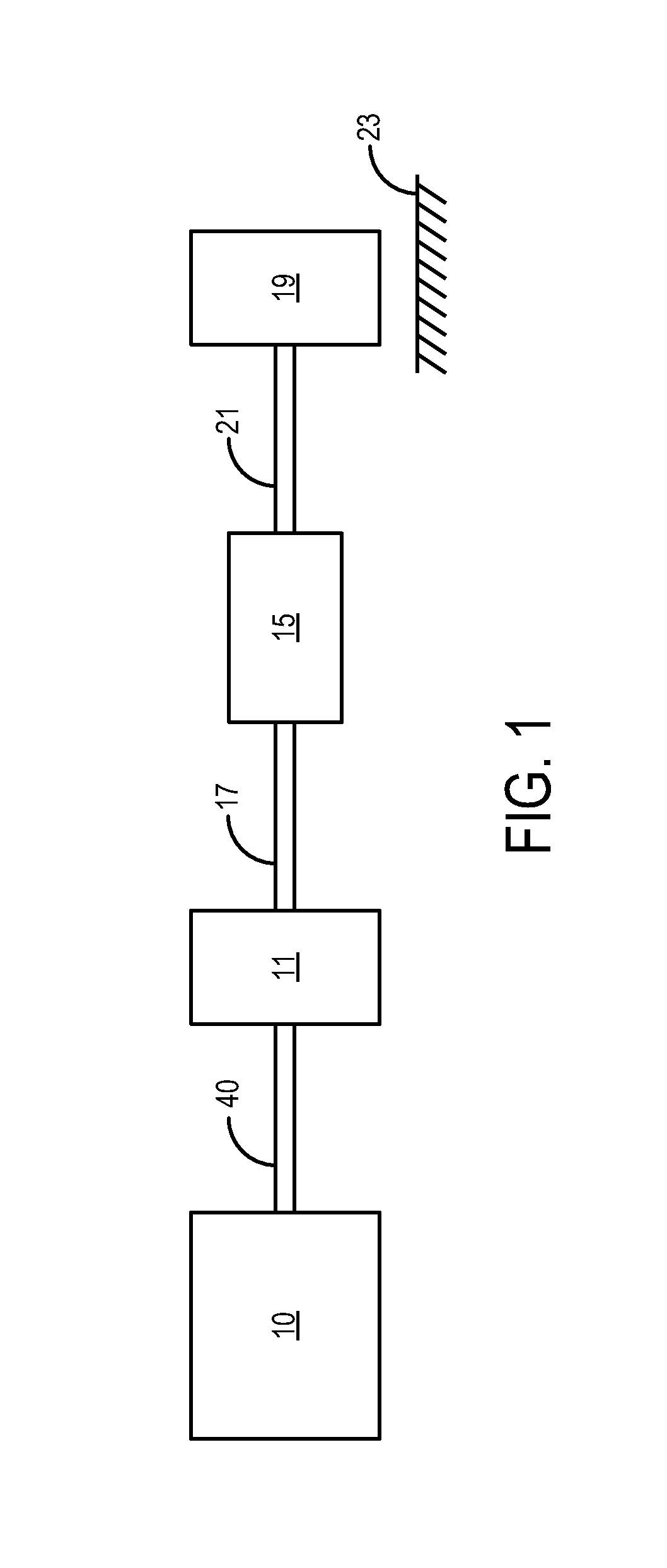
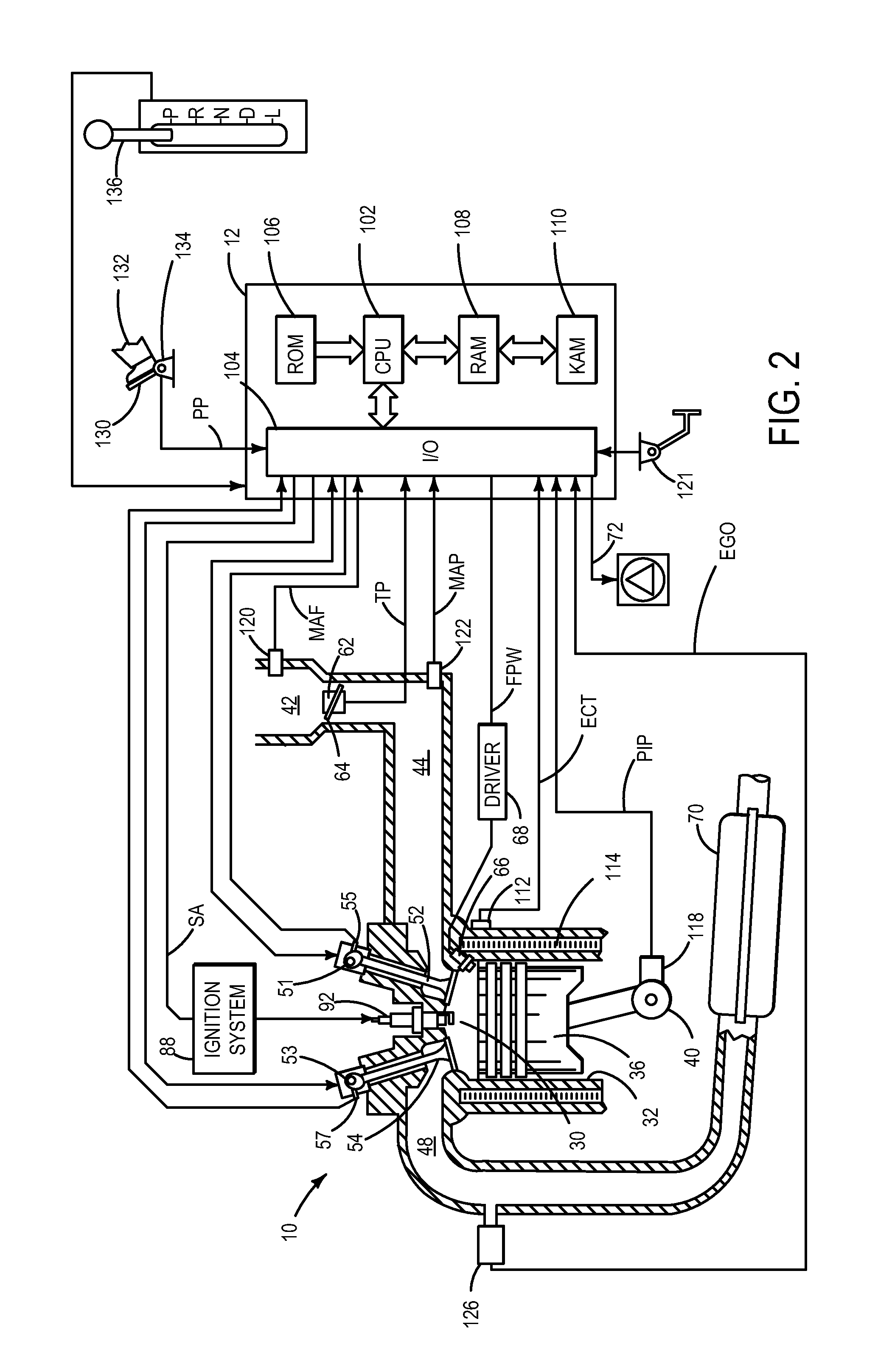
[0014]The following description relates to a method for controlling an internal combustion engine coupled to a stepped gear ratio transmission in a motor vehicle, such as in the vehicle system of FIG. 1. During vehicle coasting conditions (for example, when the accelerator pedal is not pressed, and the brakes are not applied), an engine may be turned off and allowed to spin-down to rest while the vehicle is traveling. As described herein, in some embodiments, the transmission may be disengaged (for example, partially disengaged) and the clutches may be slipped while the engine is shut down to reduce the wheel torque applied on the engine by the moving wheels. The transmission may then be maintained in gear until and during a subsequent restart request. During the restart, while the engine is cranked with a starter and while the vehicle is still traveling, the engagement of the transmission may be adjusted using a controlled slip of a transmission clutch. For example, an amount of cl...
PUM
 Login to View More
 Abstract
Description
Claims
Application Information
 Login to View More