
Seal
a sealing lip and sealing technology, applied in the direction of engine seals, mechanical devices, engine components, etc., can solve the problem of needing to fasten magnetizable layers, and achieve the effect of increasing the pressure effect of the sealing lip against the mating ring
- Summary
- Abstract
- Description
- Claims
- Application Information
AI Technical Summary
Benefits of technology
Problems solved by technology
Method used
Image

Examples
Embodiment Construction
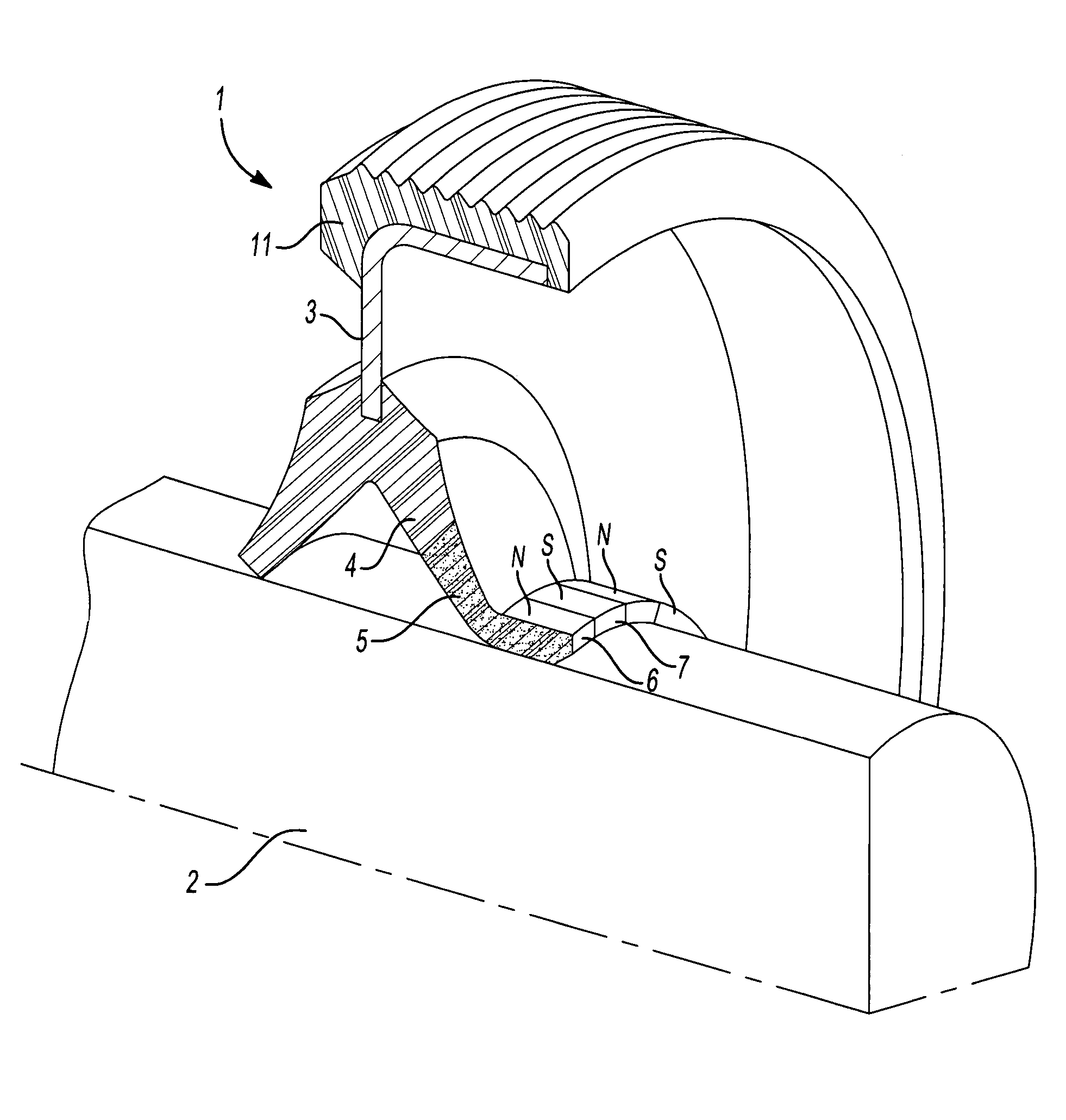
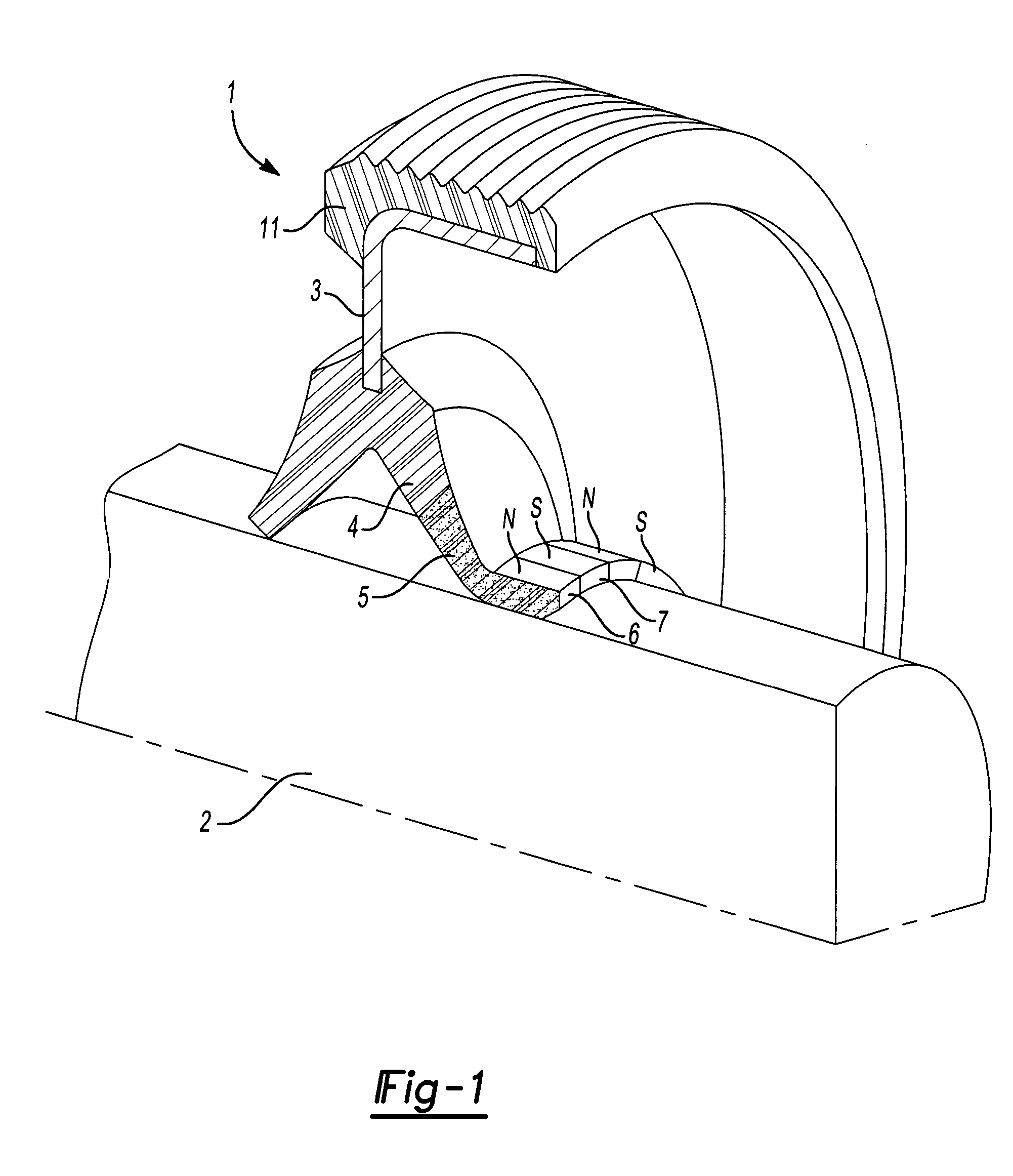
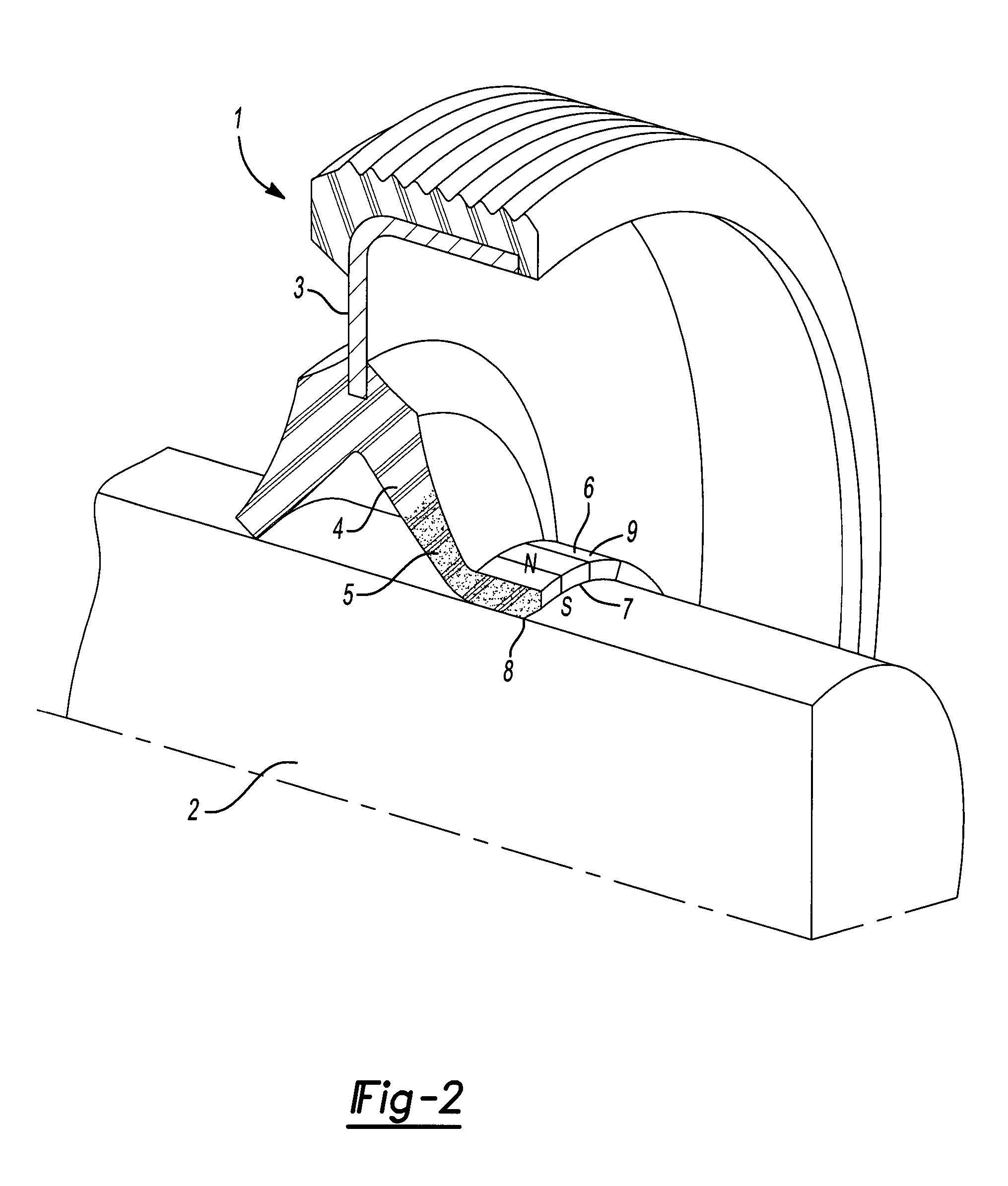
[0018]FIG. 1 shows a seal 1, which is formed as a radial shaft sealing ring and serves for sealing a shaft 2. The seal 1 has a supporting ring 3, which comprises a punched metal part. Fastened to the supporting ring 3 is a sealing lip 4 for dynamically sealing the shaft 2 and a static seal 11 for sealing the housing bore. The sealing lip 4 is made to protrude in a flared manner, the protruded form having been imparted to the sealing lip 4 already before it is put to the intended use. The static seal 11 and the dynamically sealing sealing lip 4 are formed from a polymeric material. The sealing lip 4 is in this case formed from rubber and may partially be given by rubber elongation and comprises ferromagnetic particles 5 in a proportion of 30% to 50%. The average diameter of the particles 5 is 30 nm. The sealing lip 4 with the particles 5 was magnetized on a magnetizing tool, so that pressing of the sealing lip 4 against the shaft 2 takes place by magnetic interaction. In this configu...
PUM
 Login to View More
 Abstract
Description
Claims
Application Information
 Login to View More