
Secure active element machine
a technology of active elements and active elements, applied in the field of computing, can solve the problems of difficult apprehending of adversaries, hijacking with malware, and difficult use of aem computations, and achieve the effect of enhancing the capability of a computational procedur
- Summary
- Abstract
- Description
- Claims
- Application Information
AI Technical Summary
Benefits of technology
Problems solved by technology
Method used
Image

Examples
case 1
[0322] Element A fires at time t=0 and element B doesn't fire at t=0.
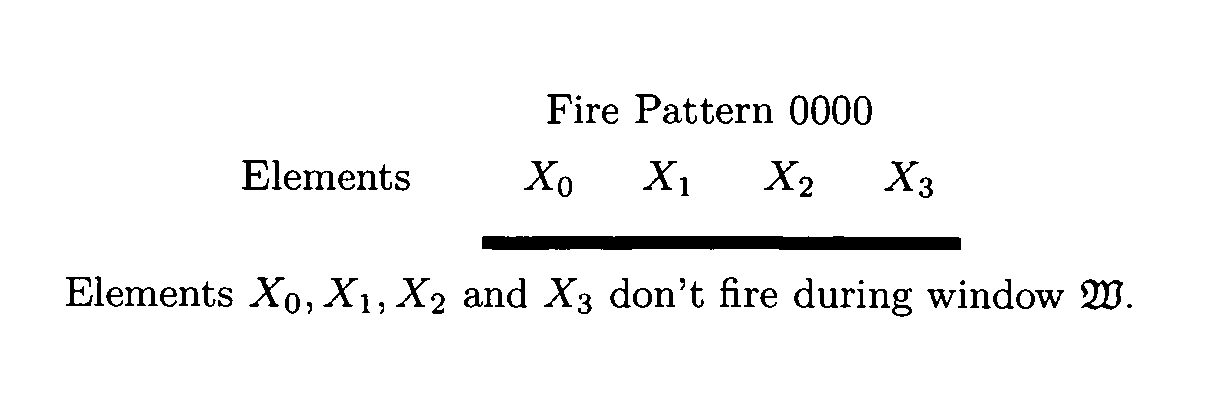
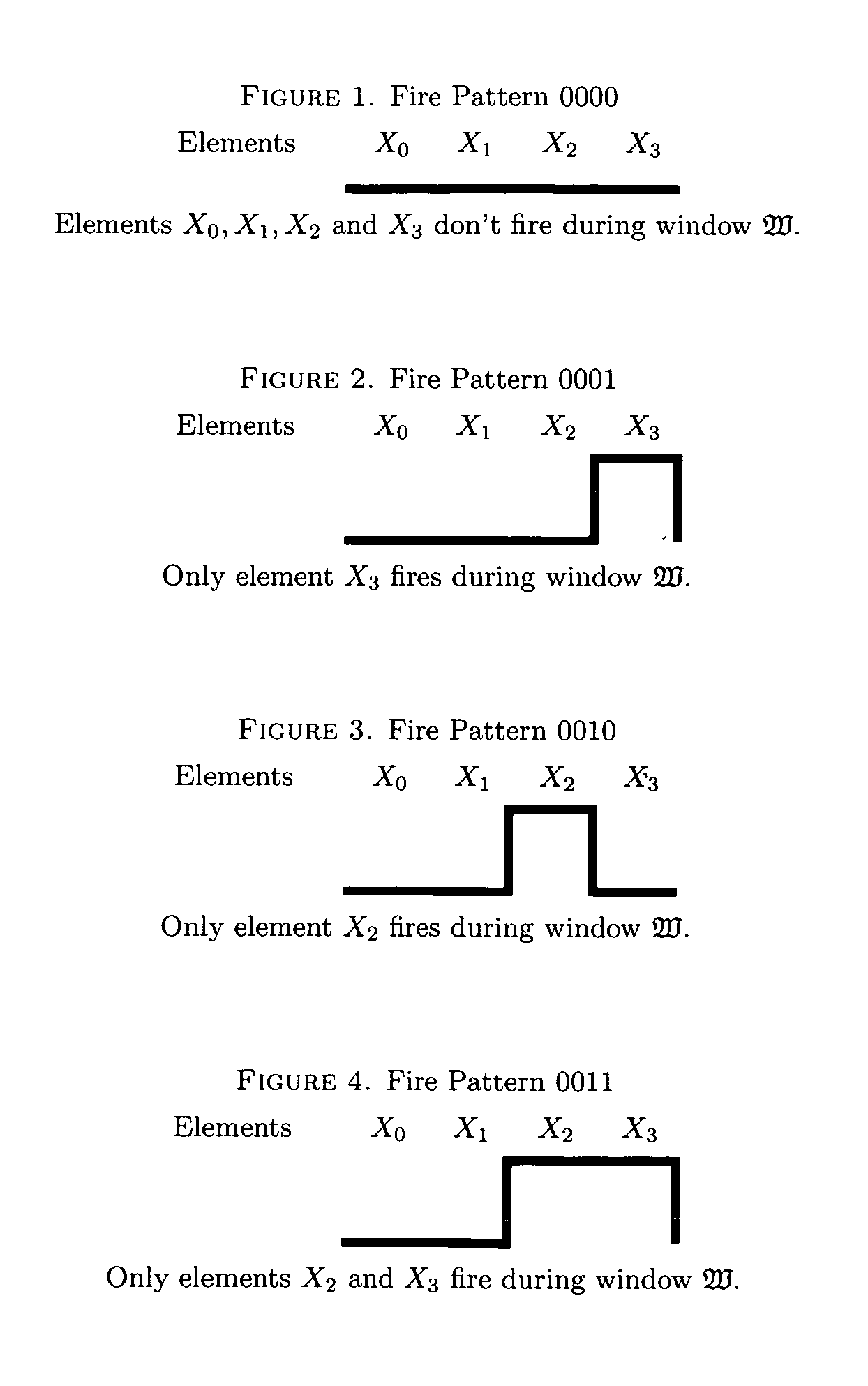
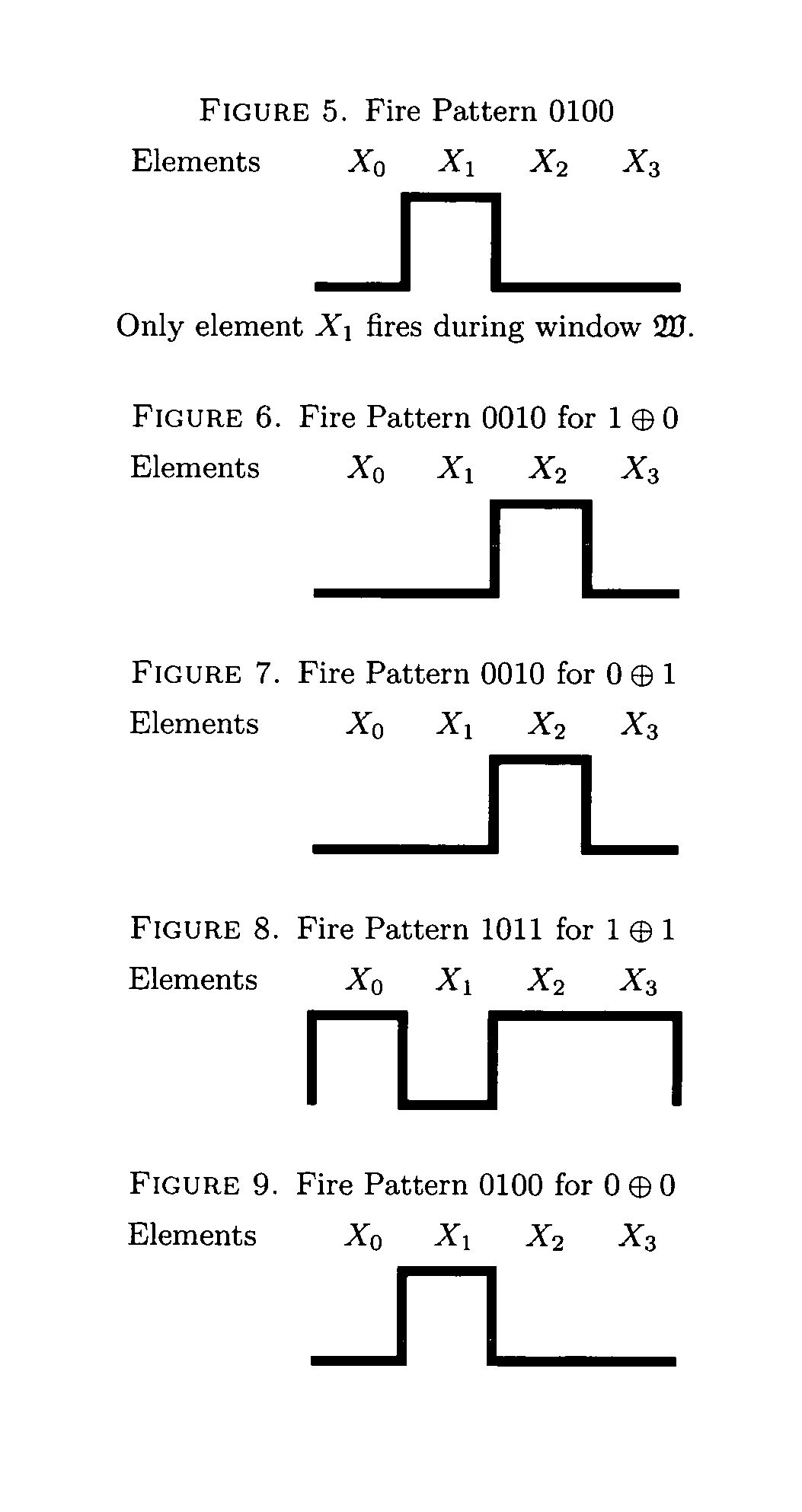
[0323]Element X0 receives a pulse from A with amplitude 2 at time t=2. Element X0 doesn't fire because its threshold=3. Element X1 receives a pulse from A with amplitude −2 at time t=2. Element X1 doesn't fire during W because X1 has threshold=−1. Element X2 receives a pulse from A with amplitude 2. Element X2 fires at time t=2 because its threshold is 1. Element X3 receives a pulse from A with amplitude 2 but doesn't fire during window W because X3 has threshold=3.
case 2
[0324] Element X0 receives a pulse from B with amplitude 2 at time t=2.
[0325]Element X0 doesn't fire because its threshold=3. Element X1 receives a pulse from B with amplitude −2 at time t=2. Element X1 doesn't fire during W because X1 has threshold=−1. Element X2 receives a pulse from B with amplitude 2. Element X2 fires at time t=2 because its threshold is 1. Element X3 receives a pulse from B with amplitude 2, but doesn't fire during window W because X3 has threshold=3.
case 3
[0326] Element A fires at time t=0 and element B fires at t=0.
[0327]Element X0 receives two pulses from A and B each with amplitude 2 at time t=2. Element X0 fires because its threshold=3. Element X1 receives two pulses from A and B each with amplitude −2 at time t=2. Element X1 doesn't fire during W because X1 has threshold=−1. Element X2 receives two pulses from A and B each with amplitude 2. Element X2 fires at time t=2 because its threshold is 1. Element X3 receives two pulses from A and B each with amplitude 2. Element X3 fires at time t=2 because X3 has threshold=3.
PUM
 Login to View More
 Abstract
Description
Claims
Application Information
 Login to View More