

CGRP agonist peptides
a peptide and cgrp technology, applied in the field of peptide agonists, can solve the problems of difficult vivo pharmacological studies of native cgrp, and achieve the effects of increasing ampk, increasing glycolysis in a subject, and activating in a subj
Patent Information
- Authority / Receiving Office
- US · United States
- Patent Type
- Patents(United States)
- Current Assignee / Owner
- Publication Date
- 2018-04-24
Smart Images
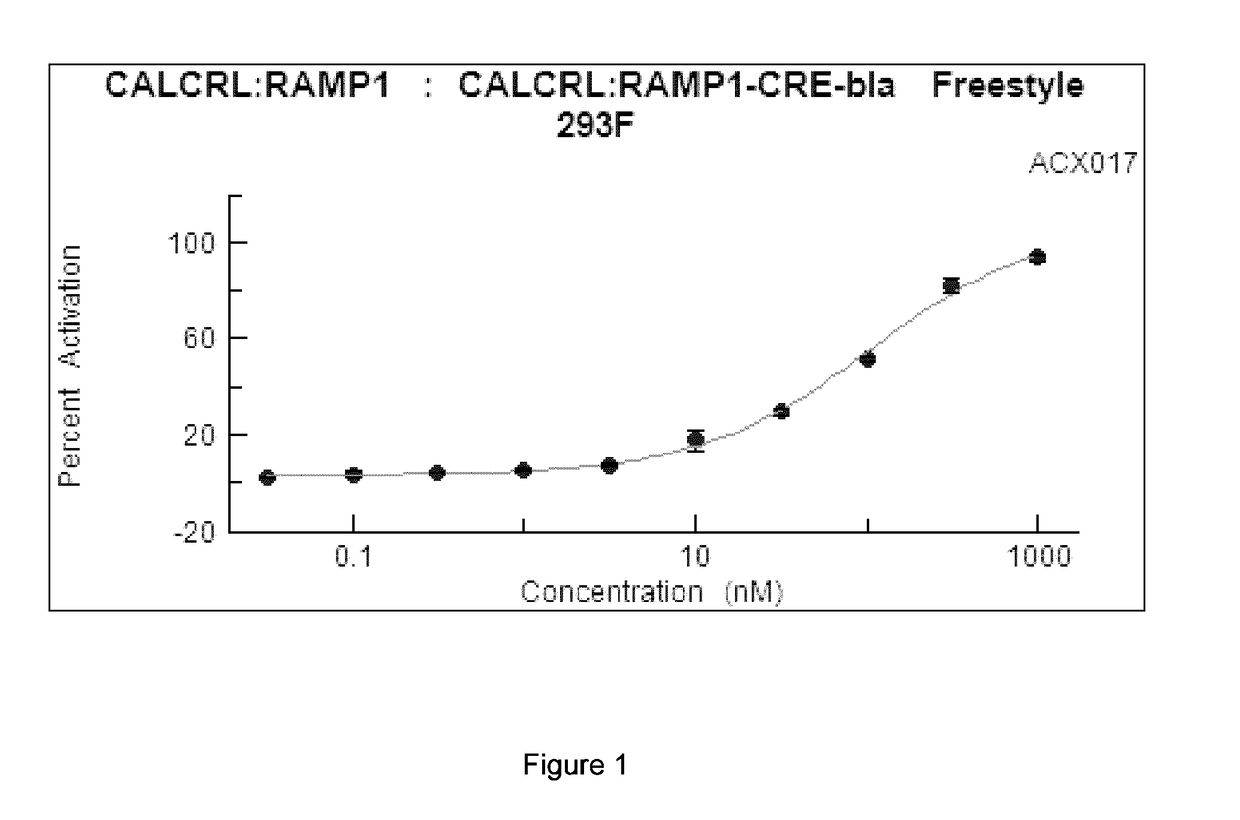
Figure 1 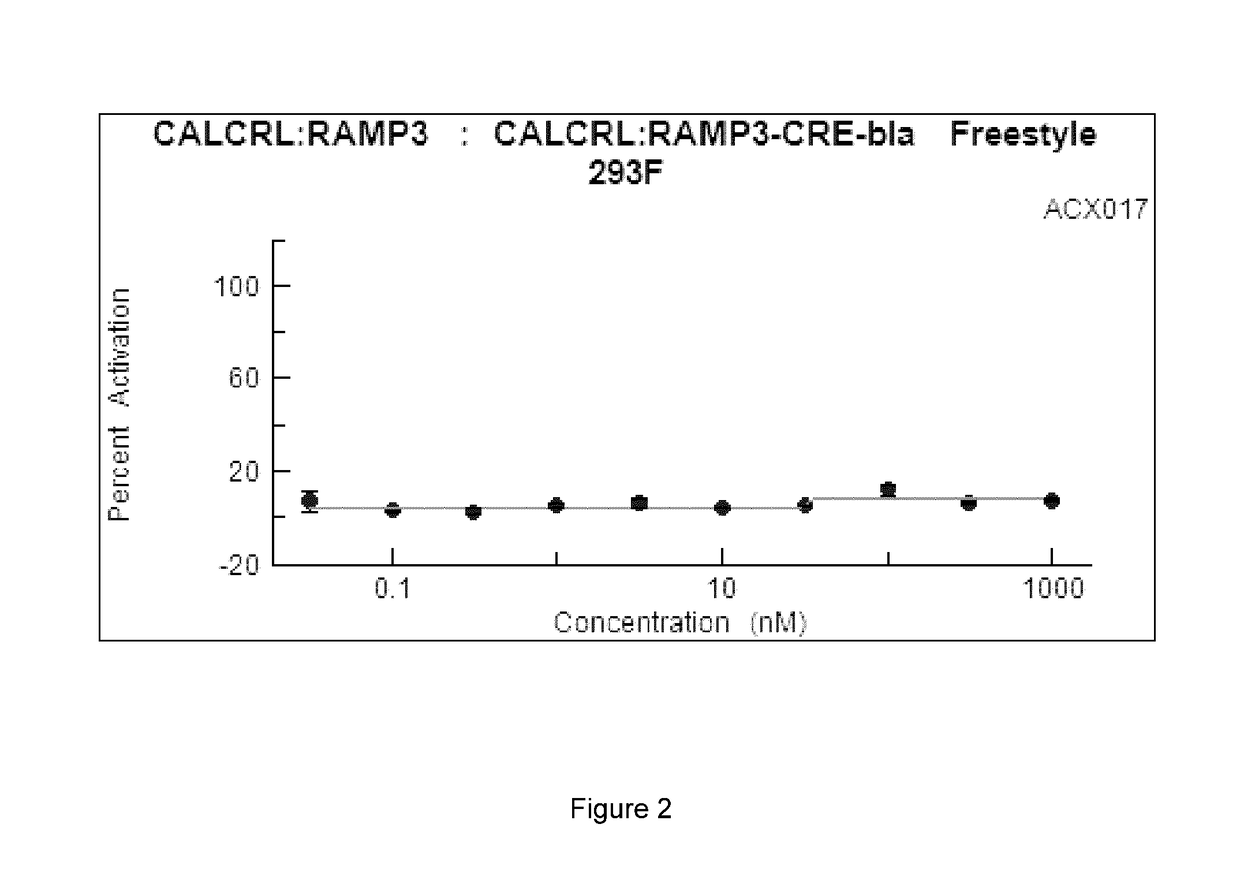
Figure 2 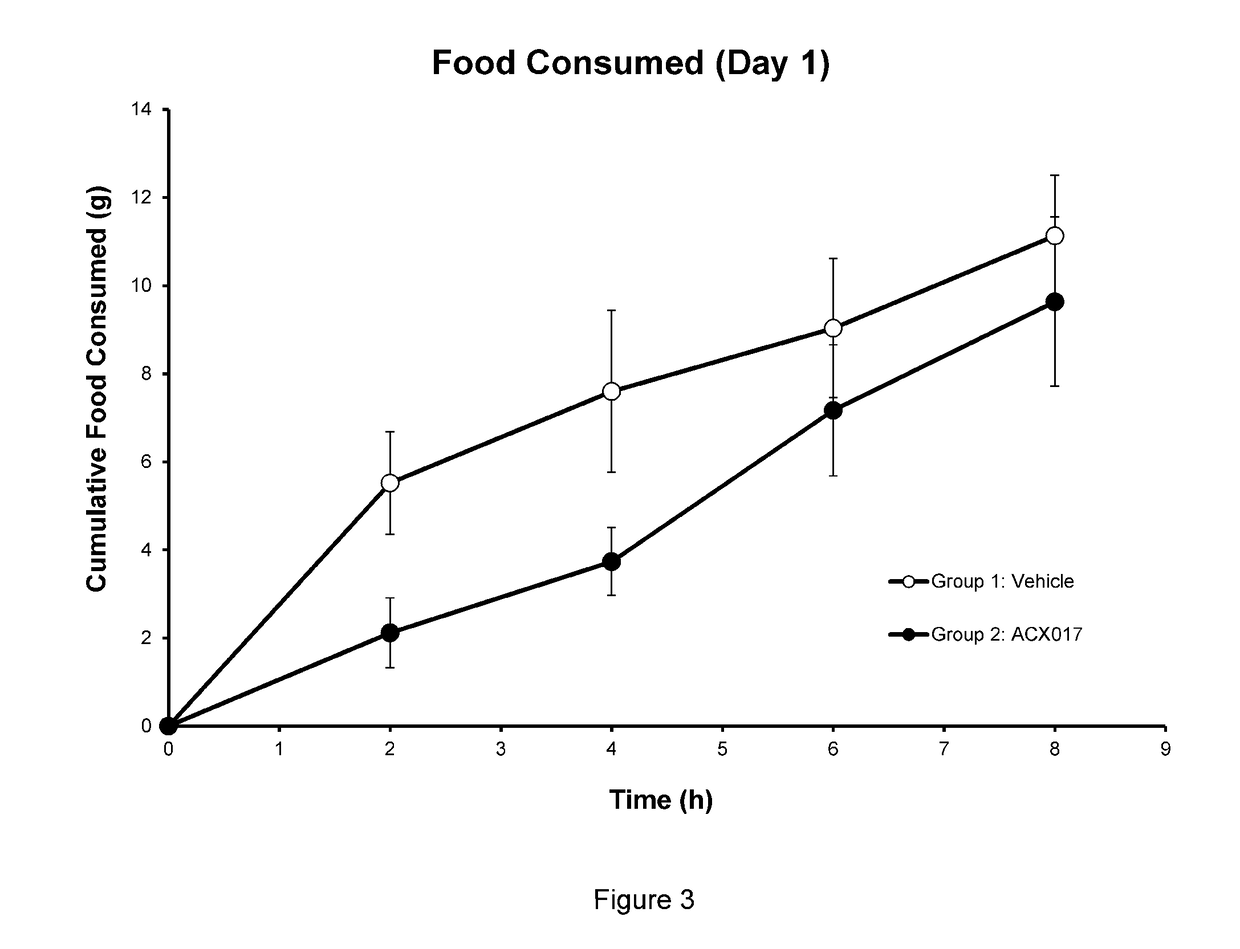
Figure 3
Abstract
Description
CROSS REFERENCE TO RELATED APPLICATIONS
[0001] This application is a U.S. National Phase Application of PCT International Application Number PCT / US2014 / 048724, filed on. Jul. 29, 2014, designating the United States of America and published in the English language. This application further claims priority to U.S. Provisional Patent Application 61 / 860,244 filed on Jul. 30, 2013 and entitled “CGRP AGONIST PEPTIDES.” The disclosures of the above-referenced applications are hereby expressly incorporated by reference in their entirety.REFERENCE TO SEQUENCE LISTING
[0002] The present application is being filed along with a sequence listing in Electronic format. The Sequence Listing is provided as a file entitled CSOAR.002W0 SECOND REVISION.TXT, created Jan. 5, 2016, which is approximately 8 kb in size. The information in the electronic format of the sequence listing is incorporated herein by reference in its entirety in its entirety.BACKGROUND OF THE INVENTION
[0003] Field of the Invention
[0004] ...
Examples
example 1
[0086]Cell-based GPCR Profiling Assays. A representative CGRP agonist peptide according to the present invention, ACX017 (SEQ ID NO:1), was profiled against G-Protein Coupled Receptors (GPCRs) in cell-based assays to determine its agonist activity and dose response. Results of the CGRP and adrenomedullin receptor screens are provided below. Assays were performed using the SelectScreen® Cell-based GPCR Profiling Services by Life Technologies, Carlsbad, Calif.
CALCRL:RAMP1 CRE-bla Freestyle 293F—Agonist Screen (CGRP Receptor)
[0087]CALCRL:RAMP1-CRE-bla Freestyle 293F cells were thawed and resuspended in Assay Media (DMEM, 10% dialyzed FBS, 25 mM HEPES pH 7.3, 0.1 mM NEAA, 100 U / mL / 100 μg / mL Pen / Strep) to a concentration of 312,500 cells / mL. 32 μL of cell suspension (10,000 cells) was added to each well of a 384-well Poly-D-Lysine assay plate. Cells in Assay Media were incubated for 16-24 hours in the plate at 37° C. / 5% CO2 in a humidified incubator. 4 μL of a 10× serial dilution of CGRP...
example 2
[0095]Food Intake Study. The effect of a CGRP agonist, in accordance with the present invention, on food intake over time both within and across several days of treatment was evaluated. Study was performed by Explora BioLabs, San Diego, Calif. and animals treated in accordance with its IACUC standards.
[0096]Sprague Dawley Rats, male, 400 g body weight (˜12-14 wks old) were acclimated for at least seven days to housing environment and a 12 hour light / dark reverse cycle (light overnight / dark during the day. Animals were purpose-bred, specific pathogen-free, and experimentally naïve at the start of the study. Animals had ad libitum access to special Rodent Diet with 60% kcal % fat (D12492, Research Diets, New Brunswick, N.J.) and acidified water (pH 2.5-3.0) from arrival throughout the end of the study. Body weight at study initiation was at least 450 g. Animals that had: 1) significantly low body weight, 2) severe dehydration, or 3) wounds from fighting were excluded from the study.
[0...