

Bismuth-base glass composition and bismuth-base material
A technology of bismuth-based glass and composition, which is applied in the direction of electrode system manufacturing, exhaust connection/feeding, cathode ray/electron beam tube shell/container, etc. Stability and other issues, to achieve the effect that the thermal expansion coefficient is not easy to change, and the airtight reliability is ensured
- Summary
- Abstract
- Description
- Claims
- Application Information
AI Technical Summary
Problems solved by technology
Method used
Image

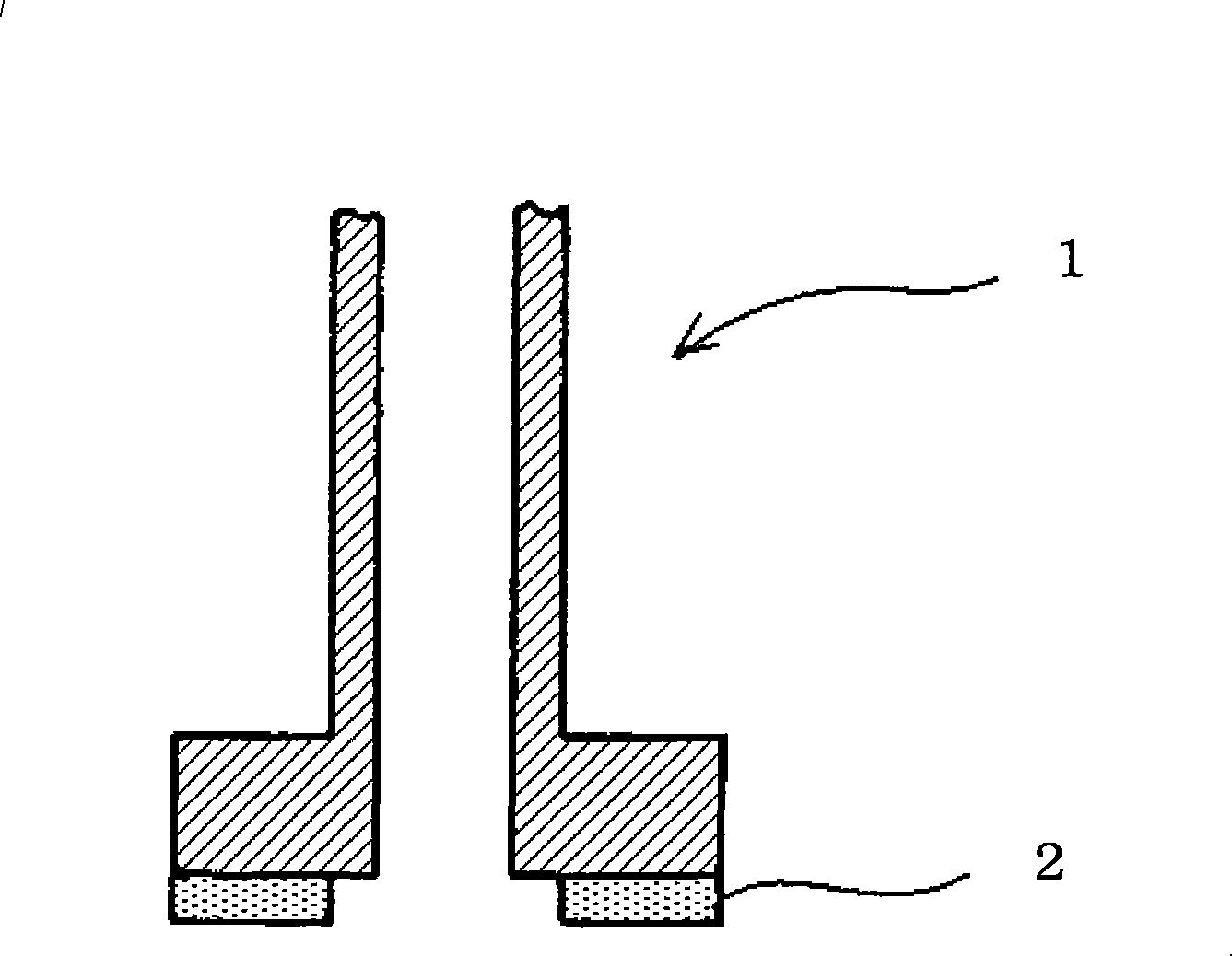
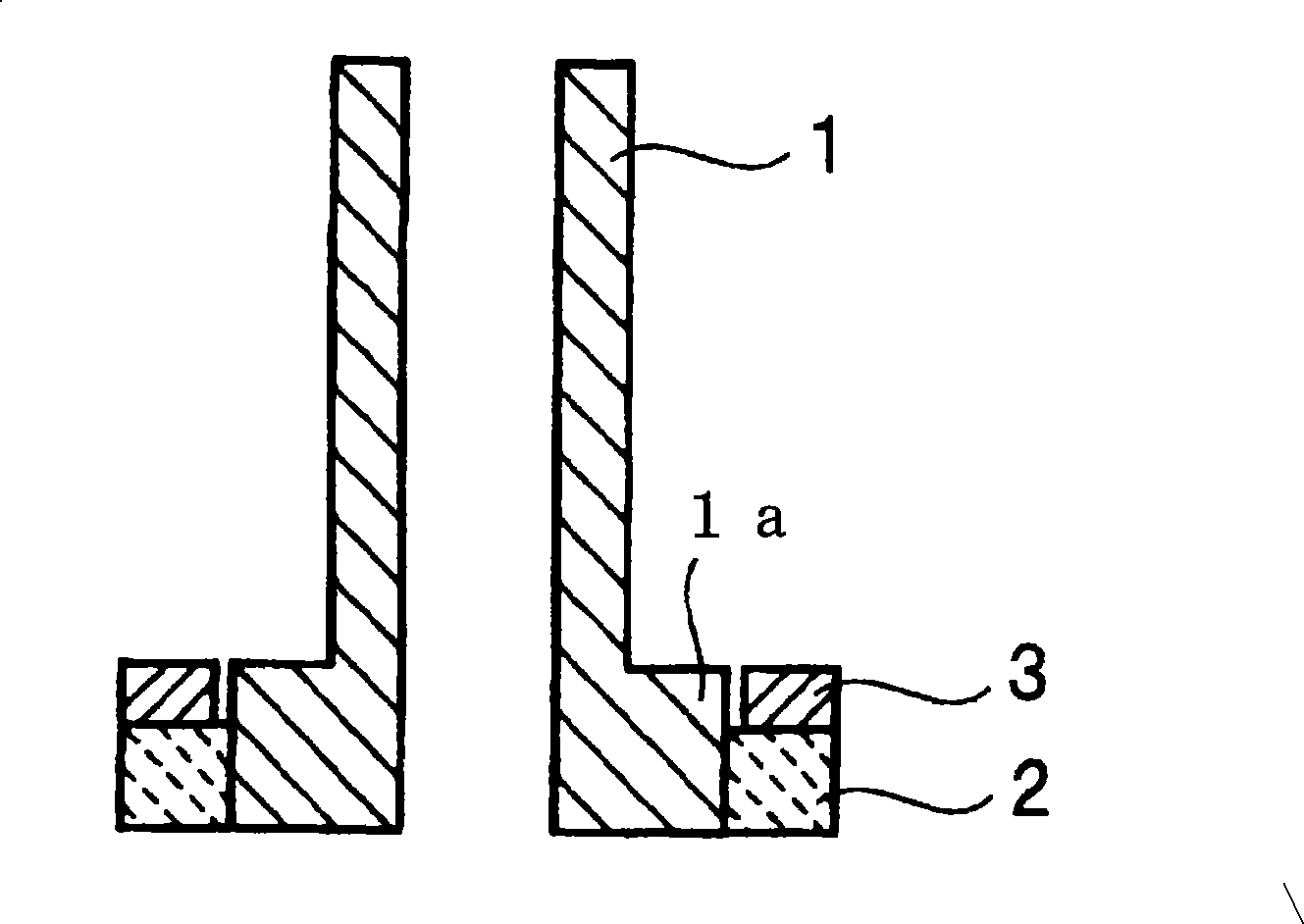
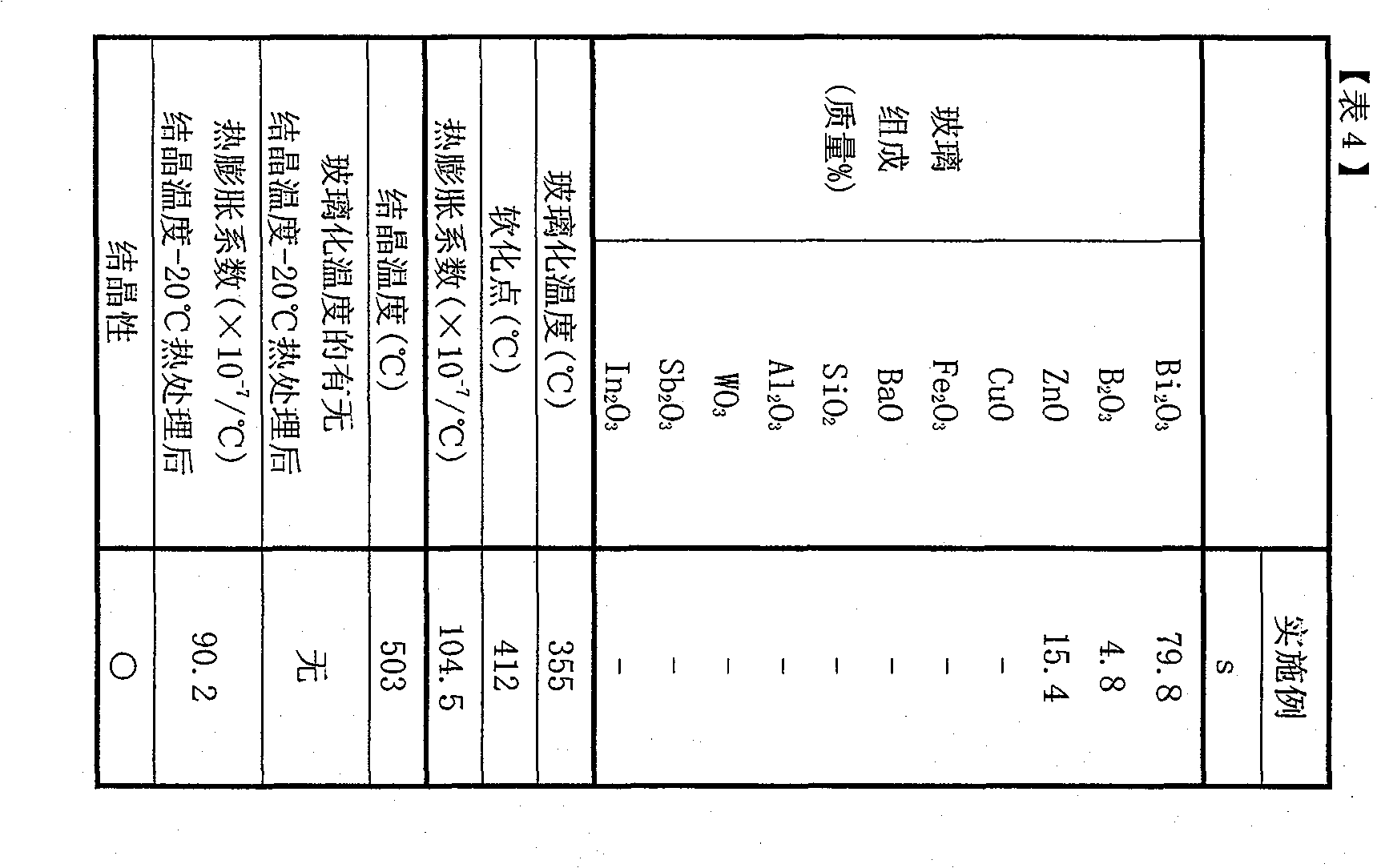
Examples
Embodiment Construction
[0036] In the bismuth-based glass composition of the present invention, the reason for limiting the glass composition range as described above is as follows. In addition, the following % shows mass % except the case where it is specifically limited.
[0037] Bi 2 o 3 It is a main component for lowering the softening point of glass, and it is also a component that becomes a structural component of precipitated crystals. Its content is 60-84%, preferably 65.1-79.9%, more preferably 67-79.3%, further preferably 72-77%, especially preferably 75-less than 77%. If Bi 2 o 3 If the content of Al is less than 60%, the softening point will rise, and it will be difficult to seal at a temperature below 500°C. If Bi 2 o 3 If the content of α is greater than 84%, the devitrification resistance of the glass will deteriorate, and before softening in the sealing process, crystals will precipitate on the glass, making it difficult to function as a sealing material.
[0038] B 2 o 3 It...
PUM
| Property | Measurement | Unit |
|---|---|---|
| crystallization temperature | aaaaa | aaaaa |
| softening point | aaaaa | aaaaa |
| thermal resistance | aaaaa | aaaaa |
Abstract
Description
Claims
Application Information
 Login to View More