Resistance type random access memory structure and manufacturing method thereof
A resistive random access memory technology, applied in static memory, read-only memory, digital memory information, etc., can solve problems such as difficulty in interpreting component signals
- Summary
- Abstract
- Description
- Claims
- Application Information
AI Technical Summary
Problems solved by technology
Method used
Image

Examples
Embodiment Construction
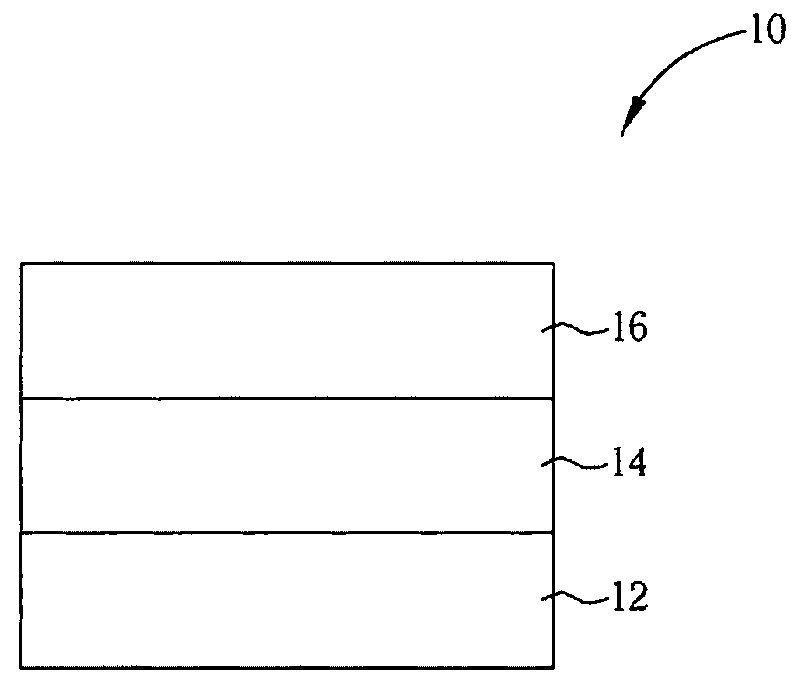
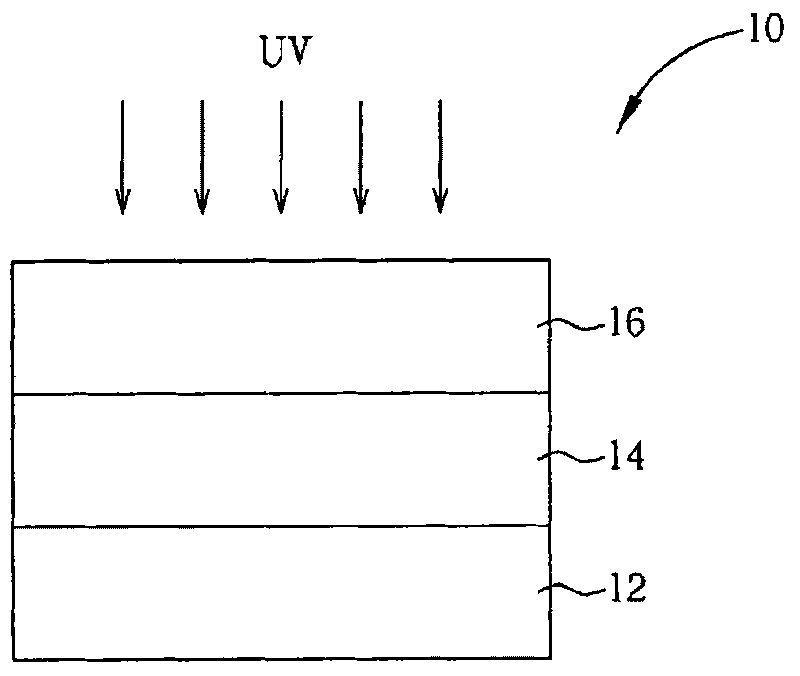
[0021] Figure 2 to Figure 3 What is shown is a schematic diagram of the manufacturing method of the resistive random access memory of the present invention. First, if figure 2 As shown, after deposition, sputtering, exposure, development, etching and other steps, the lower electrode 12, the resistive layer 14, and the upper electrode 16 are respectively formed as the resistive random access memory 10. The lower electrode 12 can be made of titanium (Ti), titanium nitride (TiN), tantalum (Ta), tantalum nitride (TaN), tungsten (W), tungsten nitride (WN), platinum (Pt), gold (Au ), copper (Cu), copper-aluminum alloy (AlCu) and other conductive materials are used as electrode materials, but oxygen-free conductive materials are preferred. The material that resistance layer 14 can use is for example: titanium oxide (TiO), nickel oxide (NiO), tungsten oxide (WO 3 ), zirconia (ZrO), copper oxide (CuO), hafnium oxide (HfO), tantalum oxide (TaO), zinc oxide (ZnO), aluminum oxide (Al...
PUM
| Property | Measurement | Unit |
|---|---|---|
| Wavelength | aaaaa | aaaaa |
Abstract
Description
Claims
Application Information
 Login to View More
 - R&D
- Intellectual Property
- Life Sciences
- Materials
- Tech Scout
- Unparalleled Data Quality
- Higher Quality Content
- 60% Fewer Hallucinations
Browse by: Latest US Patents, China's latest patents, Technical Efficacy Thesaurus, Application Domain, Technology Topic, Popular Technical Reports.
© 2025 PatSnap. All rights reserved.Legal|Privacy policy|Modern Slavery Act Transparency Statement|Sitemap|About US| Contact US: help@patsnap.com