
Vacuum light well point dewatering method
A light well point and vacuum technology, applied in drainage, earthwork drilling, safety devices, etc., to achieve strong operability, simple installation, and good precipitation effect
Patent Information
- Authority / Receiving Office
- CN · China
- Patent Type
- Applications(China)
- Current Assignee / Owner
- Publication Date
- 2011-12-14
- Estimated Expiration
- Not applicable · inactive patent
Smart Images
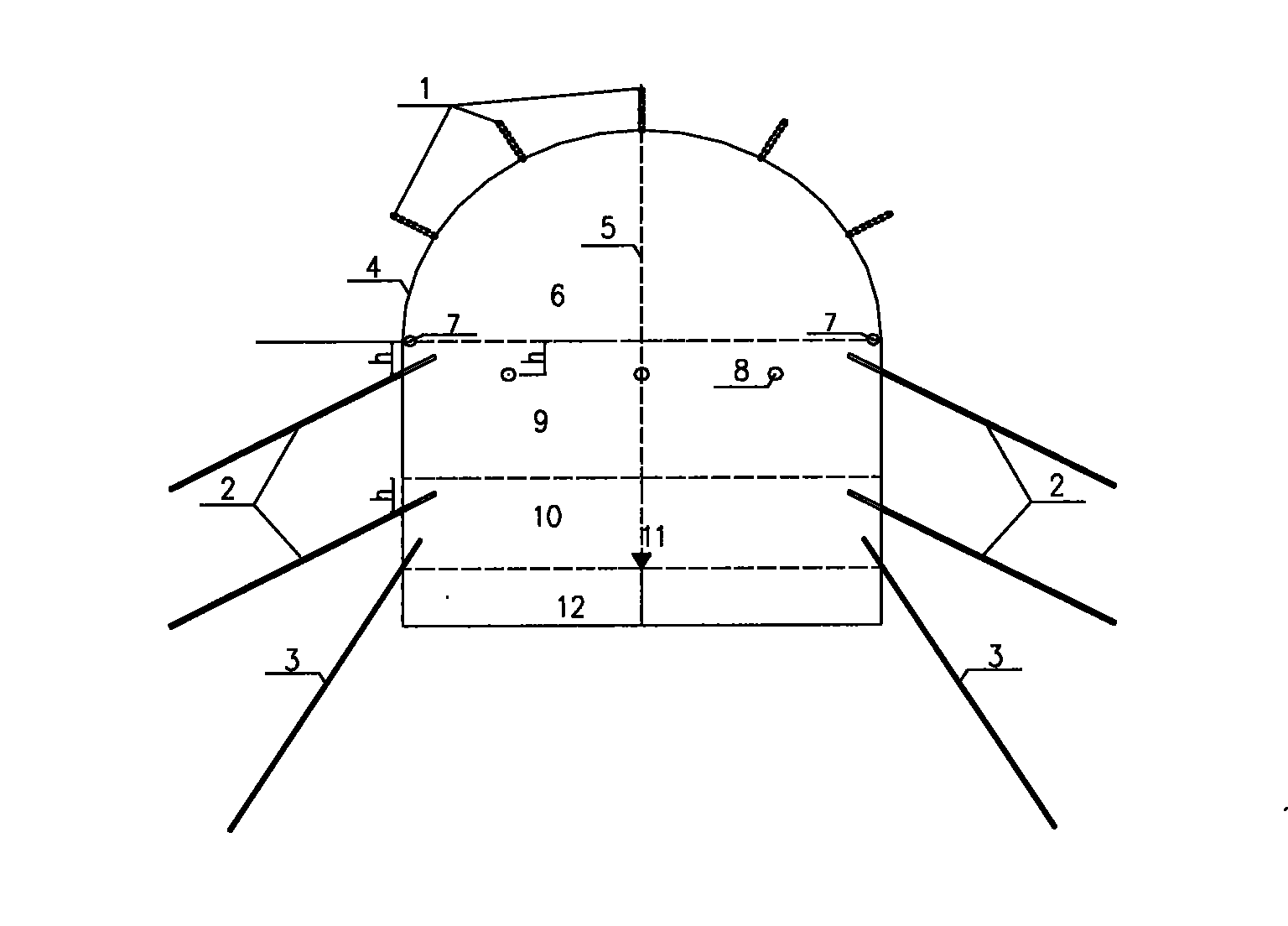
Figure 1 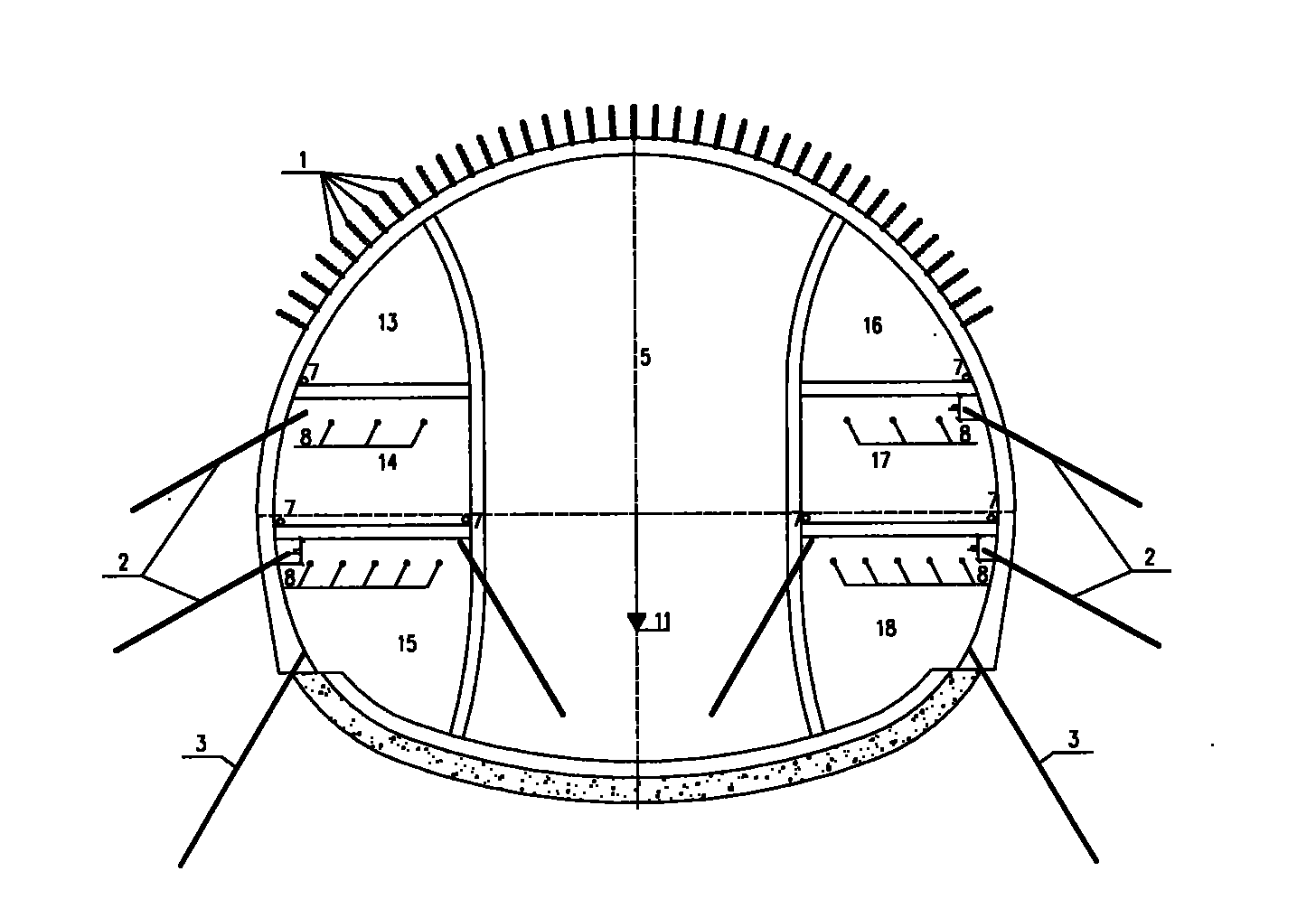
Figure 2 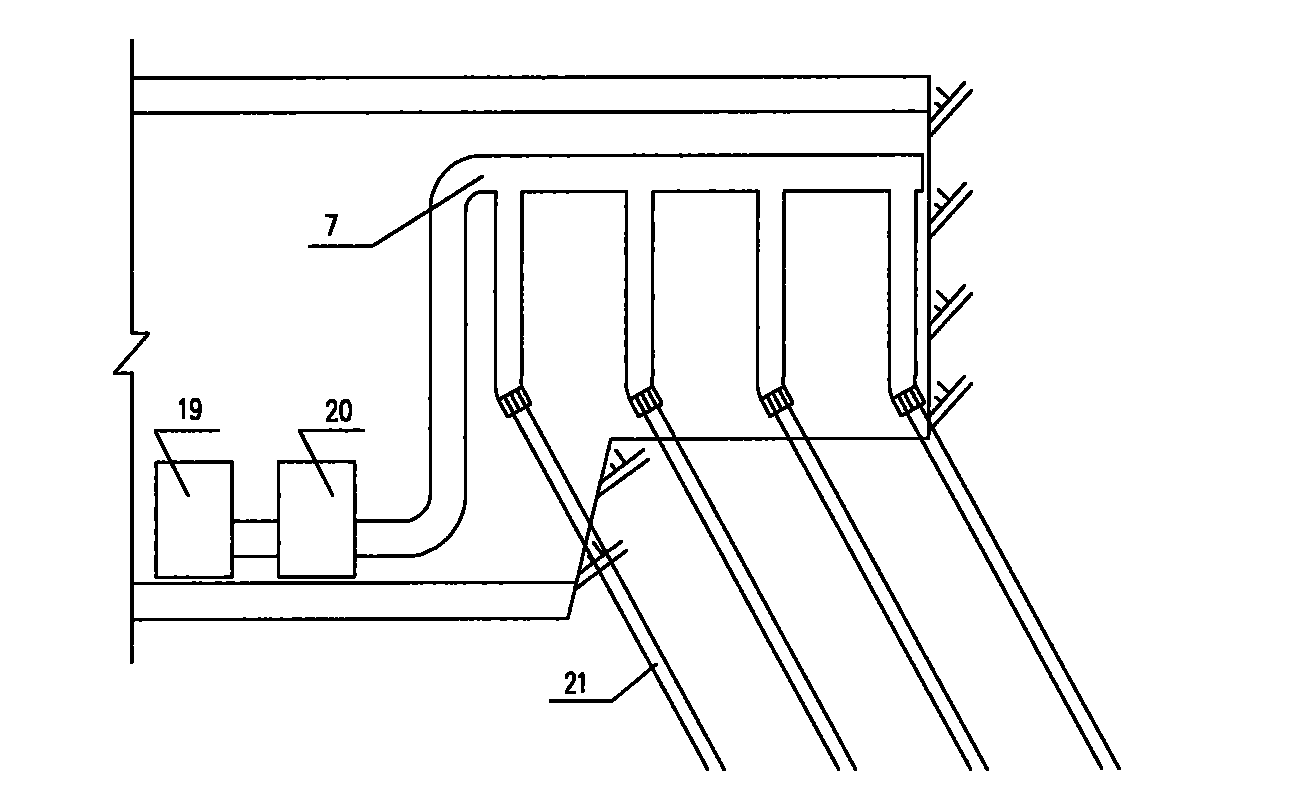
Figure 3
Abstract
Description
technical field
[0001] The invention relates to the application of a vacuum light well point dewatering method in tunnel construction. Background technique
[0002] With the development of the national economy, the number of tunnels in railway construction is increasing day by day. In the construction of domestic tunnels, due to the limitation of tunnel selection conditions, individual tunnels must pass through some poor hydrological and geological conditions, which virtually increases the difficulty of tunnel construction. For example, Taoshuping Tunnel, the geological surrounding rock is Tertiary water-rich, weakly cemented silty sandstone, with a permeability coefficient of 8.1×10 -4 cm / s~9.26×10 -4 cm / s, the daily average water inflow in the cave is 570m 3 Above, it is designed as a single-hole double-lane tunnel with a length of 3225m. The whole tunnel is surrounded by grade VI surrounding rock. The construction is difficult and extremely risky. Precipitation is the...
Examples
Embodiment Construction
[0034] Next, take the 50.7m inclined shaft and the 505m main tunnel construction project left over from the previous construction in the 4# inclined shaft of the Lanzhou-Chongqing Railway Taoshuping Tunnel undertaken by the applicant as an example to introduce the vacuum light well point dewatering method of the present application. The angles, distances, lengths, number of downcomers and material selection involved are all determined according to the actual situation of the specific project and combined with common sense in the field. Those skilled in the art should know that these angles, distances, lengths, number of downwater pipes and material selection are not limited to those described here, and appropriate selections can be made according to actual engineering needs to achieve a good precipitation effect.
[0035] For details on the layout of downpipes in inclined shafts, see figure 1 , see the layout of the downwater pipes in the construction of the double side walls ...