
A memory management method and device
A memory management and memory technology, applied in the storage field, can solve the problems of increased programming time, increased programming voltage, slow speed of non-volatile storage devices, etc., and achieves the effect of improved reliability
- Summary
- Abstract
- Description
- Claims
- Application Information
AI Technical Summary
Problems solved by technology
Method used
Image

Examples
Embodiment Construction
[0024] In order to make the purpose, technical solutions and advantages of the embodiments of the present invention clearer, the technical solutions in the embodiments of the present invention will be clearly and completely described below in conjunction with the drawings in the embodiments of the present invention. Obviously, the described embodiments It is a part of embodiments of the present invention, but not all embodiments. Based on the embodiments of the present invention, all other embodiments obtained by persons of ordinary skill in the art without creative efforts fall within the protection scope of the present invention.
[0025] Embodiments of the present invention are mainly applied to non-volatile storage devices such as SSDs, and SSDs are used as an example for introduction in embodiments of the present invention.
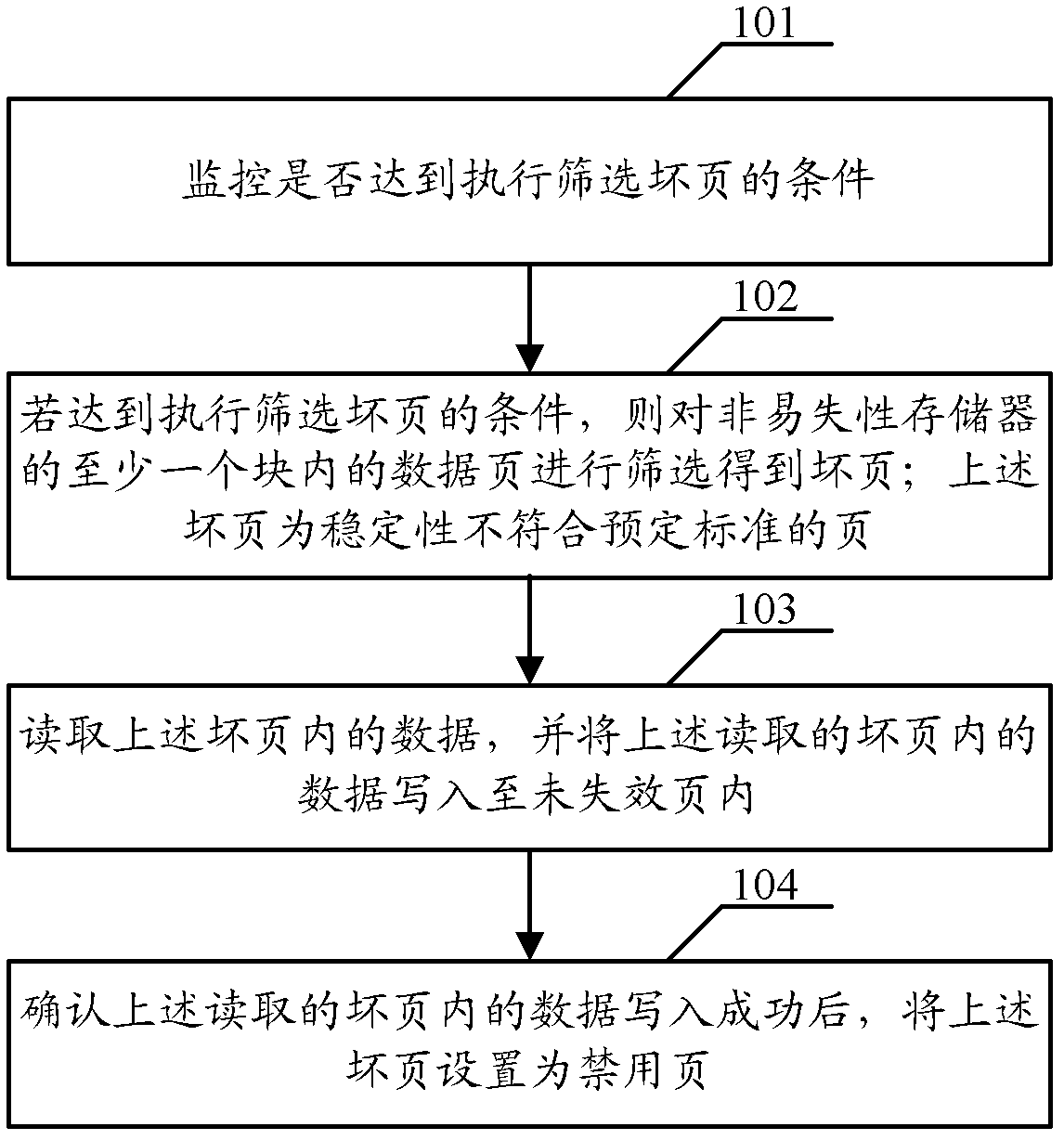
[0026] An embodiment of the present invention provides a memory management method, such as figure 1 shown, including:
[0027] 101: Monitor whethe...
PUM
 Login to View More
 Abstract
Description
Claims
Application Information
 Login to View More