
High-pressure pump
A high-pressure pump and pump piston technology, applied in the field of high-pressure pumps, can solve the problems of increased wear and tear in the contact area, and achieve the effects of reduced weight and good pressing force characteristics
- Summary
- Abstract
- Description
- Claims
- Application Information
AI Technical Summary
Problems solved by technology
Method used
Image

Examples
Embodiment Construction
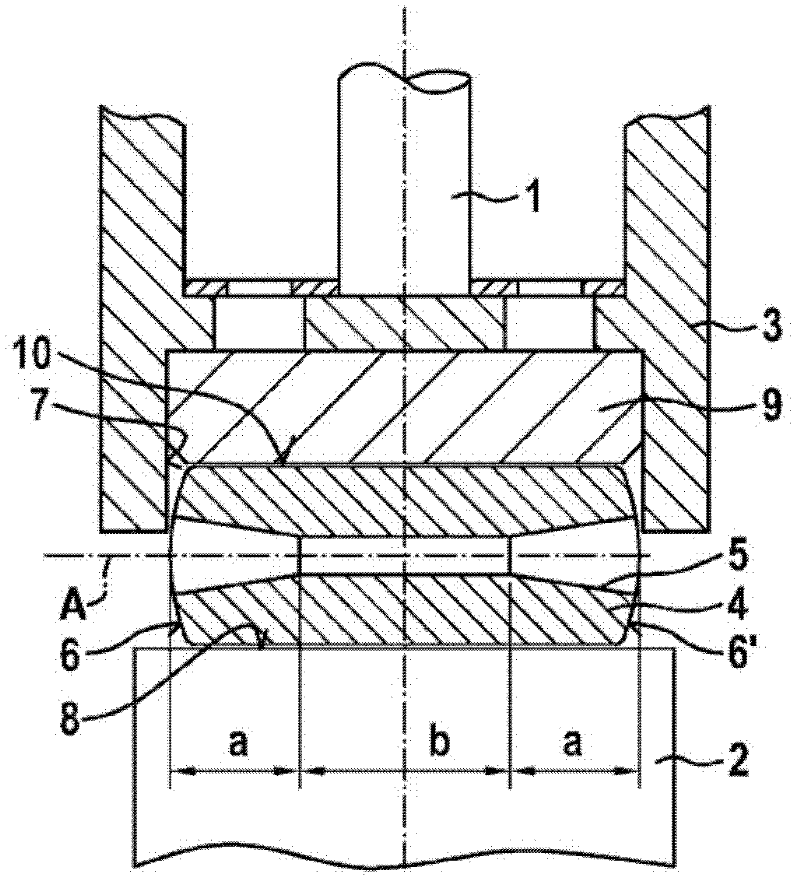
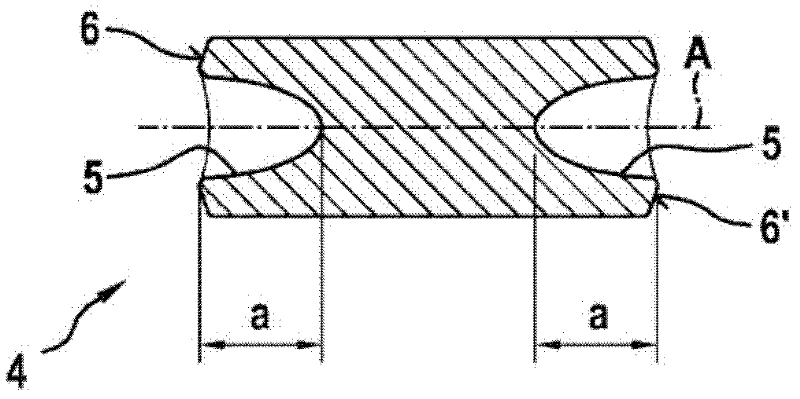
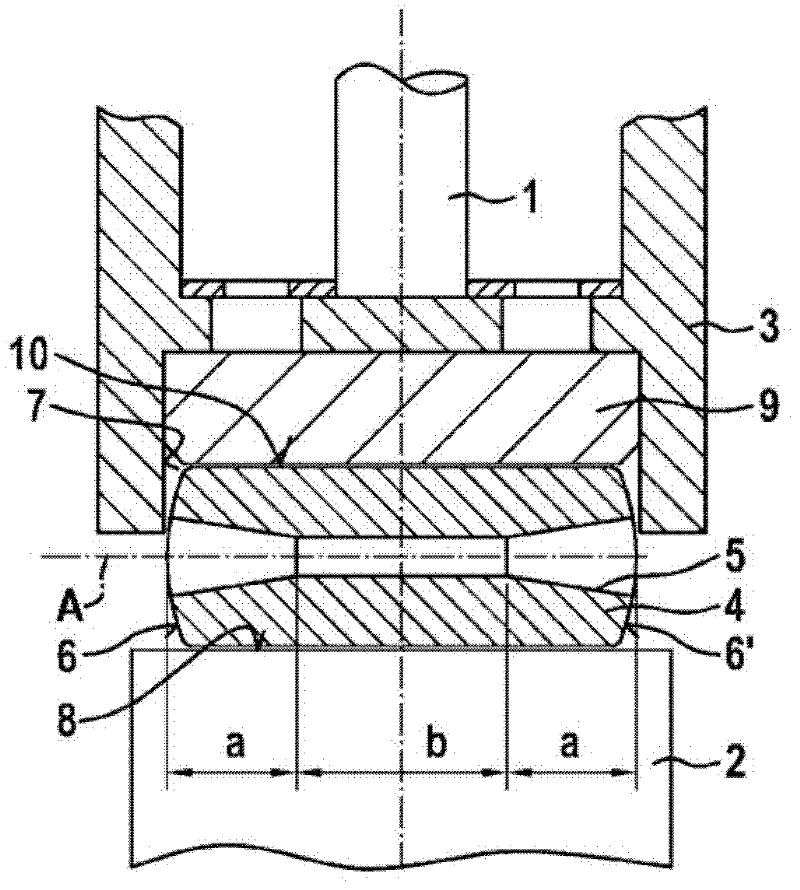
[0019] exist figure 1 The pump part of the high-pressure pump according to the invention shown in section in the middle has a pump piston 1 which is indirectly supported via a roller 4 on a cam 2 of a drive shaft (not shown). The roller 4 is received at least partially in a push rod 3 which has a pot-shaped end. For additional support of the roller 4 , a roller shoe 9 is also provided, which is arranged between the push rod 3 and the roller 4 . The rotation of the drive shaft is transmitted to the roller 4 through the cam 2, and the outer peripheral side of the roller rolls on the cam 2. The outer peripheral side of the cam 2 thus forms a rolling surface 8 . Due to the eccentricity of the cam 2 relative to the longitudinal axis of the drive shaft its rotational movement is converted into a linear movement of the pump piston 1 by the roller 4 held in the push rod 3 . In this case, especially the contact area of the roller 4 on the push rod 3 and on the running surface of t...
PUM
 Login to View More
 Abstract
Description
Claims
Application Information
 Login to View More