
Application of photocatalyst of TiO2 (titanium dioxide) loaded on glass fiber fabric to treating microcystin
A technology of glass fiber cloth and microcystin, which is applied in the field of environmental pollution control and water treatment technology, can solve the problems of insufficient effective oxidation capacity, low ozone utilization rate, and restrictions on popularization and application, and achieve good application transformation prospects, photocatalysis Increased activity and good light transmission performance
- Summary
- Abstract
- Description
- Claims
- Application Information
AI Technical Summary
Problems solved by technology
Method used
Image

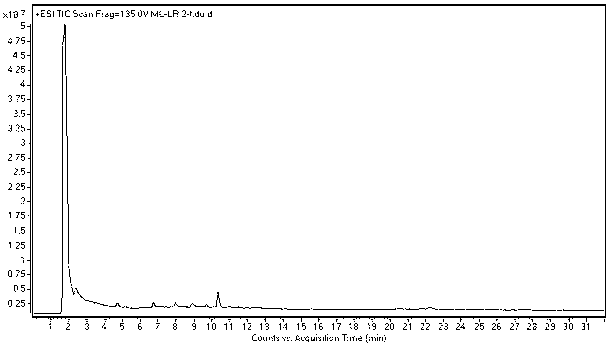
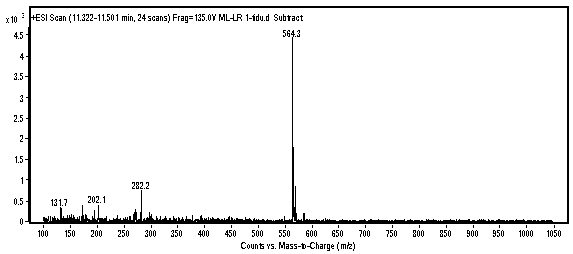
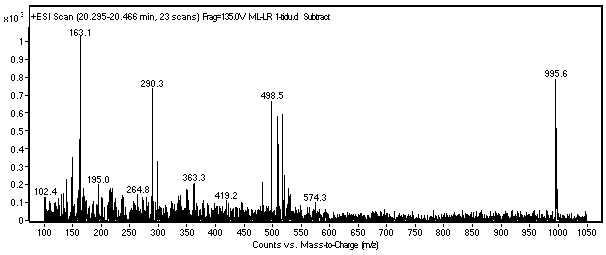
Examples
Embodiment 1
[0023] This kind of photocatalyst used in the treatment of microcystins is realized according to the following steps:
[0024] 1) TiO 2 Sol preparation:
[0025] The TiO 2 Preparation of sol: Dissolve 85mL tetrabutyl titanate in 400mL absolute ethanol, add 15mL hydrolysis inhibitor triethanolamine, stir magnetically for 1.5h to make A solution; mix 9mL deionized water and 50mL absolute ethanol, add nitric acid Adjust the pH to 3.0 to make B solution. Slowly add solution B to solution A with magnetic stirring, and continue to stir for 1 hour after the addition is completed to obtain a yellowish transparent sol; the sol is sealed and aged in a dark place for 24 hours for later use; the ratio of each raw material is: n (Cl 2 h 36 o 4 Ti): n (C 4 h 11 NO 2 ) : n (C 2 h 5 OH): n (H 2 (0)=1:0.86:26.6:2.
[0026] 2) Glass fiber cloth loaded TiO 2 :
[0027] The glass fiber cloth loaded with TiO 2 Follow the steps below: a. Soak a glass fiber cloth with a length o...
Embodiment 2
[0029] This kind of photocatalyst used in the treatment of microcystins is realized according to the following steps:
[0030] 1) TiO 2 Sol preparation:
[0031] The TiO 2 Preparation of sol: Dissolve 85mL tetrabutyl titanate in 400mL absolute ethanol, add 15mL hydrolysis inhibitor triethanolamine, stir magnetically for 1.5h to make A solution; mix 9mL deionized water and 50mL absolute ethanol, add nitric acid Adjust the pH to 3.0 to make B solution. Slowly add solution B to solution A with magnetic stirring, and continue to stir for 1 hour after the addition is completed to obtain a yellowish transparent sol; the sol is sealed and aged in a dark place for 24 hours for later use; the ratio of each raw material is: n (Cl 2 h 36 o 4 Ti): n (C 4 h 11 NO 2 ) : n (C 2 h 5 OH): n (H 2 (0)=1:0.86:26.6:2.
[0032] 2) Glass fiber cloth loaded TiO 2 :
[0033] The glass fiber cloth loaded with TiO 2 Follow the steps below: a. Soak the glass fiber cloth with a length...
Embodiment 3
[0057] This kind of photocatalyst used in the treatment of microcystins is realized according to the following steps:
[0058] 1) TiO 2 Sol preparation:
[0059] The TiO 2 Preparation of sol: Dissolve 85mL tetrabutyl titanate in 400mL absolute ethanol, add 15mL hydrolysis inhibitor triethanolamine, stir magnetically for 1.5h to make A solution; mix 9mL deionized water and 50mL absolute ethanol, add nitric acid Adjust the pH to 3.0 to make B solution. Slowly add solution B to solution A with magnetic stirring, and continue to stir for 1 hour after the addition is completed to obtain a yellowish transparent sol; the sol is sealed and aged in a dark place for 24 hours for later use; the ratio of each raw material is: n (Cl 2 h 36 o 4 Ti): n (C 4 h 11 NO 2 ) : n (C 2 h 5 OH): n (H 2 (0)=1:0.86:26.6:2.
[0060] 2) Glass fiber cloth loaded TiO 2 :
[0061] The glass fiber cloth loaded with TiO 2 Follow the steps below: a. Soak the glass fiber cloth with a length...
PUM
| Property | Measurement | Unit |
|---|---|---|
| particle diameter | aaaaa | aaaaa |
| photodegradation | aaaaa | aaaaa |
| photodegradation | aaaaa | aaaaa |
Abstract
Description
Claims
Application Information
 Login to View More