Cooperative control method of left-opened-door bus special phase setting and social traffic flow

A bus-specific, collaborative control technology, applied in the traffic control system, the traffic control system of road vehicles, and the control of traffic signals. and other problems, to achieve the effect of improving the level of traffic management, easy identification, and saving land.

CN102542817BInactive Publication Date: 2013-12-25SOUTHEAST UNIV
5 Cites 0 Cited by

Patent Information

Authority / Receiving Office
CN · China
Patent Type
Patents(China)
Current Assignee / Owner
Publication Date
2013-12-25
Estimated Expiration
Not applicable · inactive patent

Smart Images

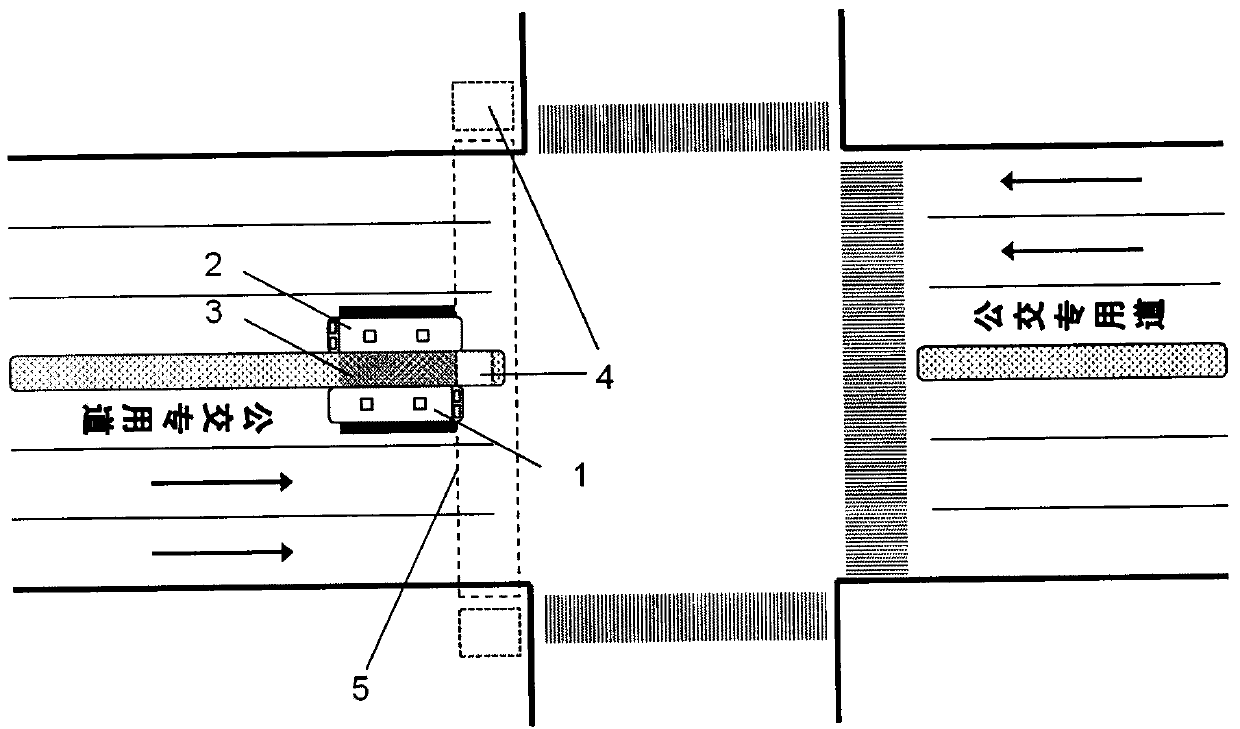
  • Figure 1
    Figure 1
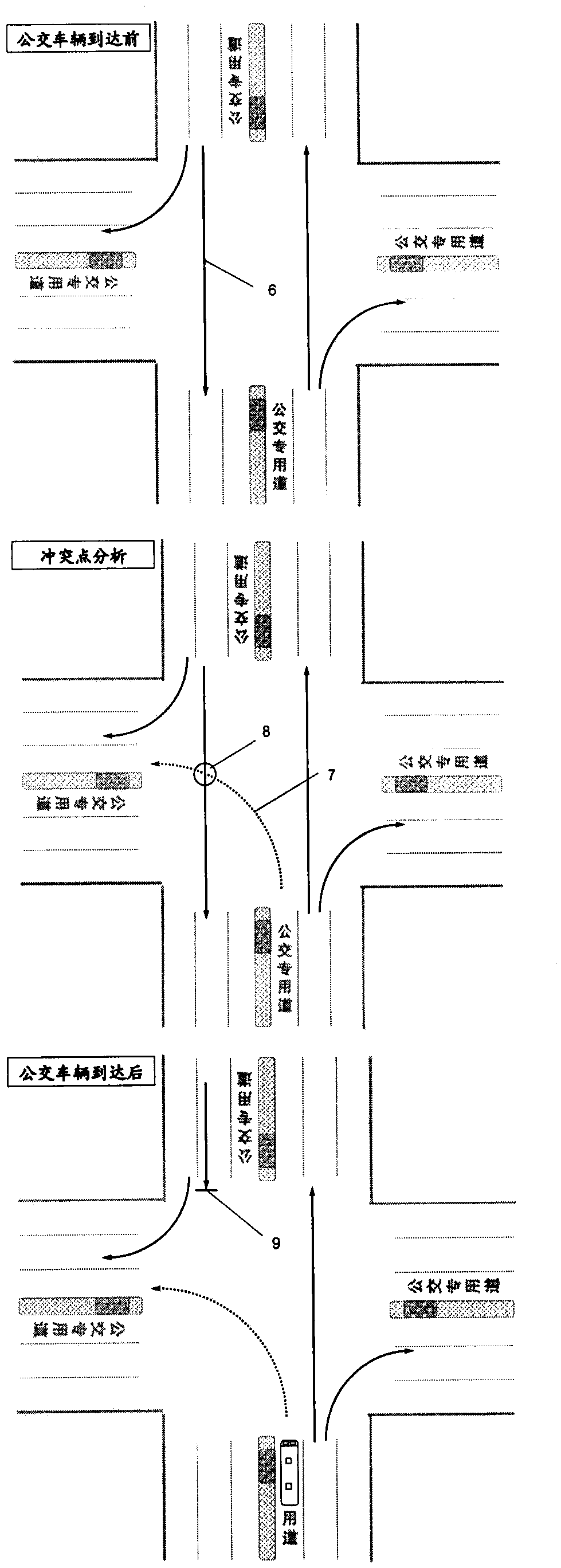
  • Figure 2
    Figure 2
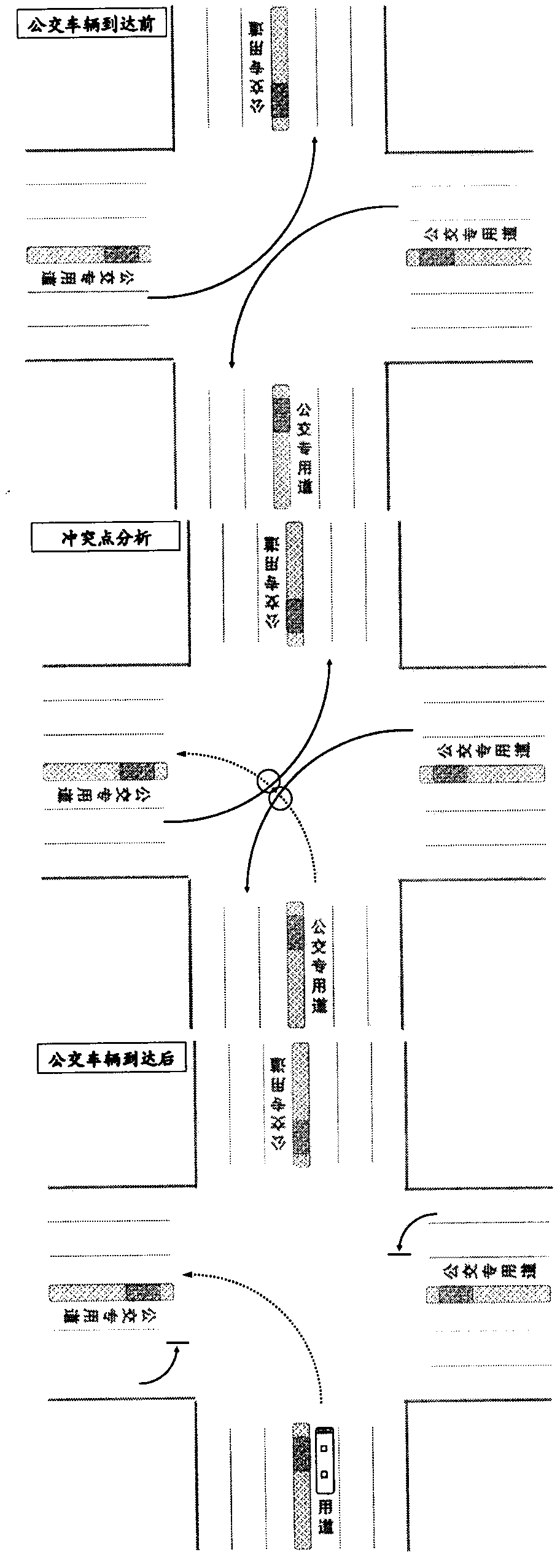
  • Figure 3
    Figure 3
Patent Text Reader

Abstract

The invention discloses a cooperative control method of a left-opened-door bus special phase setting and social traffic flow, which comprises the following steps: setting a bus station and a stereo facility which help pedestrians to cross a street; detecting a bus; determining the running time of the bus; determining a signal phase of the bus which drives through an intersection; and setting the bus special phase and a cooperative control plan. According to the invention, the bus stations in two directions are combined and placed at a median strip of the intersection, so that not only the land is saved, but also the bus station points are easier to recognize, and meanwhile, a new concept for planning and constructing of a public transit network is provided, that is, the public transit network is connected based on the bus stations arranged at intersections. With the adoption of the method, the situation that the bus does not stop at an intersection without a bus station while stops at an intersection with a bus station can be basically realized, so that passengers waiting for a long time at an intersection with a bus station can be avoided, thereby shortening the whole driving time of the bus and improving the whole operation efficiency of the bus system. Moreover, the method is functioned as the cooperation of the social traffic flow, so that the passing efficiency of the whole intersections is guaranteed.
Need to check novelty before this filing date? Find Prior Art

Description

technical field

[0001] The present invention relates to the field of urban public transport systems, and it is suitable for urban conventional public transport systems equipped with dedicated bus lanes. phase, significantly reducing the delay of the bus at the intersection, and at the same time realizing the coordinated control of the bus and other social vehicles. Background technique

[0002] Urban public transport is an important part of the urban comprehensive transport system and the main body of urban passenger transport. The conventional public transport system is the most common form of urban public transport. It includes three levels: network, line, and node. At the line level, in order to fully ensure the traffic efficiency of public transport vehicles, the public transport systems in many cities have dedicated bus lanes to separate buses from other vehicles. Interferenced by non-motorized vehicles, some passenger car drivers may also have a fluke mentality and bo...

Examples

Embodiment Construction

[0042] Below in conjunction with accompanying drawing, the present invention is described in further detail, as Figure 1-8 shown.

[0043] 1 The setting of bus stops and pedestrian crossing three-dimensional facilities

[0044] The present invention needs to be arranged at the intersection of bus station, so at first will consider the location problem of station. The specific location of the bus stop depends on the lane position of the bus lane. The setting form of bus-only lanes can be generally divided into three types according to their positional relationship with motor vehicle lanes, namely: bus-only lanes on the outside of the road, bus-only lanes in the middle of the road, and bus-only lanes on the inside of the road. The present invention comprehensively considers the convenience of waiting for passengers, the safety of crossing roads, and the synergistic effect between the platform and other road facilities, and sets the bus stop on the central divider / green belt, ...