
Empirical mode decomposition method of seismic section
A technology of empirical mode decomposition and seismic section, applied in the field of oil and gas seismic exploration, can solve the problems of small amount of calculation and unsuitable for seismic section data processing
Patent Information
- Authority / Receiving Office
- CN · China
- Patent Type
- Applications(China)
- Current Assignee / Owner
- Publication Date
- 2013-09-18
- Estimated Expiration
- Not applicable · inactive patent
Smart Images
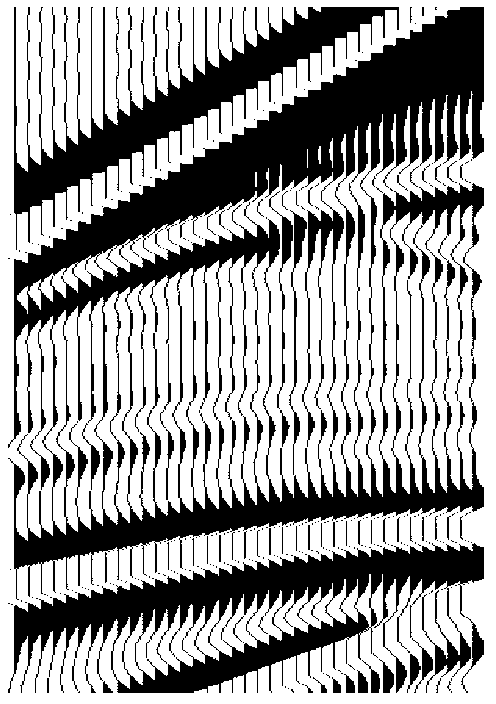
Figure 1 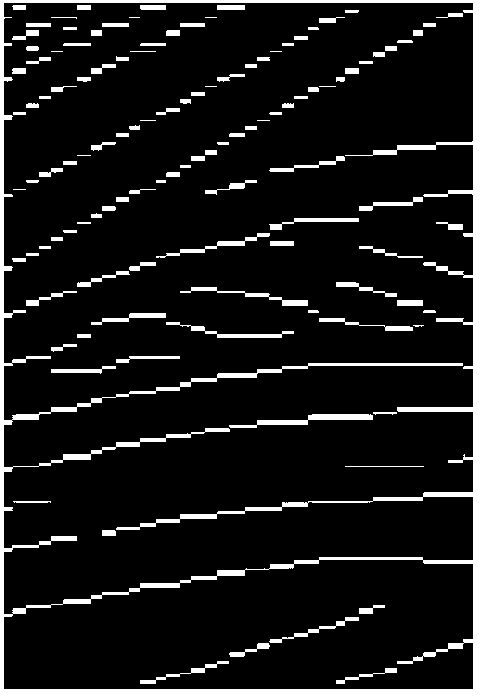
Figure 2 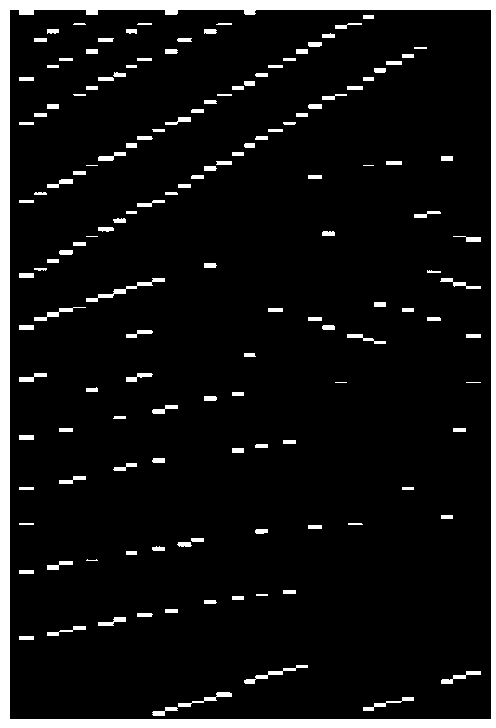
Figure 3
Abstract
Description
technical field
[0001] The invention relates to the field of oil and gas seismic exploration, and more specifically, relates to an empirical mode decomposition method of seismic sections in the analysis of seismic instantaneous attributes. Background technique
[0002] The traditional two-dimensional seismic section complex analysis technique (A.E.Barnes, Theory of 2D complex seismic trace analysis, Geophysics, Vol.61, No.1, 1996, 264–272) is to directly perform two-dimensional Hilbert transformation on the seismic section (Bidimensional Hilbert Transform, BHT), to form an analytical signal, and then calculate the instantaneous seismic characteristic attributes such as instantaneous amplitude, instantaneous phase, and instantaneous frequency, which reflect the micro-local changes in the process of seismic wave propagation, and can help determine the lithology, lithofacies changes and The properties of fluids contained in rock pores. However, this complex analysis technique ...
Examples
Embodiment Construction
[0029] The present invention will be further described below in conjunction with the accompanying drawings, but the embodiments of the present invention are not limited thereto.
[0030] A clear definition has been given for one-dimensional IMF, but there is no definition for BIMF. For a one-dimensional IMF, four conditions are met, the number of local maximum points and minimum points differs by at most one; there is a vibration mode, that is, there is only one maximum or pole between two zero-crossing points Small value; at any time, the mean line of the upper and lower envelopes is a zero function or tends to a zero function; the IMFs obtained by decomposing the same signal should be orthogonal to each other. Since the first two conditions are difficult to guarantee in the decomposition process, as long as the BIMF meets the last two conditions of the one-dimensional IMF in the calculation process, it can be used as an effective approximation of the two-dimensional single-c...