
Secondary constant measuring method for aspherical mirrors
A quadratic constant and measurement method technology, applied in the direction of measuring devices, instruments, optical devices, etc., can solve problems such as difficult to measure accurately, and achieve the effects of easy operation, reduced detection cost, and balanced performance
- Summary
- Abstract
- Description
- Claims
- Application Information
AI Technical Summary
Problems solved by technology
Method used
Image


Examples
Embodiment Construction
[0037] In order to make the object, technical solution and advantages of the present invention clearer, the present invention will be described in further detail below in conjunction with specific embodiments and with reference to the accompanying drawings.
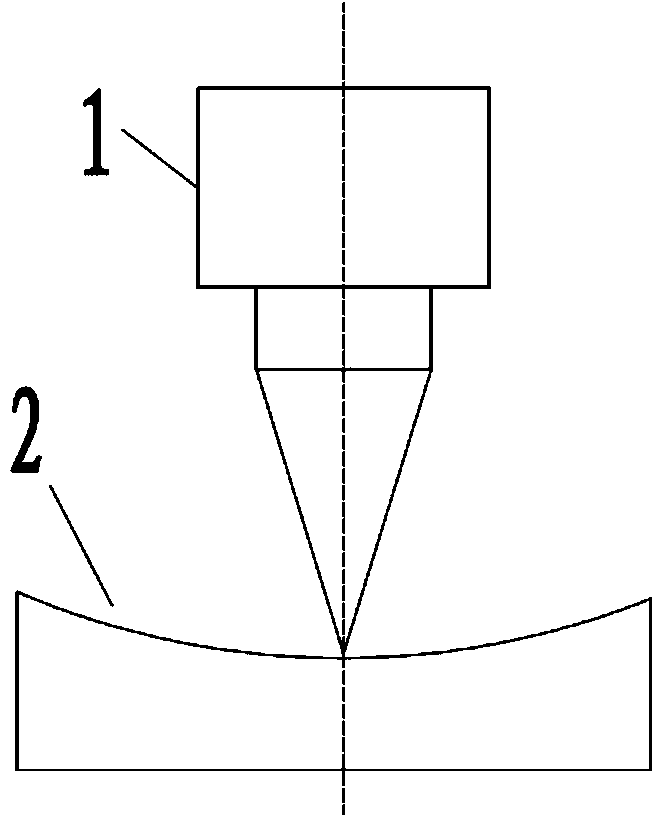
[0038] Such as figure 1 Shown is a measurement device for the quadratic constant of a large-diameter aspheric primary mirror. The device includes: an interferometer 1 and a measured aspheric mirror 2. The specific implementation steps of the measurement method are as follows:
[0039] 1. Measure the specific process:
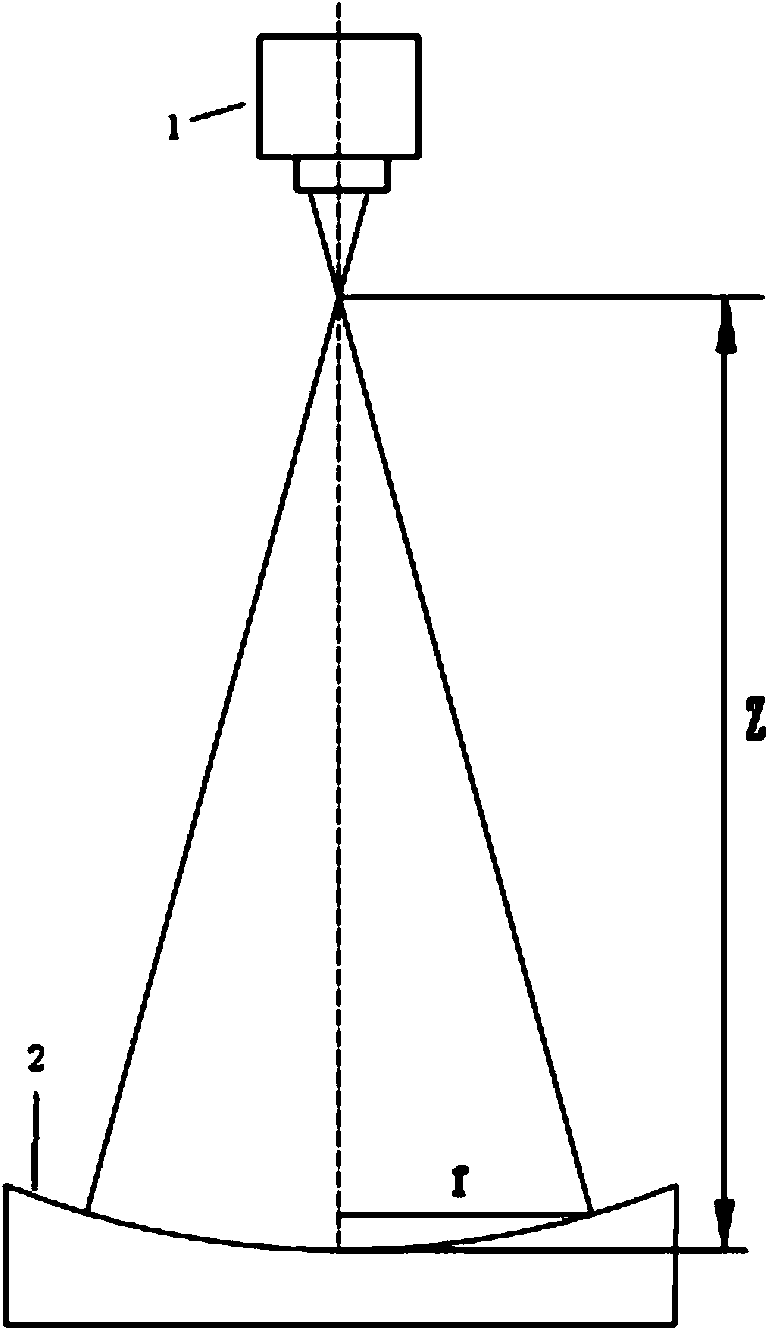
[0040] (a) Find the cat's eye. according to figure 1 As shown, adjust the interferometer 1 so that the focus of the standard lens is aligned with the apex of the mirror 2, and find the cat's eye position of the interferometer. The interferogram of the cat's eye position is as follows figure 2 shown. According to the ranging interferometer, record the position coordinates of the interferometer at this t...
PUM
 Login to View More
 Abstract
Description
Claims
Application Information
 Login to View More