Multi-layer back electrode for a photovoltaic thin-film solar cell, use of the same for producing thin-film solar cells and modules, photovoltaic thin-film solar cells and modules containing the multi-layer back electrode and method for the production thereof
What is AI technical title?
AI technical title is built by Patsnap AI team. It summarizes the technical point description of the patent document.
A solar cell, back electrode layer technology, applied in photovoltaic power generation, final product manufacturing, sustainable manufacturing/processing, etc., can solve problems such as high production costs, and achieve the effect of good quantum throughput
Inactive Publication Date: 2015-02-04
NICE SOLAR ENERGY GMBH
View PDF10 Cites 10 Cited by
Summary
Abstract
Description
Claims
Application Information
AI Technical Summary
This helps you quickly interpret patents by identifying the three key elements:
Problems solved by technology
Method used
Benefits of technology
Problems solved by technology
[0004] While it is possible to achieve good efficiencies by using particularly pure back electrode materials, this is accompanied by often disproportionately high production costs
Method used
the structure of the environmentally friendly knitted fabric provided by the present invention; figure 2 Flow chart of the yarn wrapping machine for environmentally friendly knitted fabrics and storage devices; image 3 Is the parameter map of the yarn covering machine
View more
Image
Smart Image Click on the blue labels to locate them in the text.
Viewing Examples
Smart Image
Click on the blue label to locate the original text in one second.
Reading with bidirectional positioning of images and text.
Smart Image
Examples
Experimental program
Comparison scheme
Effect test
Embodiment Construction
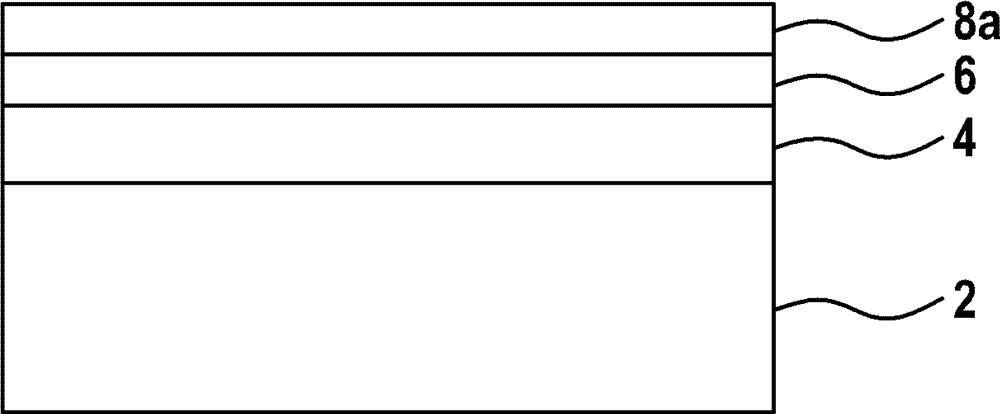
[0048] exist figure 1 In the embodiment of the multilayer back electrode 1 according to the invention shown in , there is a bulk back electrode layer 4 made of molybdenum on a substrate layer 2 , for example a glass substrate. On the block back electrode layer 4 there is a bidirectionally acting conductive barrier layer 6 made of, for example, tungsten nitride or titanium nitride, and a metal chalcogenide such as molybdenum selenide adjacent to this layer. Ohmic contact layer 8a. In a preferred embodiment, the contact layer 8 a can also be doped with at least one dopant, for example sodium ions or sodium compounds, in particular sodium sulfite or sodium sulfide.
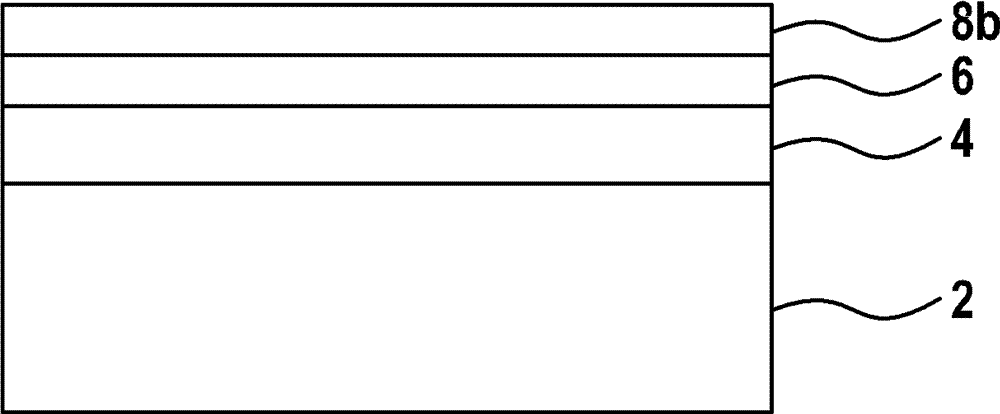
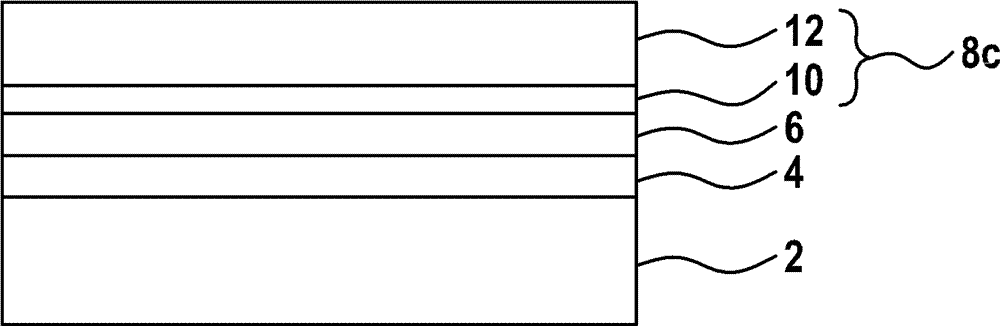
[0049] exist figure 2 In the second embodiment of the multilayer electrode 1 of the invention reproduced in figure 1 In different embodiments, the contact layer 8b is a metal layer, such as a molybdenum layer or a tungsten layer. In a preferred configuration, the contact layer 8 b can also be doped with at least...
the structure of the environmentally friendly knitted fabric provided by the present invention; figure 2 Flow chart of the yarn wrapping machine for environmentally friendly knitted fabrics and storage devices; image 3 Is the parameter map of the yarn covering machine
Login to View More
PUM
Login to View More
Abstract
The invention relates to a multi-layer back electrode for a photovoltaic thin-film solar cell, comprising, in this order, at least one bulk back electrode layer, containing or substantially consisting of V, Mn, Cr, Mo, Co, Zr, Ta, Nb and / or W and / or containing or substantially consisting of alloys containing V, Mn, Cr, Mo, Co, Zr, Fe, Ni, Al, Ta, Nb and / or W; at least one conductive barrier layer; at least one, in particular ohmic contact layer, containing or substantially consisting of Mo, W, Ta, Nb, Zr and / or Co, in particular Mo and / or W, and / or containing or substantially consisting of at least one metal chalcogenide, and / or containing at least one first layer, adjacent to the barrier layer, containing or substantially consisting of Mo, W, Ta, Nb, Zr and / or Co, in particular Mo and / or W, and at least one second layer which is non-adjacent to the barrier layer, containing or substantially consisting of at least one metal chalcogenide.
Description
technical field [0001] The invention relates to multilayer back electrodes for photovoltaic thin-film solar cells, the use of multilayer back electrodes for producing thin-film solar cells and thin-film solar modules, photovoltaic thin-film solar cells comprising a multilayer back electrode according to the invention and modules and methods for manufacturing photovoltaic thin-film solar cells and modules. Background technique [0002] Suitable photovoltaic solar cells include crystalline and amorphous silicon solar modules on the one hand and so-called thin-film solar modules on the other hand. In the latter case, IB-IIIA-VIA compound semiconductor layers, so-called chalcopyrite semiconductor absorber layers, are generally used. In these thin-film solar modules a molybdenum rear electrode layer is usually applied on a glass substrate. In a method variant, the molybdenum rear electrode layer is provided with copper and indium and optionally with a thin precursor metal layer...
Claims
the structure of the environmentally friendly knitted fabric provided by the present invention; figure 2 Flow chart of the yarn wrapping machine for environmentally friendly knitted fabrics and storage devices; image 3 Is the parameter map of the yarn covering machine
Login to View More
Application Information
Patent Timeline
Application Date:The date an application was filed.
Publication Date:The date a patent or application was officially published.
First Publication Date:The earliest publication date of a patent with the same application number.
Issue Date:Publication date of the patent grant document.
PCT Entry Date:The Entry date of PCT National Phase.
Estimated Expiry Date:The statutory expiry date of a patent right according to the Patent Law, and it is the longest term of protection that the patent right can achieve without the termination of the patent right due to other reasons(Term extension factor has been taken into account ).
Invalid Date:Actual expiry date is based on effective date or publication date of legal transaction data of invalid patent.



 Login to View More
  Login to View More