Anti-oxidation experimental system for preparing nitrogen at room temperature during laser cladding

A technology of laser cladding and experimental system, applied in metal material coating process, coating, etc., can solve the problems of cladding layer quality degradation, sputtering, oxidation, etc., and achieve the effect of simple use and scientific and reasonable structure design

CN104451670AInactive Publication Date: 2015-03-25CIVIL AVIATION UNIV OF CHINA
4 Cites 4 Cited by

Patent Information

Authority / Receiving Office
CN · China
Current Assignee / Owner
Publication Date
2015-03-25
Estimated Expiration
Not applicable · inactive patent

Smart Images

  • Figure 1
    Figure 1
  • Figure 2
    Figure 2
  • Figure 3
    Figure 3
Patent Text Reader

Abstract

The invention discloses an anti-oxidation experimental system for preparing nitrogen at room temperature during laser cladding. The anti-oxidation experimental system is composed of a constant-temperature nitrogen making machine and an anti-oxidation experimental box, wherein the constant-temperature nitrogen making machine comprises an air inlet pipe, a nitrogen-oxygen separation tank, an air outlet pipe, a glass box and an air valve switch, wherein the anti-oxidation experimental box comprises an air delivery pipe, a quartz plate, a box body, a hollow metal base and two small bases. According to the anti-oxidation experimental system for preparing nitrogen during room-temperature cladding disclosed by the invention, nitrogen separated from air can be filled into the anti-oxidation experimental box during laser cladding, so as to prevent a base body and a cladding layer from being oxidized; meanwhile, a few of changes of scientific research personnel and instruments in close observation and laser cladding process detection can be avoided, and thus further research of laser cladding is facilitated. The experimental system also has the advantages of being scientific and reasonable in structure design, simple to use, energy-saving, environmental friendly and the like.
Need to check novelty before this filing date? Find Prior Art

Description

technical field

[0001] The invention belongs to the technical field of mechanical equipment, in particular to an experimental system for producing nitrogen at normal temperature and preventing oxidation during laser cladding. Background technique

[0002] At present, laser cladding has been gradually applied in industrial production. Compared with other thermal spraying technologies, it has the advantages of material saving, dense and uniform cladding layer, high degree of bonding with the substrate, small heat-affected area, shallow range, and high processing accuracy. , has gradually become a hot spot of related research. However, in the process of laser cladding, because the high-energy laser beam melts both the surface material of the substrate and the material to be clad, the substrate material and the cladding layer are easily oxidized by oxygen in the air, resulting in a decrease in the overall quality of the cladding layer. decline. At the same time, since some hig...

Examples

Embodiment Construction

[0014] The experimental system for nitrogen production and anti-oxidation at room temperature during laser cladding provided by the present invention will be described in detail below in conjunction with the accompanying drawings and specific examples.

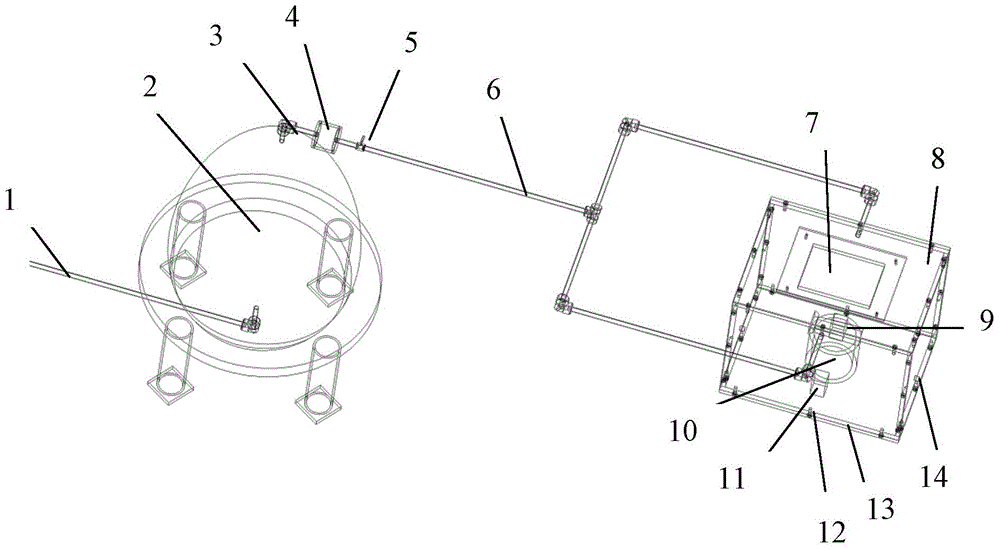
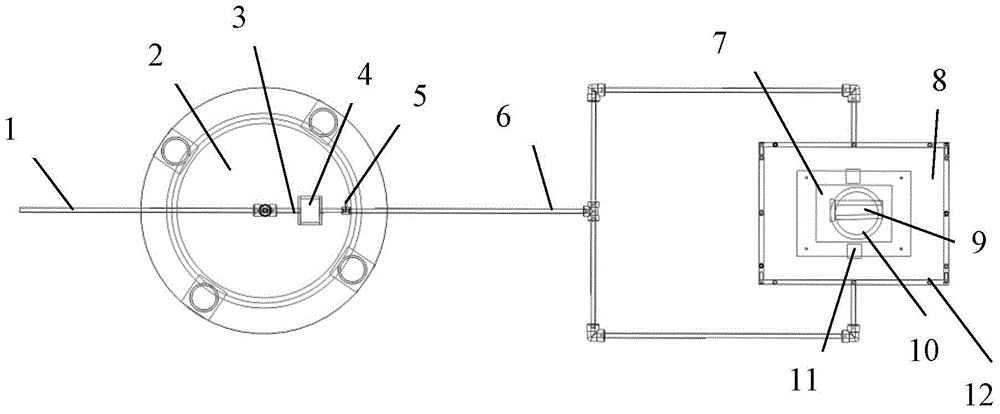
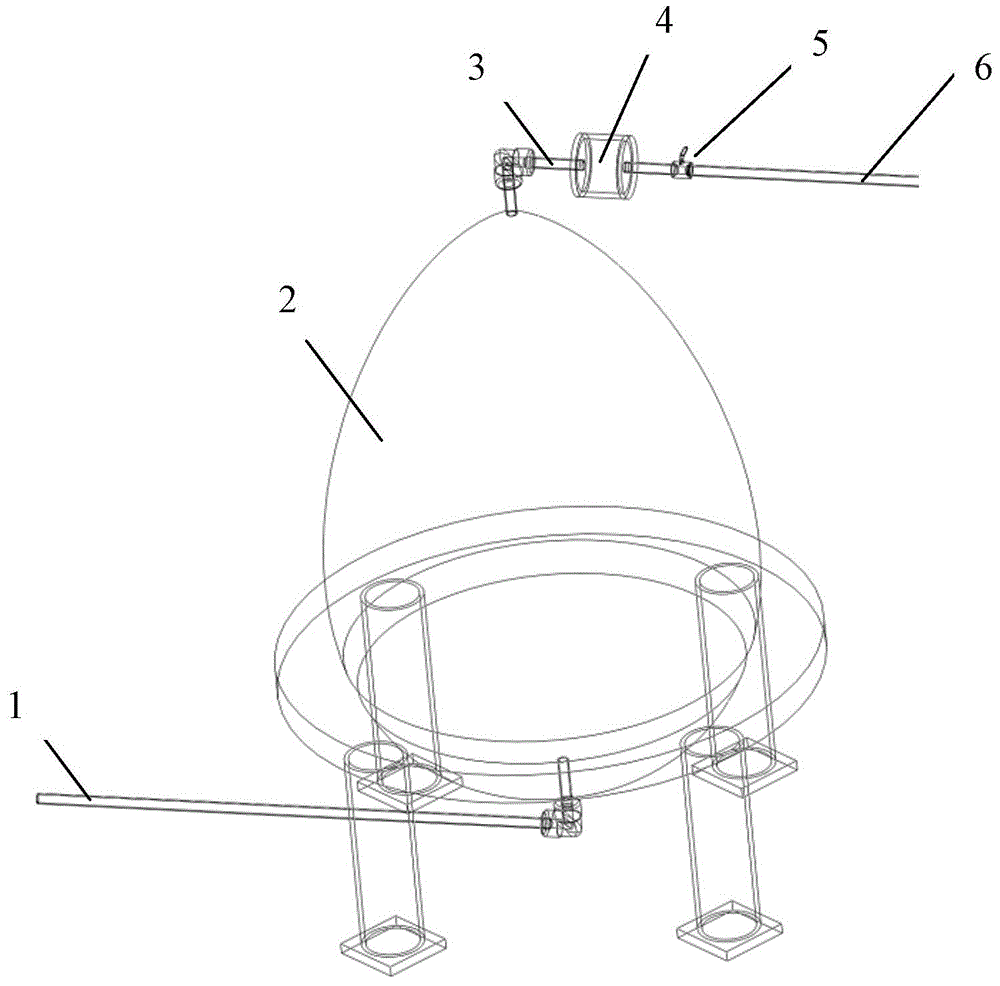
[0015] Such as figure 1 — Figure 4 As shown, the experimental system for producing nitrogen at normal temperature and preventing oxidation during laser cladding provided by the present invention is composed of two parts: a nitrogen producing machine at normal temperature and an anti-oxidation test box, wherein the nitrogen producing machine at normal temperature includes an inlet pipe 1, a nitrogen and oxygen separation tank 2, an outlet Trachea 3, glass box 4 and gas valve switch 5; Anti-oxidation test box includes gas delivery pipe 6, quartz plate 7, box body, hollow metal base 10 and two small bases 11; Described nitrogen and oxygen separation tank 2 is equipped with Carbon molecular sieve of oxygen molecules; one end of ...