Human body joint angle resolving method and device

A technology for human joints and calculations, applied in computing, computer components, input/output of user/computer interaction, etc., can solve the problem of inability to directly control robots, high requirements for initial wearing position and direction consistency, and human body different attitude issues

CN106227368AActive Publication Date: 2016-12-14BEIJING UNIV OF TECH
9 Cites 8 Cited by

Patent Information

Authority / Receiving Office
CN · China
Patent Type
Applications(China)
Current Assignee / Owner
Publication Date
2016-12-14

Smart Images

  • Figure 1
    Figure 1
  • Figure 2
    Figure 2
  • Figure 3
    Figure 3
Patent Text Reader

Abstract

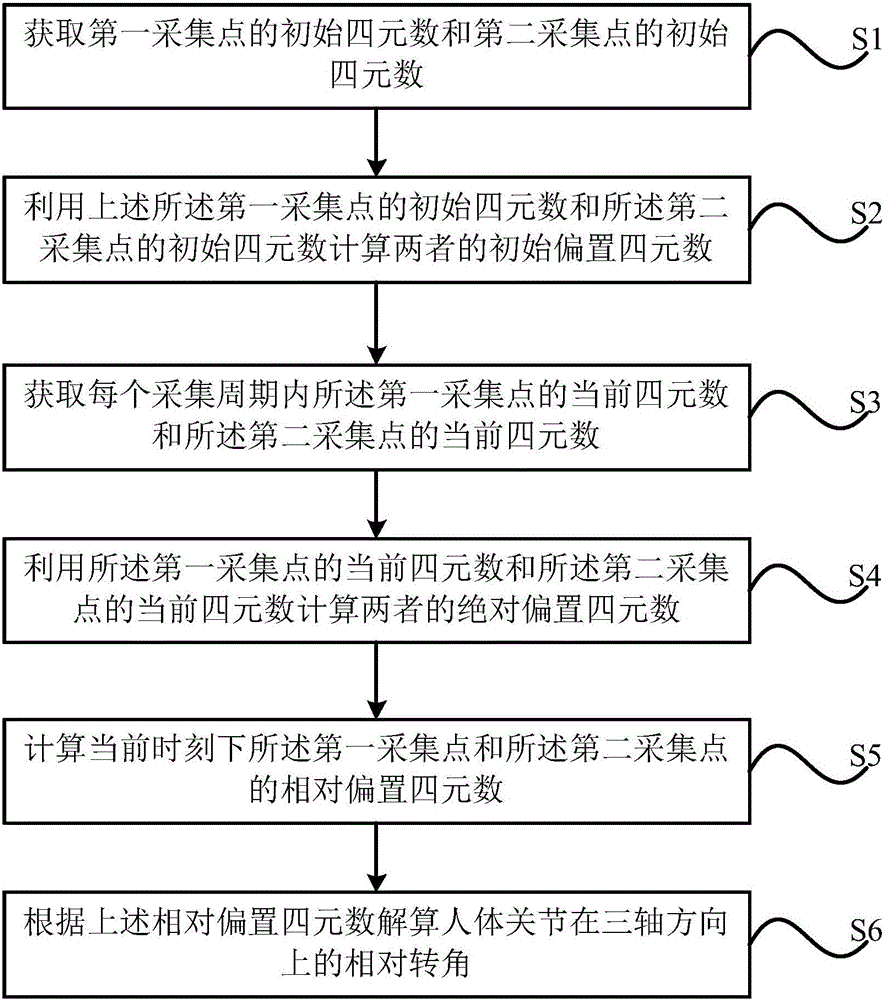
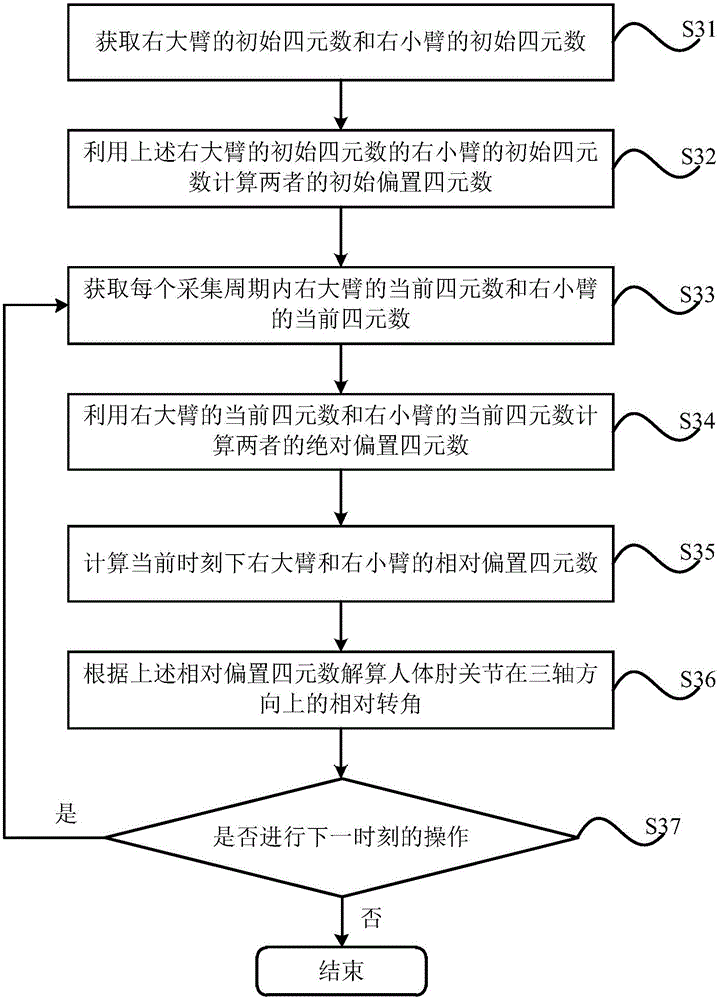
The invention relates to a human body joint angle resolving method and device based on quaternion numbers. The method comprises the following steps of obtaining initial quaternion numbers at a first collecting point and initial quaternion numbers at a second collecting point; calculating initial bias quaternion numbers of the initial quaternion numbers at the first and second collecting points by using the initial quaternion numbers at the first collecting point and the initial quaternion numbers at the second collecting point; obtaining current quaternion numbers at the first collecting point and current quaternion numbers at the second collecting point in each collecting period; calculating an absolute bias quaternion numbers of the current quaternion numbers at the first and second collecting points by using the current quaternion numbers at the second collecting point and the current quaternion numbers at the second collecting point; calculating relative bias quaternion numbers of the first collecting point and the second collecting point at the current moment; resolving the relative rotating angle of the right arm elbow joint in the three-axis direction according to the relative bias quaternion numbers. The device is realized on the basis of the method. The robot following control based on the human body posture can be realized by using the real-time angle change of the quaternion numbers of the two collecting points resolved in the three-axis direction of the human body joint relative to the initial position.
Need to check novelty before this filing date? Find Prior Art

Description

technical field

[0001] The invention relates to the technical field of robot control, in particular to a method and device for calculating human joint angles. Background technique

[0002] With the increasing maturity of micro-electro-mechanical technology and strapdown inertial navigation technology, more and more researchers use MEMS (Micro-Electro-Mechanical System, micro-electro-mechanical system) technology, and inertial navigation sensors (gyroscope, accelerometer, magnetic Compass, etc.) for data fusion, and then use the quaternion form to represent the human body posture, and apply the acquired human body posture to the fields of medical monitoring, gesture recognition, action correction, three-dimensional reconstruction and robot control.

[0003] At present, the common human body posture acquisition method in the prior art is based on modular design, and different numbers of acquisition modules are equipped according to different specific functions, and human body ...

Examples

Embodiment Construction

[0046] In order to make the purpose, technical solutions and advantages of the embodiments of the present invention clearer, the technical solutions in the embodiments of the present invention will be clearly and completely described below in conjunction with the drawings in the embodiments of the present invention. Obviously, the described embodiments It is a part of embodiments of the present invention, but not all embodiments. Based on the embodiments of the present invention, all other embodiments obtained by persons of ordinary skill in the art without creative efforts fall within the protection scope of the present invention.

[0047] In the first aspect, the present invention provides a method for calculating human joint angles, such as figure 1As shown, the method includes:

[0048] S1. Obtain the initial quaternion of the first collection point and the initial quaternion of the second collection point;

[0049] S2. Using the initial quaternion of the first collectio...