
Vibration amplifier and testing method for simulating high-order nonlinear vibration fatigue of blade
A test method and amplifier technology, applied in the field of material fatigue fracture and high cycle fatigue test, can solve the problems of nonlinear stiffness, unsolved resonance, and small frequency adjustment range.
Patent Information
- Authority / Receiving Office
- CN · China
- Patent Type
- Applications(China)
- Current Assignee / Owner
- Publication Date
- 2016-12-21
Smart Images
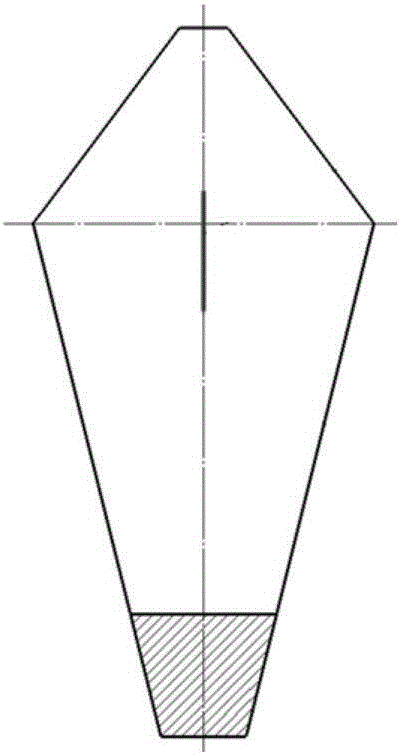
Figure 1 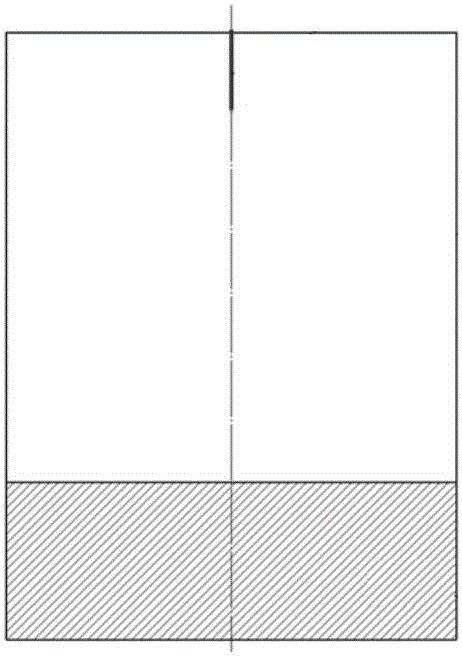
Figure 2 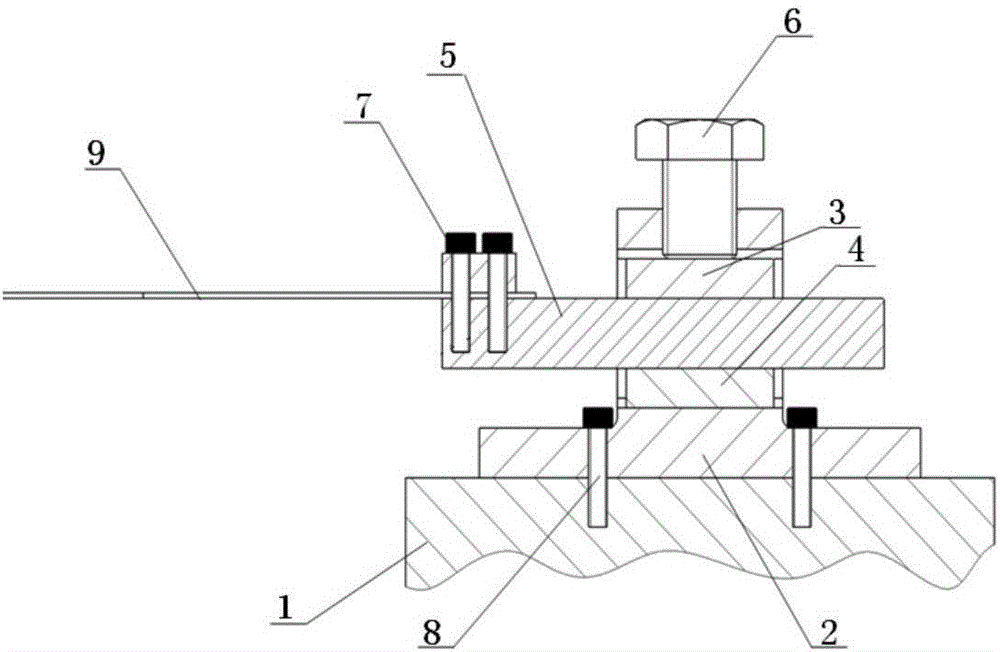
Figure 3
Abstract
Description
technical field
[0001] The invention belongs to the field of material fatigue fracture and high-cycle fatigue test methods, and relates to a vibration amplifier and a test method for simulating high-order nonlinear vibration fatigue of blades. Background technique
[0002] Aeroengines, ground gas turbines and other high-speed rotating machinery have variable working conditions and are always under a complex and harsh working condition. High-cycle fatigue fracture of rotor blades is the most common and serious failure problem, and vibration fatigue is the main fatigue form. .
[0003] At present, the fatigue performance assessment method of blades still mainly adopts the first-order bending vibration fatigue test, and the main assessment is the fatigue performance of the blade root (one-pitch line). have been effectively avoided. However, fatigue failures such as blade drop-off and cracks caused by high-order vibrations are still very serious, especially after the blades ar...
Examples
Embodiment Construction
[0037] The present invention is described in further detail below in conjunction with accompanying drawing:
[0038]The vibration amplifier of the present invention includes a base 2, a fixed housing, an upper pad 3, a lower pad 4, a first fixing screw 7, a second fixing screw 6, an amplifying arm 5 and a clamping block 10; an upper pad 3 and the lower pad 4 are located in the fixed housing, and one end of the amplifying arm 5 passes through one side of the fixed housing, between the upper pad 3 and the lower pad 4, and the other side of the fixed housing to extend out to the fixed housing. Outside the housing, the clamping block 10 is located on the upper surface of the other end of the amplifying arm 5, and the first fixing screw 7 passes through the clamping block 10 and the amplifying arm 5 to connect the clamping block 10 with the amplifying arm 5, and the second fixing screw 6 Pass through the top of the fixed housing and extend into the fixed housing to contact the uppe...