
Rapid image fusing method for eliminating splicing slits
An image fusion and gap technology, applied in the field of image processing, can solve the problems of pixel value error, large amount of calculation, etc., and achieve the effect of fast speed and gap elimination
- Summary
- Abstract
- Description
- Claims
- Application Information
AI Technical Summary
Problems solved by technology
Method used
Image

Examples
Embodiment Construction
[0025] The traditional algorithm is to perform weighted average operation on all pixels in the overlapping area. If the overlapping area is large, the calculation amount will be very large, but in fact, the weighted average operation on the pixels far away from the stitching gap is unnecessary. In addition, the overlapping area is an irregular image. If the denominators of the weights are the same, errors will occur in the calculation of the pixel value of the pixel.
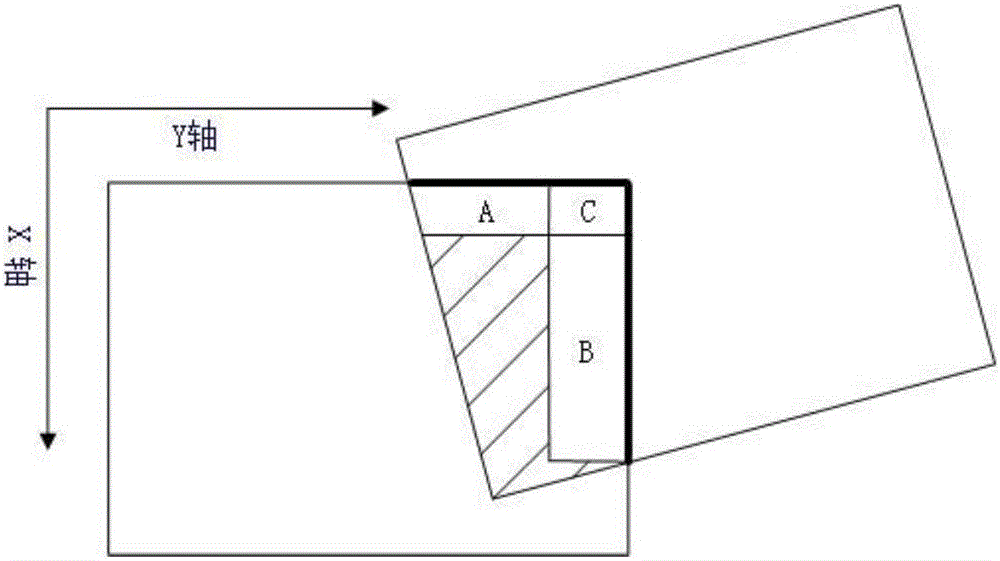
[0026] To solve the above problems, we propose an improved weighted fusion algorithm for stitched images. figure 1 The thick line in the middle is the gap after stitching the two images. The specific algorithm is as follows:
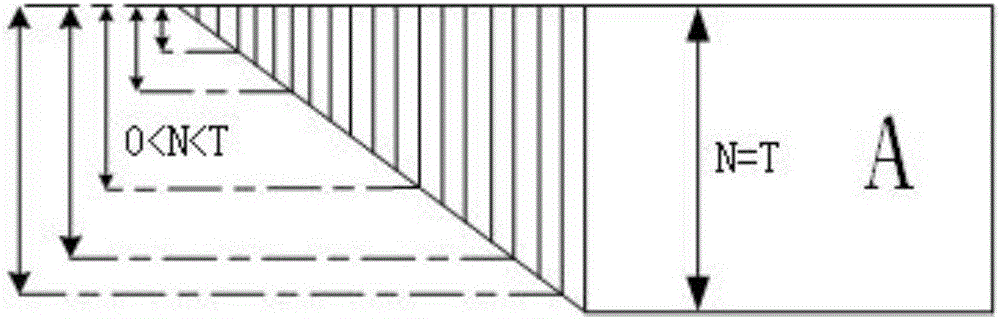
[0027] Step1: First, we set a threshold T, which is related to the brightness difference of the two images and the size of the overlapping area. The threshold range is generally 16 to 64 pixels.
[0028] Step2: Search for areas in the overlapping area whose distance from the stitching ga...
PUM
 Login to View More
 Abstract
Description
Claims
Application Information
 Login to View More