Low-frequency broadband high-efficiency low-profile back-cavity antenna

A low-profile, broadband technology, applied in the direction of slot antenna, antenna grounding switch structure connection, radiation element structure, etc., can solve the problems of poor reliability and manufacturability, inconvenient installation and use, and large vertical size of antenna, etc., to achieve Small impact, improve structural strength, avoid the effect of cantilever structure

CN106549223AActive Publication Date: 2017-03-29SOUTHWEST CHINA RES INST OF ELECTRONICS EQUIP
4 Cites 7 Cited by

Patent Information

Authority / Receiving Office
CN · China
Patent Type
Applications(China)
Current Assignee / Owner
Publication Date
2017-03-29

Smart Images

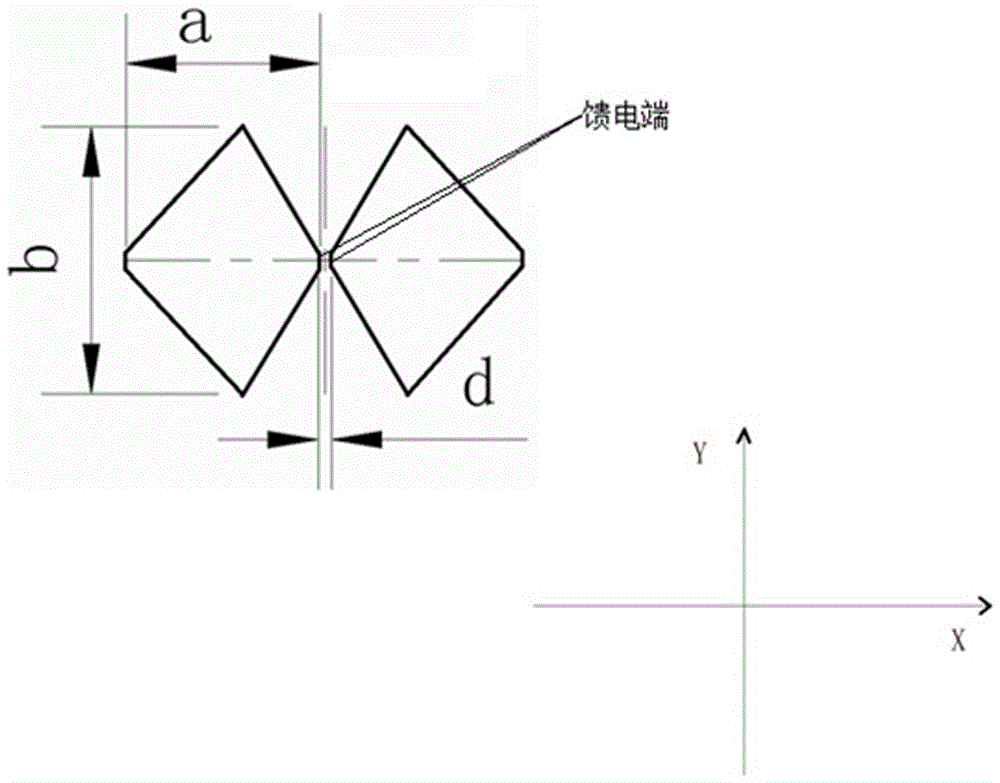
  • Figure 1
    Figure 1
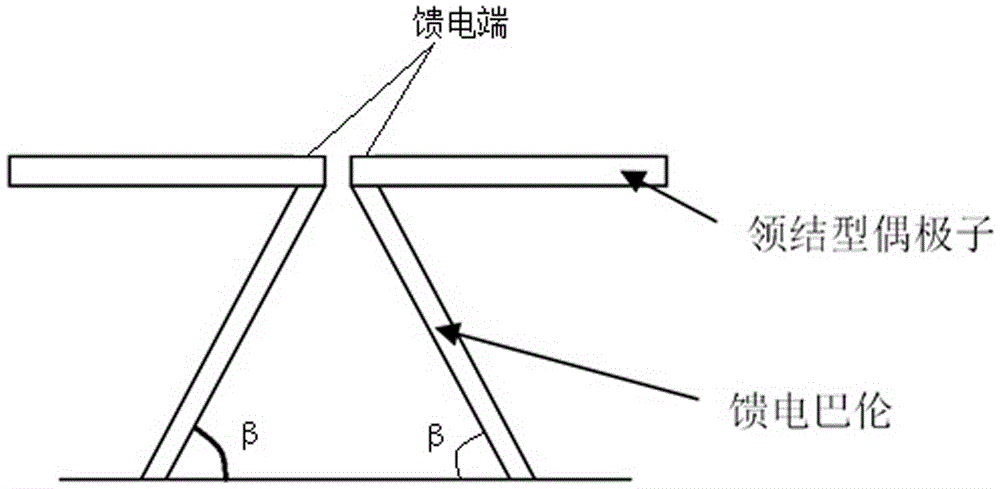
  • Figure 2
    Figure 2
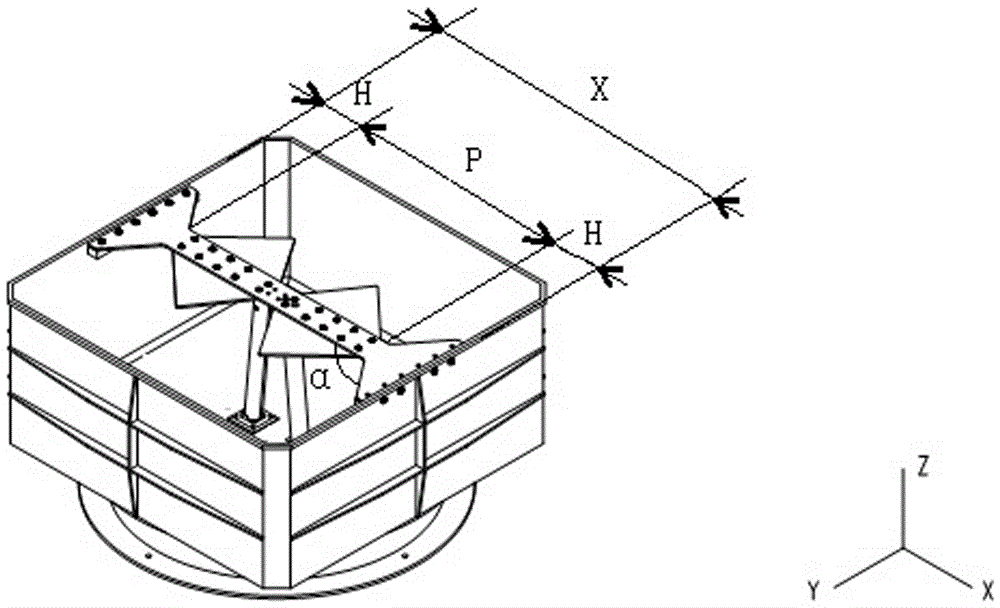
  • Figure 3
    Figure 3
Patent Text Reader

Abstract

The present invention belongs to the back-cavity antenna design field and provides a low-frequency broadband high-efficiency low-profile back-cavity antenna. The objective of the invention is to solve problems in the prior art. According to the low-frequency broadband high-efficiency low-profile back-cavity antenna of the invention, a bow tie-shaped dipole and a feed Balun are arranged in a reflection cavity; the root portion of the feed Balun is connected with the bottom end surface of the reflection cavity; the top end of the feed Balun is connected with the feed end surface of the tie-shaped dipole; the other end surface of the tie-shaped dipole is connected with an H-shaped medium pull rod; the cavity connection end of the feed Balun is a connection port which is connected with the bottom end surface of the reflection cavity; the end surface of the cavity connection end of the feed Balun is parallel to the bottom surface of the reflection cavity; the dipole connection end of the feed Balun is a connection end which is infinitely closed to the feed end of the tie-shaped dipole; the end surface of the dipole connection end of the feed Balun is parallel to the bottom surface of the reflection cavity; and two ends of the H-shaped medium pull rod are respectively connected with two opposite edges of the opening end surface of the reflection cavity.
Need to check novelty before this filing date? Find Prior Art

Description

technical field

[0001] The invention relates to the field of cavity-backed antenna design, in particular to a low-frequency, broadband, high-efficiency, low-profile cavity-backed antenna. Background technique

[0002] An antenna with a working bandwidth of 2.5 times frequency can be realized by using various broadband antenna forms such as logarithmic, horn, and dipole. The logarithmic antenna is easily affected by the installation platform and has a large longitudinal dimension; the horn antenna is similar to the logarithmic antenna, and the low-frequency antenna has a large longitudinal dimension, which is not easy to install and use. The dipole antenna can be added with a back cavity to reduce the impact of the platform, but the work efficiency is low, and the reliability and manufacturability are poor. For application platforms that require low frequency, broadband, low profile, high efficiency, and high reliability, existing technologies cannot meet the requirements. ...

Examples

Embodiment Construction

[0025] All features disclosed in this specification, or steps in all methods or processes disclosed, may be combined in any manner, except for mutually exclusive features and / or steps.

[0026] Any feature disclosed in this specification, unless specifically stated, can be replaced by other alternative features that are equivalent or have similar purposes. That is, unless expressly stated otherwise, each feature is one example only of a series of equivalent or similar features.

[0027] A low-frequency broadband high-efficiency low-profile cavity-backed antenna includes a bow-tie-shaped dipole, a feed balun, a reflective cavity with an opening on the top surface, and an H-shaped dielectric rod; the two ends of the H-shaped dielectric rod are respectively opposite to the open end faces of the reflective cavity Both sides are connected; the feed balun is built into the reflection cavity, and the cavity connection end of the feed balun is connected to the bottom surface of the re...