Deep learning-based short-term traffic flow prediction method

A short-term traffic flow and deep learning technology, applied in the field of short-term traffic flow prediction, can solve the problems of not being able to make full use of the temporal and spatial characteristics and periodic characteristics of traffic flow data, and achieve the effect of reducing manpower consumption

CN107230351AActive Publication Date: 2017-10-03FUZHOU UNIV
4 Cites 86 Cited by

Patent Information

Authority / Receiving Office
CN · China
Current Assignee / Owner
Publication Date
2017-10-03

Smart Images

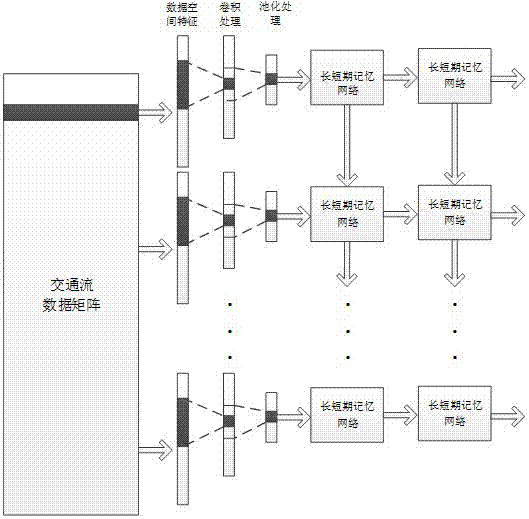
  • Figure 1
    Figure 1
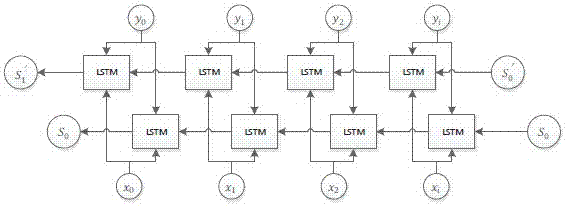
  • Figure 2
    Figure 2
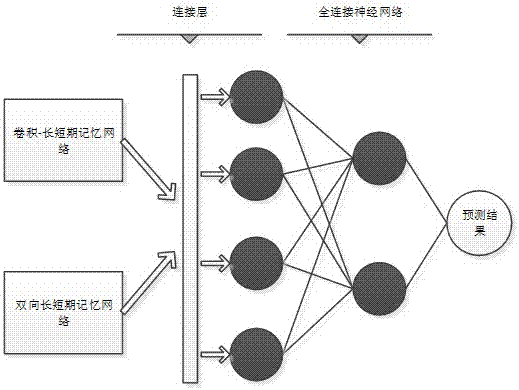
  • Figure 3
    Figure 3
Patent Text Reader

Abstract

The present invention discloses a deep learning method-based short-term traffic flow prediction method. The influence of the traffic flow rate change of the neighbor points of a prediction point, the time characteristic of the prediction point and the influence of the periodic characteristic of the prediction point on the traffic flow rate of the prediction point are considered simultaneously. According to the deep learning method-based short-term traffic flow prediction method of the invention, a convolutional neural network and a long and short-term memory (LSTM) recurrent neural network are combined to construct a Conv-LSTM deep neural network model; a two-way LSTM model is used to analyze the traffic flow historical data of the point and extract the periodic characteristic of the point; and a traffic flow trend and a periodic characteristic which are obtained through analysis are fused, so that the prediction of traffic flow can be realized. With the method of the invention adopted, the defect of the incapability of an existing method to make full use of time and space characteristics can be eliminated, the time and space characteristics of the traffic flow are fully extracted, and the periodic characteristic of the data of the traffic flow is fused with the time and space characteristics, and therefore, the accuracy of short-term traffic flow prediction results can be improved.
Need to check novelty before this filing date? Find Prior Art

Description

technical field

[0001] The invention relates to the fields of intelligent transportation and deep learning, in particular to a short-term traffic flow prediction method based on deep learning methods. Background technique

[0002] With the continuous development of the economy and the continuous improvement of the level of urbanization, people's demand for transportation is higher, and the frequency of driving is also higher and higher. The problem that follows is that traffic congestion is becoming more and more serious. How to grasp traffic information, Planning travel time and travel routes with reference to traffic information is a problem that needs to be solved at present. Providing users with accurate and real-time traffic flow change forecasts can save travel time for users and reduce unnecessary waste. At the same time, accurate traffic flow information is crucial to It is also very helpful in maintaining traffic support and traffic management, and has great commerc...

Examples

Embodiment Construction

[0032] The technical solution of the present invention will be specifically described below in conjunction with the accompanying drawings.

[0033] A short-term traffic flow prediction method based on deep learning of the present invention is specifically implemented according to the following steps,

[0034] Step S1: Consider the spatial correlation of traffic flow data, and obtain the spatial characteristics of traffic flow prediction points;

[0035] In this example, firstly, collect the traffic flow data set of the target detection point and its adjacent points, map the traffic flow data of the points in the area at the same time to a one-dimensional vector, take the predicted point as the reference point, and map the traffic flow data of the predicted point to The traffic flow data is placed in the center of the vector, and the north and south are used as the measurement standard. Set whether the data point in the vector is before or after the prediction point, with the n...