

A kind of lysobacterium that antagonizes Xanthomonas oryzae and its isolation method and application
A technology of Xanthomonas oryzae and Lysobacterium, applied in the field of rice disease prevention and control, can solve the problems of rampant and residual
Active Publication Date: 2020-03-17
JIANGSU ACAD OF AGRI SCI
View PDF6 Cites 0 Cited by
- Summary
- Abstract
- Description
- Claims
- Application Information
AI Technical Summary
Problems solved by technology
Chemical pesticide control has the advantages of good control effect, quick effect, and low cost, but the "3R" (residual, re-rampant, and resistance) problems caused by long-term excessive and inappropriate application have become the focus of food quality and ecological security.
Method used
the structure of the environmentally friendly knitted fabric provided by the present invention; figure 2 Flow chart of the yarn wrapping machine for environmentally friendly knitted fabrics and storage devices; image 3 Is the parameter map of the yarn covering machine
View moreImage
Smart Image Click on the blue labels to locate them in the text.
Smart ImageViewing Examples

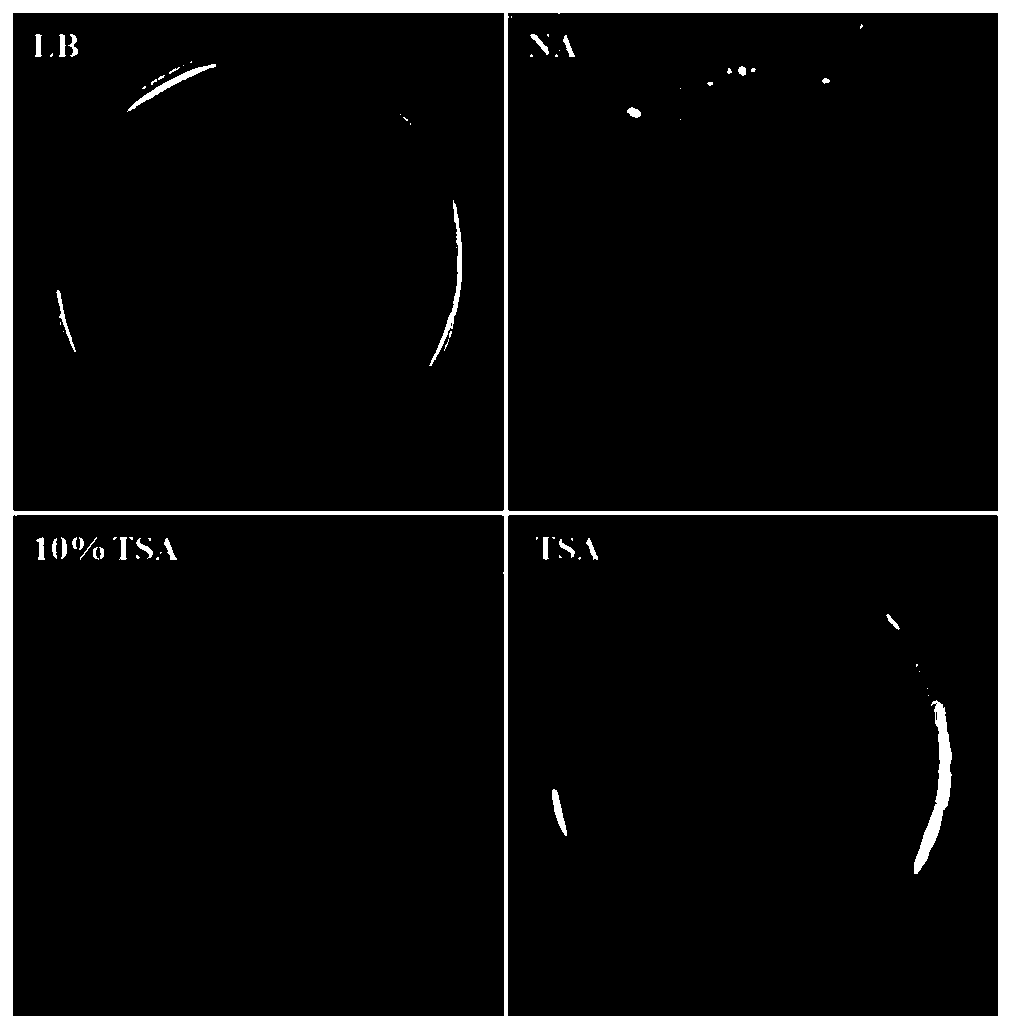

Examples
Experimental program
Comparison scheme
Effect test
Embodiment Construction
[0021] 1 Materials and methods
[0022] 1.1 Test strains, medium
the structure of the environmentally friendly knitted fabric provided by the present invention; figure 2 Flow chart of the yarn wrapping machine for environmentally friendly knitted fabrics and storage devices; image 3 Is the parameter map of the yarn covering machine
Login to View More PUM
 Login to View More
 Abstract
The invention relates to a lysobacterium antagonizing Xanthomonas oryzae and its isolation method and application. The lysobacterium is classified as lysobacterium ( Lysobacter sp.) OH23, which has been preserved in CGMCC, General Microorganism Center of China Committee for the Collection of Microorganisms, preservation number: CGMCC No.13677, preservation date: February 23, 2017, preservation address: No. 1, Beichen West Road, Chaoyang District, Beijing No. 3 Institute of Microbiology, Chinese Academy of Sciences. Lysobacterium of the present invention ( Lysobacter sp.) OH23 is a Gram-negative bacterium, and has obvious antagonistic effects on rice leaf spot fungus and rice white leaf disease fungus, and has the potential to be developed as a biopesticide.
Description
technical field [0001] The invention belongs to the technical field of rice disease prevention and control, and relates to a lysobacterium antagonizing Xanthomonas oryzae and its separation method and application. Background technique [0002] Xanthomonas oryzae (X.oryzae), including two pathogenic varieties of rice bacterial blight (Xanthomonas oryzaepv.oryzae) and rice stripe disease (Xanthomonas oryzae pv.oryzicola), cause rice bacterial blight (bacterial blight, BB) and bacterial leaf streak (BLS). At present, the prevention and control of these two diseases in production mainly rely on disease-resistant varieties and chemical pesticides. Chemical pesticides mainly include agricultural streptomycin, yekuling, yekuzole, thiazole zinc, etc. Chemical pesticide control has the advantages of good control effect, quick effect, and low cost, but the "3R" (residual, re-rampant, and resistance) problems caused by long-term excessive and inappropriate application have become the...
Claims
the structure of the environmentally friendly knitted fabric provided by the present invention; figure 2 Flow chart of the yarn wrapping machine for environmentally friendly knitted fabrics and storage devices; image 3 Is the parameter map of the yarn covering machine
Login to View More Application Information
Patent Timeline
 Login to View More
 Patent Type & AuthorityPatents(China)
IPC IPC(8): C12N1/20C12N1/02A01N63/20A01P1/00C12R1/01
CPCA01N63/00C12N1/02C12N1/20C12N1/205C12R2001/01
Inventor刘凤权赵杨扬徐会永汤宝赵延存朱润杰
OwnerJIANGSU ACAD OF AGRI SCI