Convolutional neural network demosaicing algorithm based on residual interpolation
A convolutional neural network and demosaicing technology, applied in the field of convolutional neural network demosaicing algorithm based on residual interpolation, which can solve the problems of lower overall resolution, blurred edges, zipper effect, etc.
- Summary
- Abstract
- Description
- Claims
- Application Information
AI Technical Summary
Problems solved by technology
Method used
Image

Examples
Embodiment 1
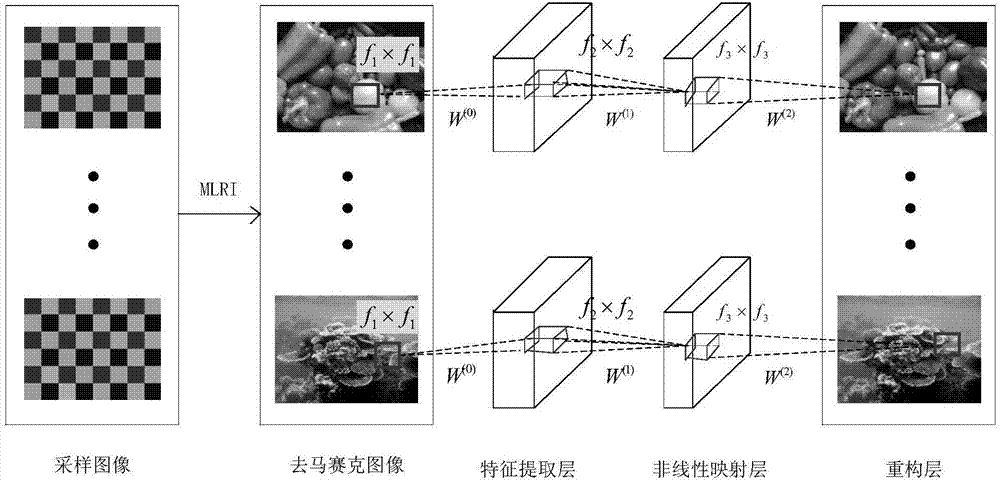
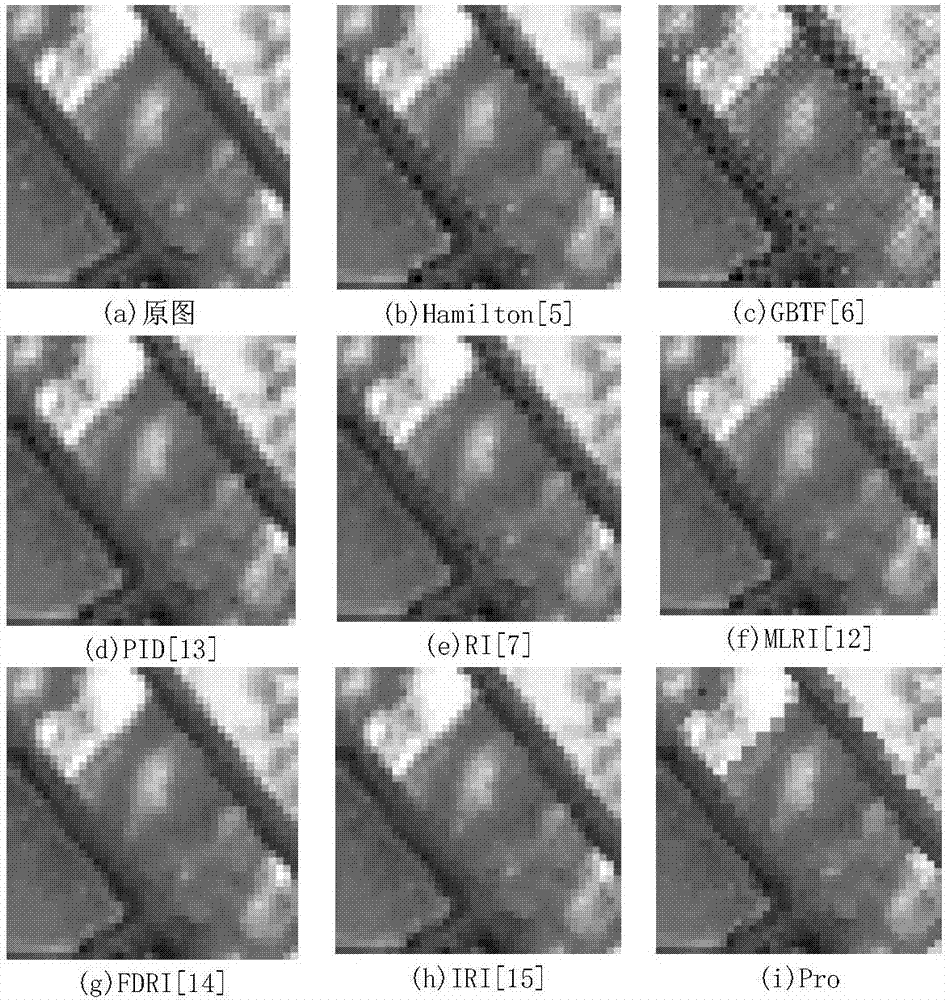
[0148] The present embodiment adopts the image of Bayer format, obtains 91 images as the training set by sampling at intervals, randomly crops them into small blocks of 33*33, adopts the demosaicing method proposed by the present invention to generate a low-resolution sample set, and uses it in Caffe on the training model. Select the IMAX data set as the test set test model, set the weight decay item to 0, power to 0.9, adopt the optimization strategy of stochastic gradient descent, and set the parameters of each layer of the convolutional neural network to: n 1 =64,n 2 = 32, f 1 =9,f 2 = 5, f 3 =5. Among them, n 1 ,n 2 Respectively represent the number of filters in the first layer and the second layer of the network, f 1 ,f 2 ,f 3 Indicates the space size of each filter. This embodiment is carried out under the experimental environment of GeForce GTX TITAN GPU, 32G memory, ubuntu operating system and Matlab16.04 (R2016a) platform.
[0149] The standard IMAX18 data ...
PUM
 Login to View More
 Abstract
Description
Claims
Application Information
 Login to View More
 - R&D
- Intellectual Property
- Life Sciences
- Materials
- Tech Scout
- Unparalleled Data Quality
- Higher Quality Content
- 60% Fewer Hallucinations
Browse by: Latest US Patents, China's latest patents, Technical Efficacy Thesaurus, Application Domain, Technology Topic, Popular Technical Reports.
© 2025 PatSnap. All rights reserved.Legal|Privacy policy|Modern Slavery Act Transparency Statement|Sitemap|About US| Contact US: help@patsnap.com