
Power grid topology analysis engine system and method based on graph database
A power grid topology and analysis engine technology, applied in the field of power grid topology analysis engine system based on graph database, can solve the problems of not supporting distributed data storage and parallel computing framework, low data efficiency of large-scale power grid graph, etc., and achieve faster start-up time , the effect of efficient processing
- Summary
- Abstract
- Description
- Claims
- Application Information
AI Technical Summary
Problems solved by technology
Method used
Image

Examples
Embodiment 1
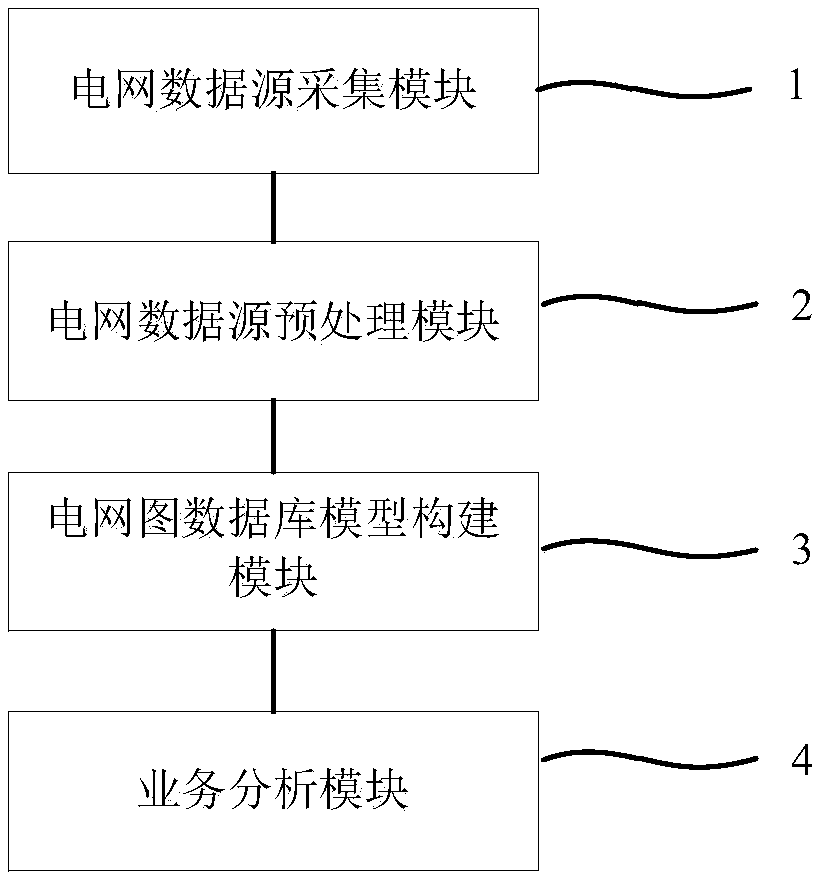
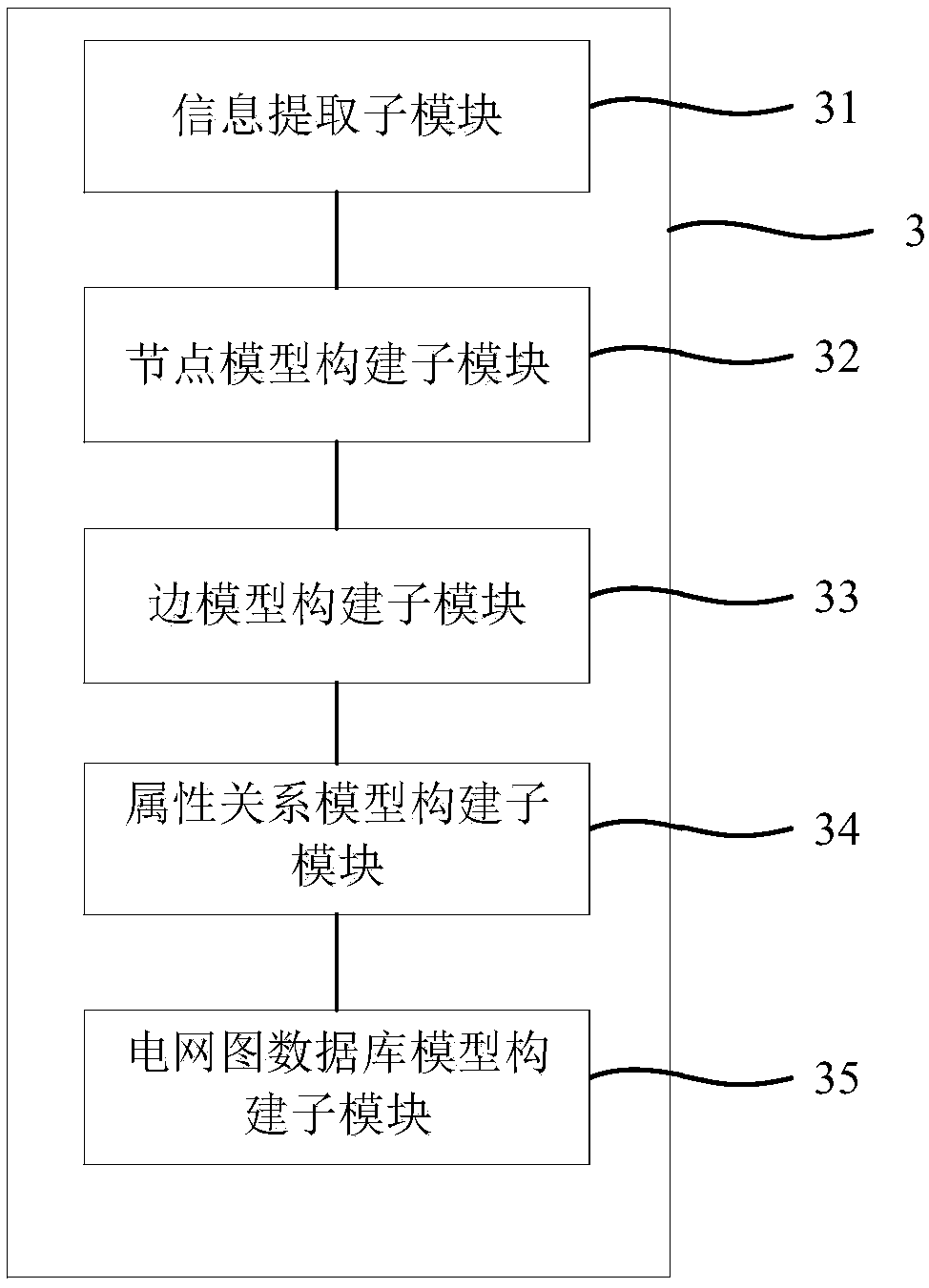
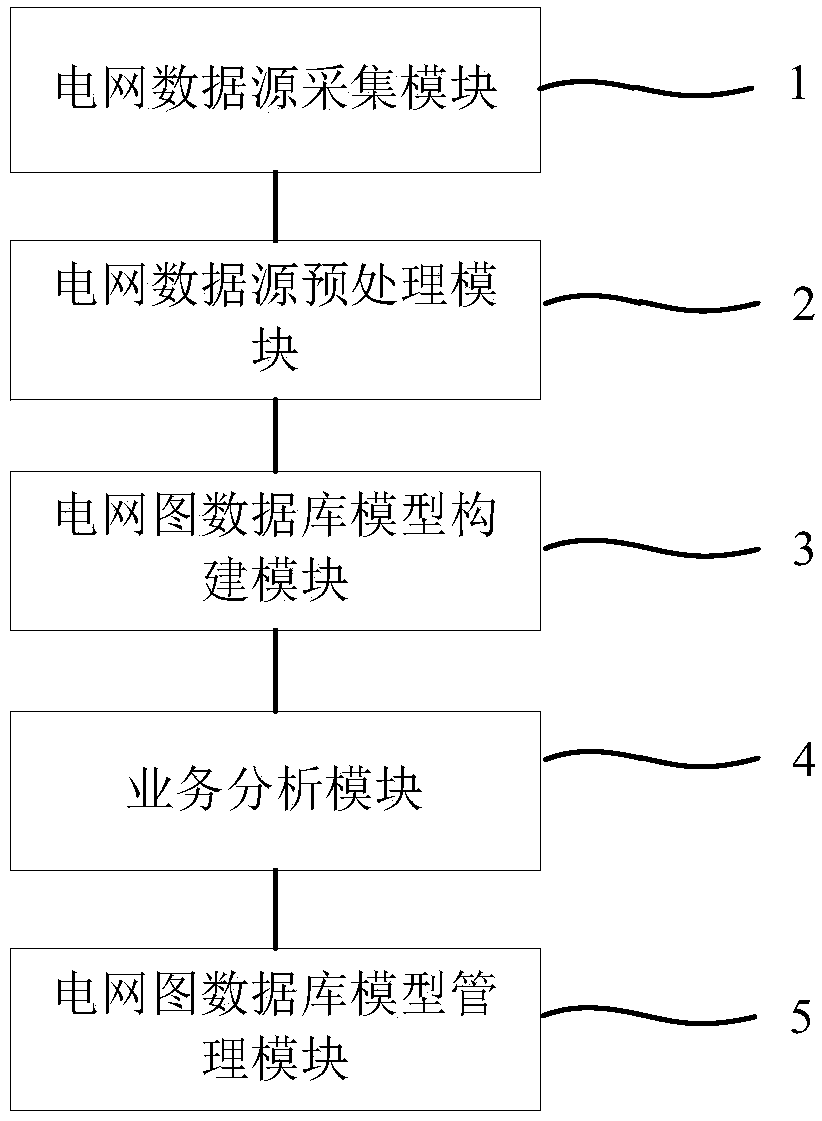
[0028] An embodiment of the present invention provides a power grid topology analysis engine system based on a graph database, such as figure 1 As shown, the power grid topology analysis engine system based on graph database includes: power grid data source acquisition module 1, used to collect power grid data source information; power grid data source preprocessing module 2, used to convert power grid data The source information is converted into standard data information; the power grid diagram database model building module 3 is used to establish the power grid diagram database model according to the standard data information; the business analysis module 4 is used to obtain the business requirements input by the user, and extract the user-selected data from the business requirements Analysis algorithm, according to the analysis algorithm, perform topology analysis on the standard data information in the power grid diagram database model, and generate analysis service result...
Embodiment 2
[0040] An embodiment of the present invention provides a graph database-based grid topology analysis method, such as Figure 4 As shown, the grid topology analysis method includes:
[0041] Step S1: Collect information on grid data sources.
[0042] Step S2: Transform the power grid data source information into standard data information according to the requirements of the modeling data format.
[0043] Step S3: Establish a grid diagram database model according to the standard data information.
[0044] Step S4: Obtain the business requirements input by the user, extract the analysis algorithm selected by the user from the business requirements, perform topology analysis on the standard data information in the grid diagram database model according to the analysis algorithm, and generate analysis service results.
[0045] Through the above steps S1 to S4, the power grid topology analysis method based on the graph database in the embodiment of the present invention supports di...
Embodiment 3
[0061] An embodiment of the present invention provides a non-transitory computer storage medium, the computer storage medium stores computer-executable instructions, and the computer-executable instructions can execute the grid topology analysis method based on graph database in any of the above-mentioned Embodiment 2. Wherein, the above-mentioned storage medium may be a magnetic disk, an optical disk, a read-only memory (Read-Only Memory, ROM), a random access memory (Random Access Memory, RAM), a flash memory (Flash Memory), a hard disk (HardDisk Drive , abbreviation: HDD) or a solid-state drive (Solid-State Drive, SSD), etc.; the storage medium may also include a combination of the above-mentioned types of memories.
[0062] Those skilled in the art can understand that all or part of the processes in the methods of the above embodiments can be implemented through computer programs to instruct related hardware, and the programs can be stored in a computer-readable storage med...
PUM
 Login to View More
 Abstract
Description
Claims
Application Information
 Login to View More