
Pseudowire encryption method in MPLS-TP
An encryption method and pseudowire technology, which is applied in the field of pseudowire encryption in MPLS-TP, can solve problems such as the lack of pseudowire end-to-end encryption solutions, and achieve the effect of improving security
- Summary
- Abstract
- Description
- Claims
- Application Information
AI Technical Summary
Problems solved by technology
Method used
Image

Examples
specific example
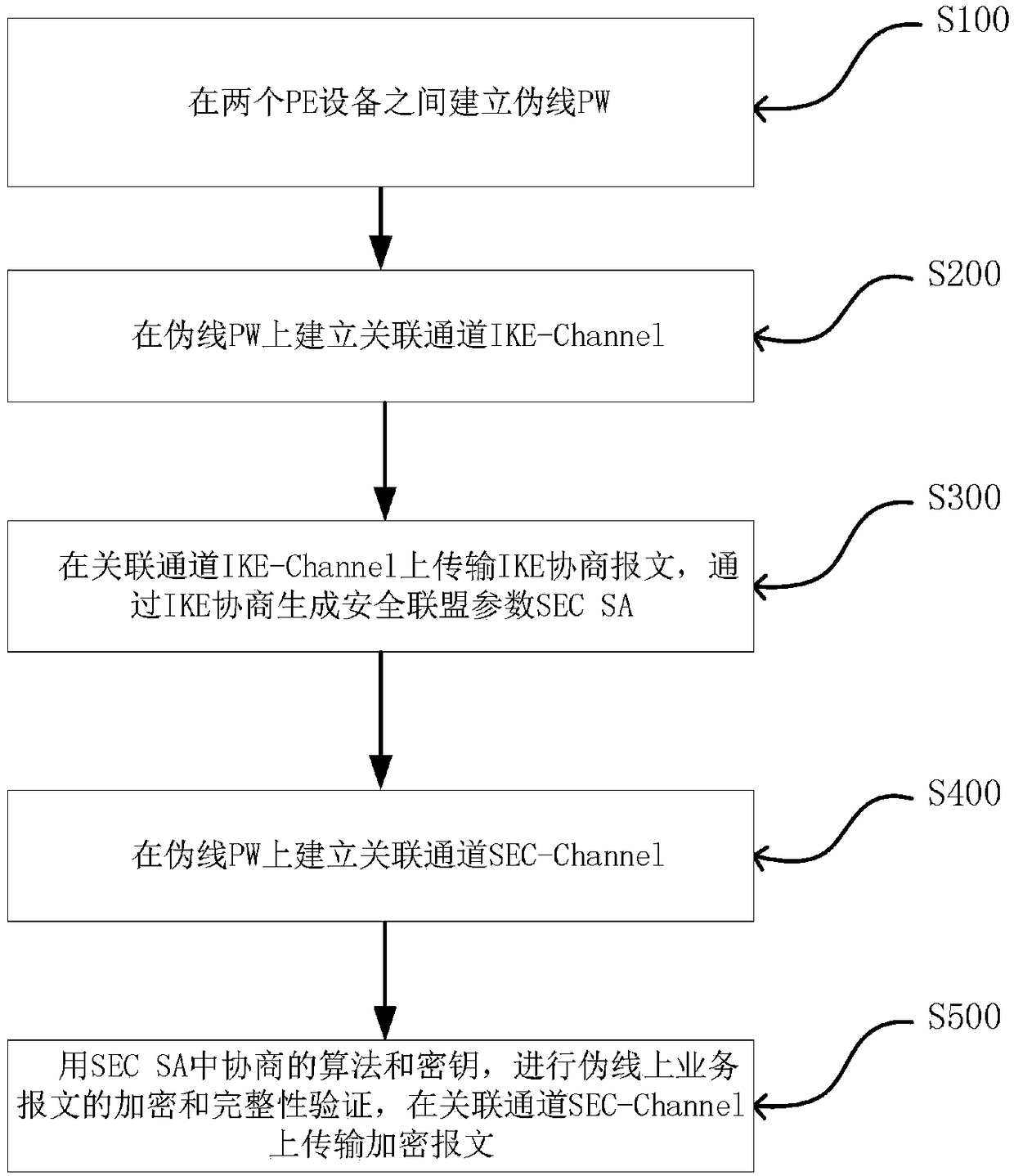
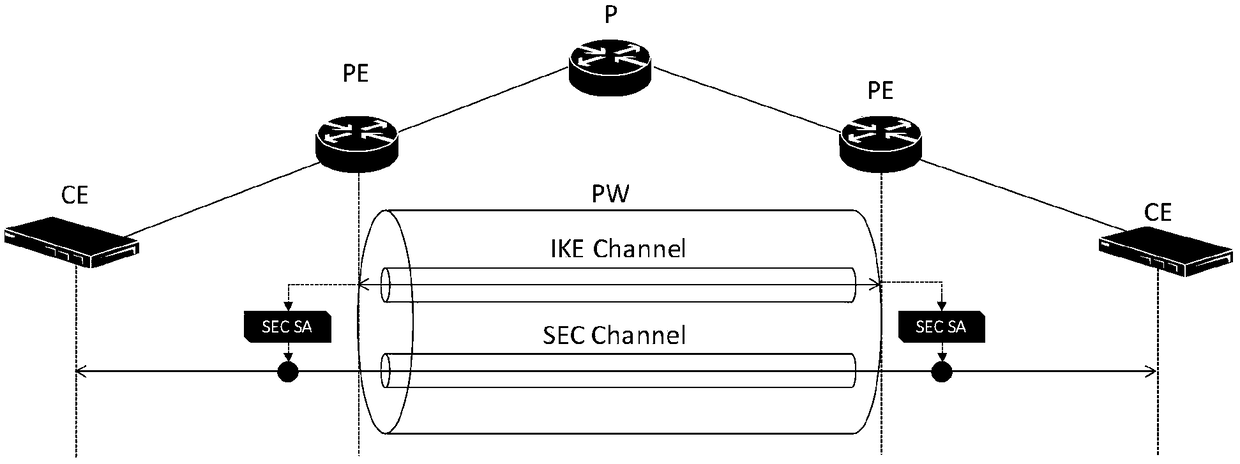
[0067] Pseudowire encryption using IKEv1 negotiation; including the following steps:
[0068] Step 1: Establish a pseudowire PW between two PE devices. The detailed steps are: configure MPLS-TP between two PE devices, including:
[0069] 1) Set the device IP address and routing;
[0070] 2) Define VPWS instance;
[0071] 3) Configure the AC port;
[0072] 4) Configure pseudowire parameters;
[0073] Step 2: Establish an associated channel IKE-Channel on the pseudowire PW. The detailed steps are: configure the IKE parameter set, including:
[0074] 1) IKE version and mode, such as IKEv1 main mode;
[0075] 2) Encryption and decryption algorithms, such as AES-128;
[0076] 3) Integrity verification algorithm, such as SHA-256;
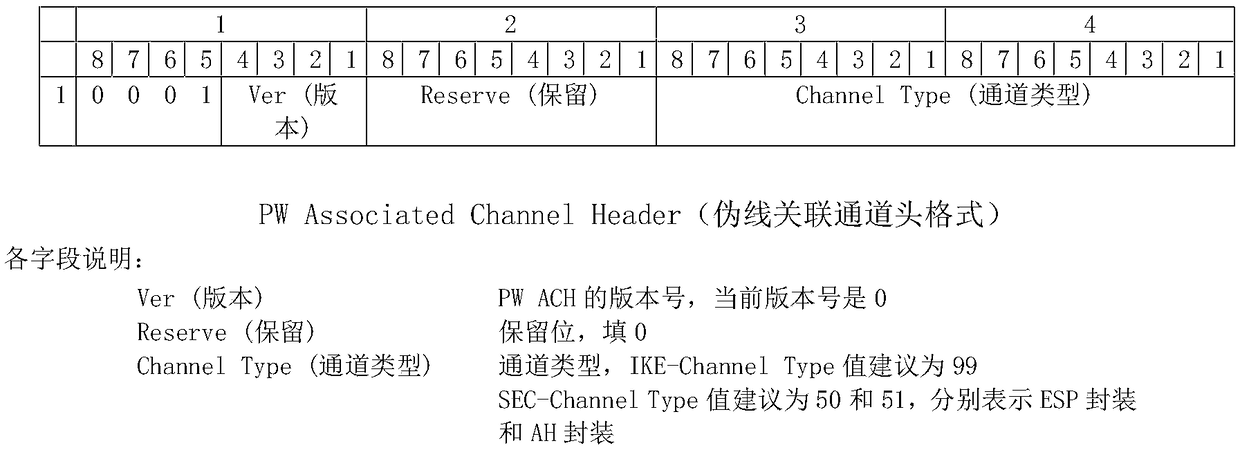
[0077] 4) An identity authentication method, such as a pre-shared key; 5) Select an encapsulation format, such as ESP. Then configure the associated channel IKE-Channel on the pseudowire PW, set the Channel-type value to 99, and associate the IKE p...
PUM
 Login to View More
 Abstract
Description
Claims
Application Information
 Login to View More