Femoral or tibial registration method and device based on total knee replacement surgery

A technology of total knee replacement and femur, which is applied in the field of total knee replacement surgery, can solve the problem of low accuracy of the registration method of the knee joint, and achieve the effect of improving accuracy and good registration effect

CN110215281AActive Publication Date: 2019-09-10BEIJING HURWA ROBOT MEDICAL TECH CO LTD
10 Cites 16 Cited by

Patent Information

Authority / Receiving Office
CN · China
Patent Type
Applications(China)
Current Assignee / Owner
Publication Date
2019-09-10

Smart Images

  • Figure 1
    Figure 1
  • Figure 2
    Figure 2
  • Figure 3
    Figure 3
Patent Text Reader

Abstract

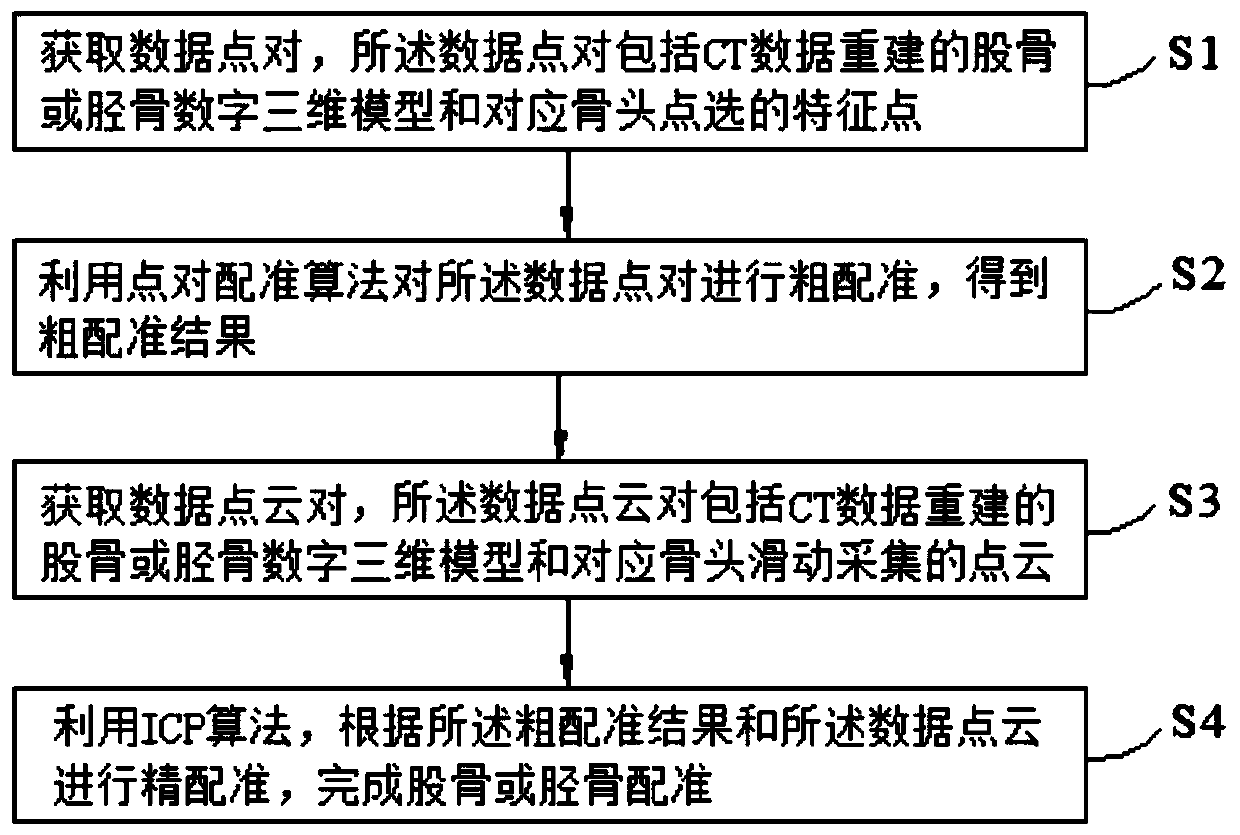
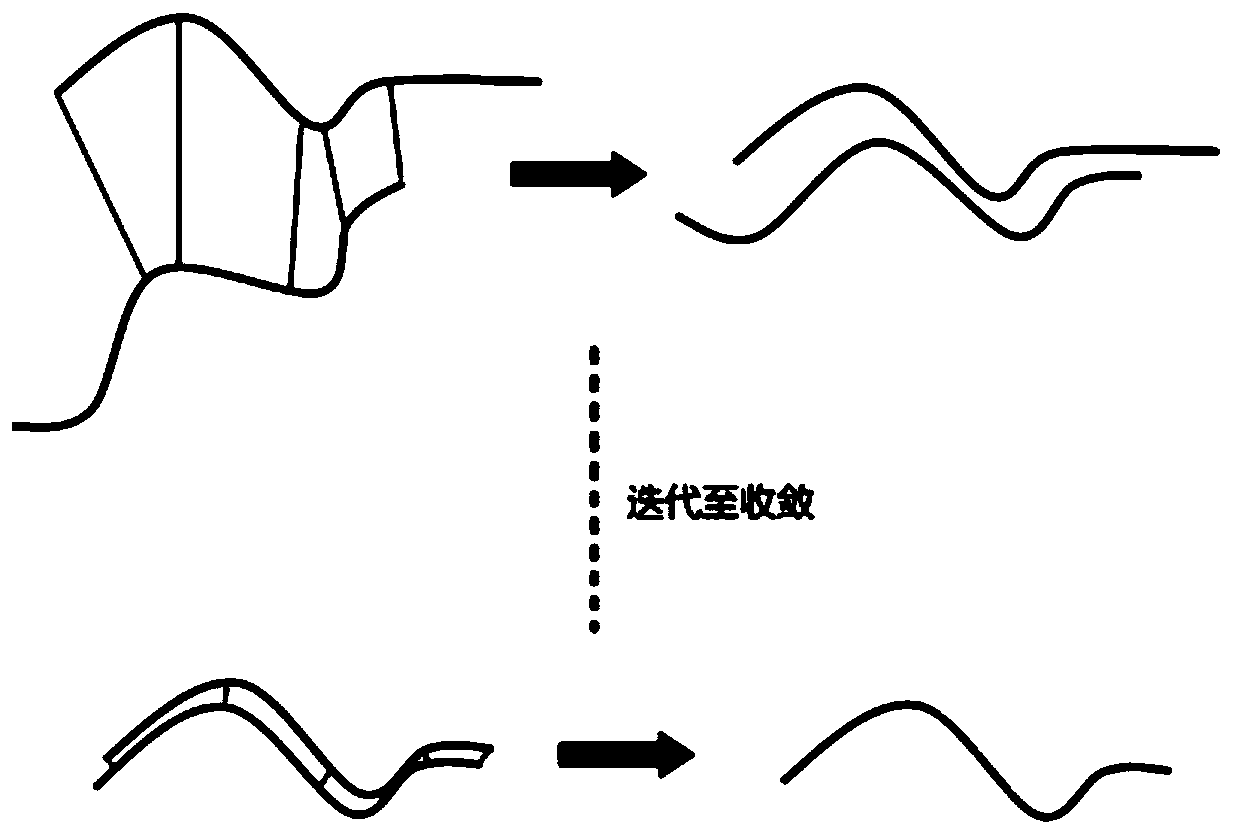
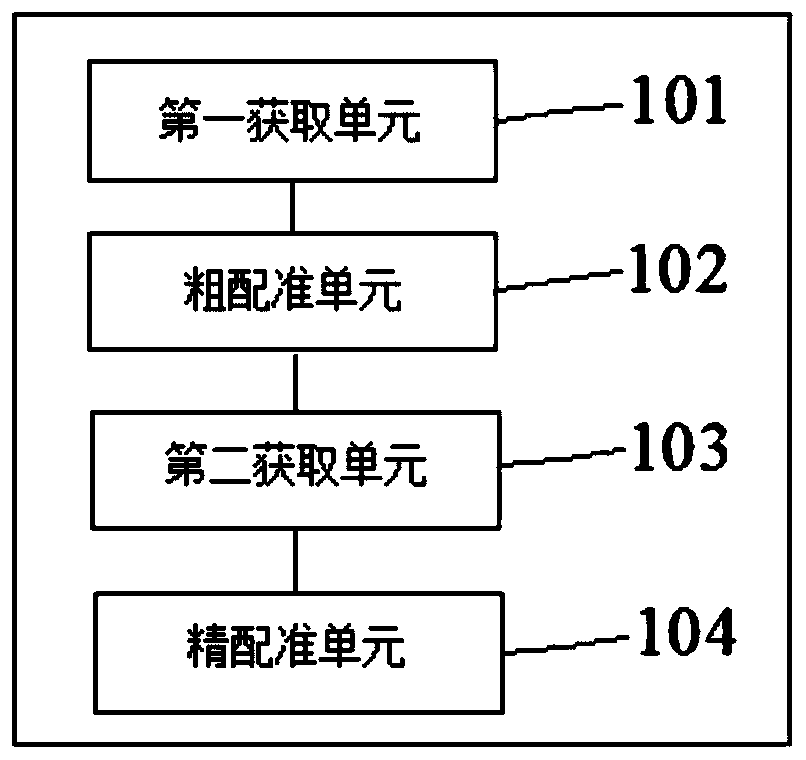
The invention discloses a femoral or tibial registration method and device based on total knee replacement surgery. The method comprises the steps of acquiring data point pairs, wherein the data pointpairs include a CT data reconstructed femoral or tibial digital three-dimensional model and selected feature points corresponding to bone points; adopting a point pair registration algorithm for performing rough registration on the data point pairs to obtain rough registration results; acquiring data point cloud pairs, wherein the data point cloud pairs include the CT data reconstructed femoral or tibial digital three-dimensional model and slidably collected point clouds corresponding to bones; performing precise registration according to the rough registration results and the data point clouds. According to the method and the device, anatomical feature points which are clear for a doctor are adopted for carrying out a rough registration algorithm, and dense three-dimensional point cloudstereoscopic data is further utilized to perform a fine registration algorithm, so that the registration accuracy rate is greatly increased. The first registration result based on SVD-ICP is used as the initial position of the next ICP registration, and the point cloud data is collected again to achieve a better registration effect from a more satisfactory initial position.
Need to check novelty before this filing date? Find Prior Art

Description

technical field

[0001] The present application relates to the technical field of total knee replacement surgery, in particular to a femur or tibia registration method and device based on total knee replacement surgery. Background technique

[0002] Artificial total knee replacement is a technique for treating knee joint diseases. It can effectively treat severe knee joint pain and greatly improve the quality of life of patients. The main influencing factors of artificial joint replacement surgery include accurate osteotomy in three-dimensional space, the position and angle of prosthesis placement, and total knee joint replacement has particularly strict requirements on these factors. Traditional surgery uses a mechanical guide to perform intramedullary and extramedullary positioning, and the operator judges the osteotomy, prosthetic position, and soft tissue balance with the naked eye, feel, and experience. Many subjective factors directly affect the accuracy of the operatio...

Examples

Embodiment Construction

[0034] The intraoperative registration of total knee arthroplasty refers to the transformation between the coordinate system of the patient in the actual process and the coordinate system of the virtual preoperative planning. This application uses the SVD-ICP algorithm to spatially register the 3D model reconstructed from the CT image and the patient's real bones through coarse registration and fine registration.

[0035] refer to figure 1 , the embodiment of the present application provides a femoral or tibial registration method based on total knee replacement surgery, including:

[0036] Step S1, obtaining a data point pair, the data point pair includes a digital three-dimensional model of the femur or tibia reconstructed from CT data and feature points selected from the corresponding bone;

[0037] The data point pairs have obvious characteristics, and the user can easily distinguish them. The user can relatively simply collect one-to-one corresponding data point pairs on...