Multi-scale image semantic segmentation method

A semantic segmentation and multi-scale technology, applied in the field of computer vision, can solve the problems of loss of details of segmentation results, low utilization efficiency of receptive field features, and insufficient robustness of segmentation, etc., to reduce the amount of calculation and the number of parameters, and reduce the calculation volume and number of parameters, the effect of increasing utilization

CN110232394AActive Publication Date: 2019-09-13SOUTH CHINA UNIV OF TECH
6 Cites 106 Cited by

Patent Information

Authority / Receiving Office
CN · China
Patent Type
Applications(China)
Current Assignee / Owner
Publication Date
2019-09-13

Smart Images

  • Figure 1
    Figure 1
  • Figure 2
    Figure 2
  • Figure 3
    Figure 3
Patent Text Reader

Abstract

The invention discloses a multi-scale image semantic segmentation method. The method comprises the following steps: obtaining a to-be-segmented image and a corresponding label; constructing a full convolutional deep neural network, wherein the full convolutional deep neural network comprises a convolution module, a hole convolution module, a pyramid pooling module, a 1 * 1 * depth convolution layer and a deconvolution structure; setting hole convolution as channel-by-channel operation, and utilizing low-scale, medium-scale and high-scale characteristics in a targeted mode; training the full convolutional deep neural network, establishing a loss function, and determining parameters of the full convolutional deep neural network by training the sample image; and inputting the to-be-segmentedimage into the trained full convolutional deep neural network to obtain a semantic segmentation result. By means of the method, the image semantic segmentation problem with complex details, holes andlarge targets can be well solved while the calculated amount and the parameter number are reduced, and the consistency of category labels can be reserved while the target edges can be well segmented.
Need to check novelty before this filing date? Find Prior Art

Description

technical field

[0001] The invention relates to the field of computer vision, in particular to a multi-scale image semantic segmentation method. Background technique

[0002] Semantic segmentation is an important issue in the field of computer vision. At present, various application scenarios (such as object detection, recognition, etc.) need to be realized through semantic segmentation. The task of semantic segmentation is to judge the category of each pixel of the image and label it.

[0003] The semantic segmentation problem puts forward two requirements for the algorithm: (1) classification: the labels of the pixels in the target range belonging to the same category must be consistent; (2) localization: the pixels at the edge of the target can also be accurately classified. Among these two requirements, the former requires high-level semantic features, which can usually be obtained by setting the convolution step size, pooling downsampling, etc.; while the latter requir...

Examples

Embodiment

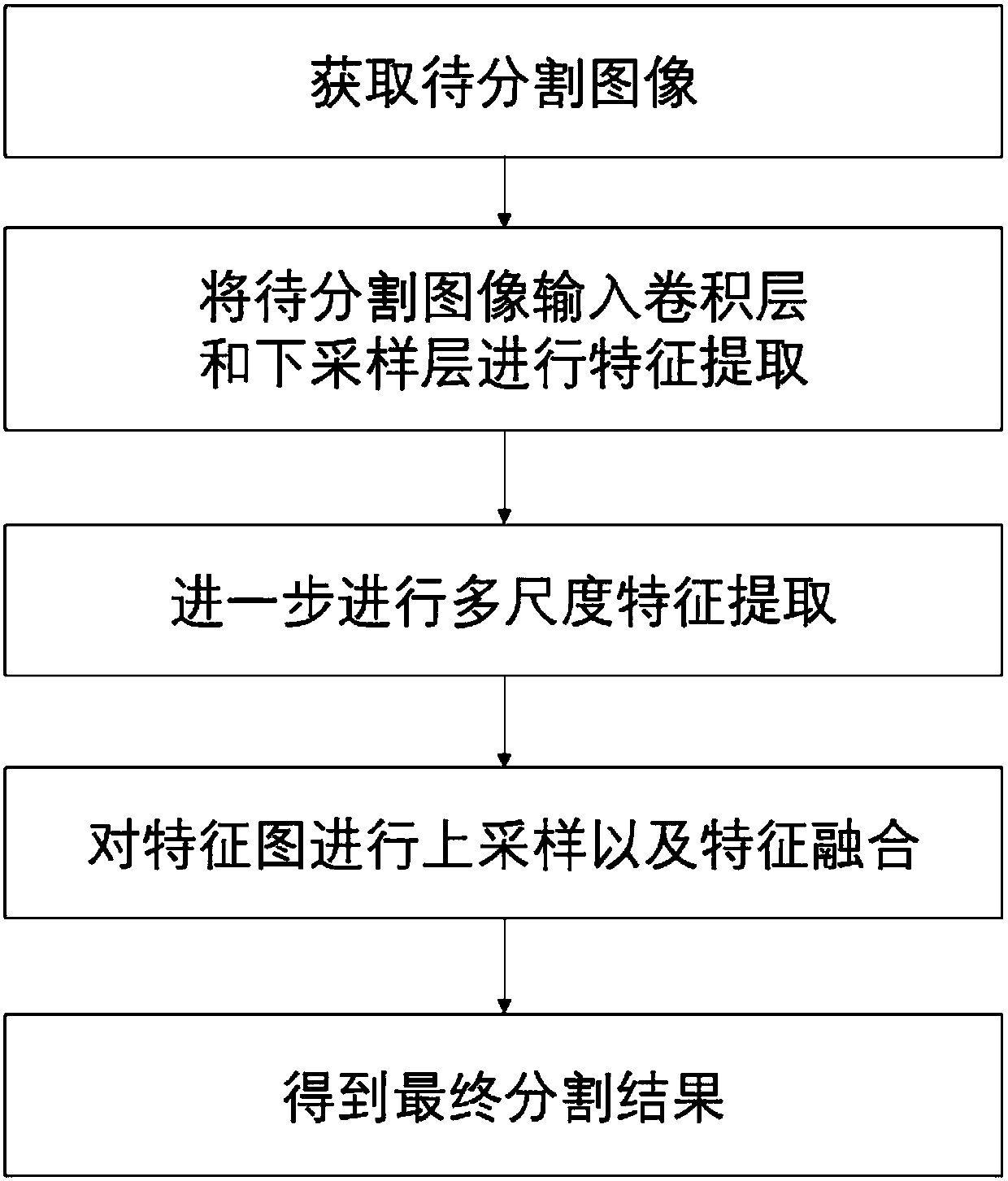
[0047] Such as figure 1 As shown, a multi-scale image semantic segmentation method includes the following steps:

[0048] S1. Obtain an image to be segmented and a corresponding label, the image to be segmented is a three-channel color image, and the label is a category label corresponding to each pixel position;

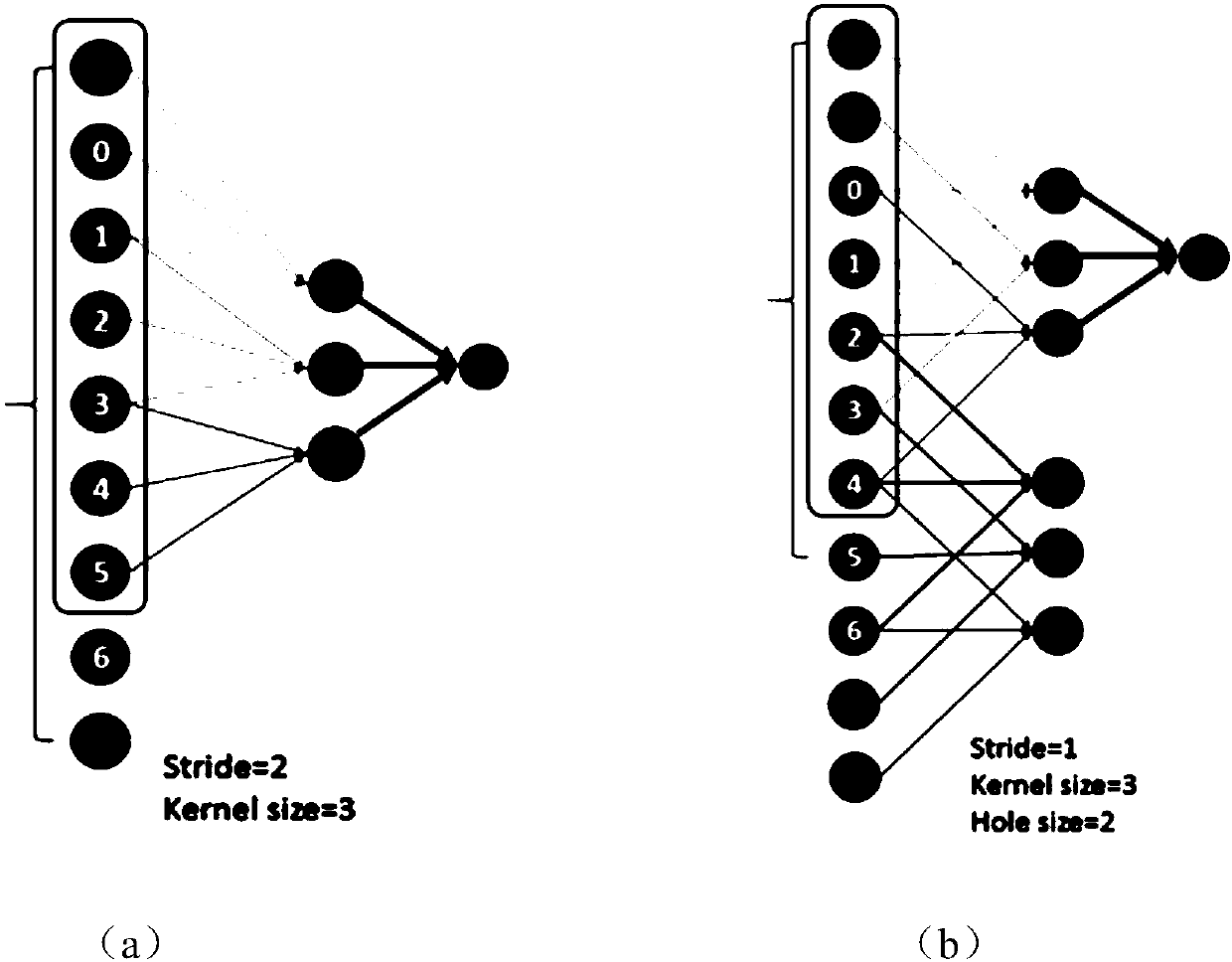
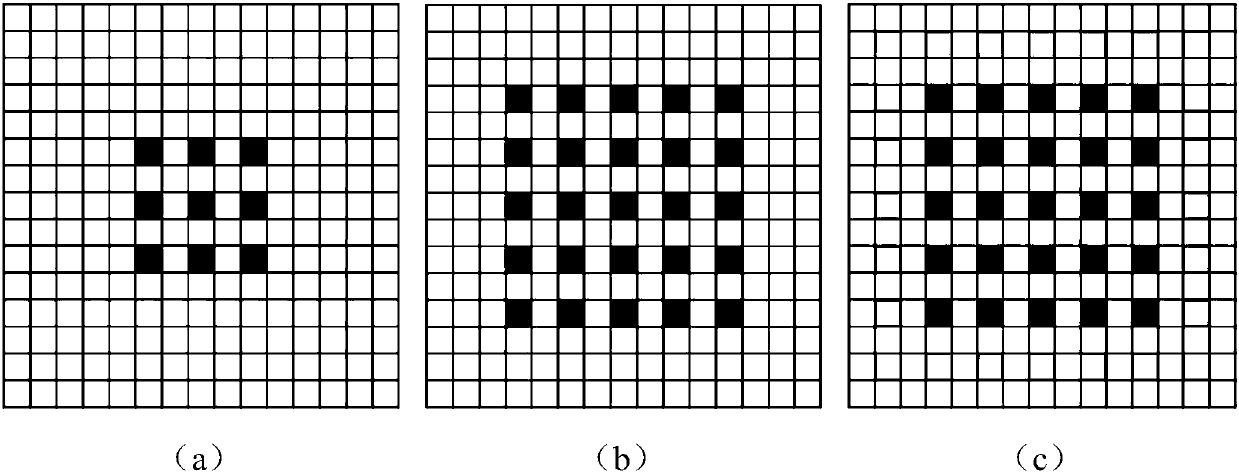
[0049] S2. Construct a fully convolutional deep neural network, such as Figure 4 As shown, the full convolution deep neural network includes a convolution module, a hole convolution module, a pyramid pooling module, a 1×1×depth convolution layer, and a deconvolution structure; the hole convolution module includes several groups A multi-scale atrous convolution structure, the multi-scale atrous convolution structure is provided with atrous convolution kernels of different expansion rates, and extracts information of low, medium, and high-resolution targets from the feature image; step S2 specifically includes the following steps:

[0050] S21. The fully convoluti...