Bionic robotic fish

A robotic fish and steering gear technology, applied in the field of bionic robotic fish, can solve the problems of inability to take into account high-speed swimming, low-speed maneuvering and good stability, insufficient swimming performance of bionic robotic fish, etc., so as to facilitate low-speed observation and obstacle avoidance, Improve the effect of intelligent regulation and high-performance sports and visual field stabilization
CN110758689AInactive Publication Date: 2020-02-07INST OF AUTOMATION CHINESE ACAD OF SCI

Patent Information

Authority / Receiving Office
CN · China
Current Assignee / Owner
INST OF AUTOMATION CHINESE ACAD OF SCI
Publication Date
2020-02-07
Estimated Expiration
Not applicable · inactive patent

Smart Images

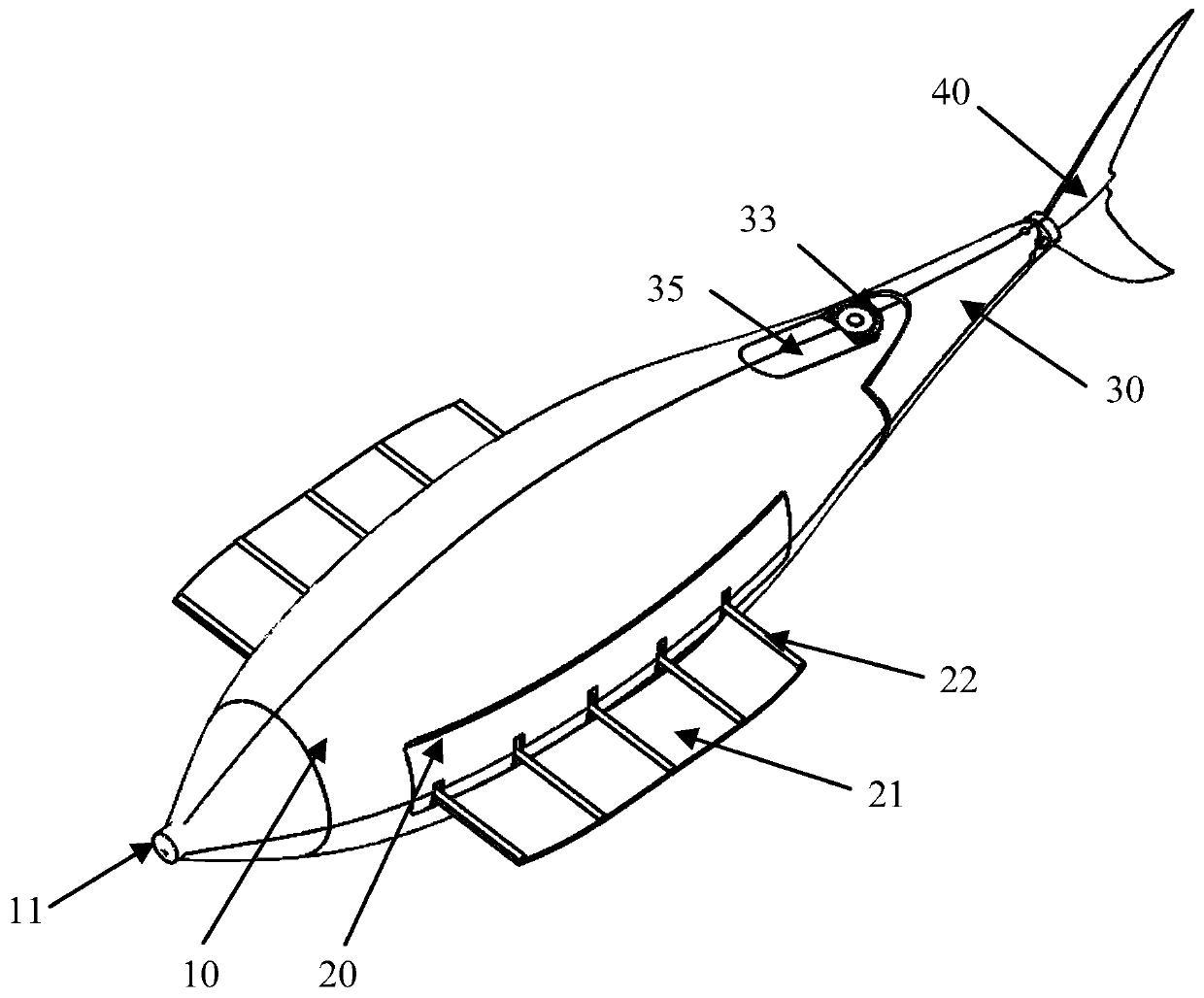
  • Figure 1
    Figure 1
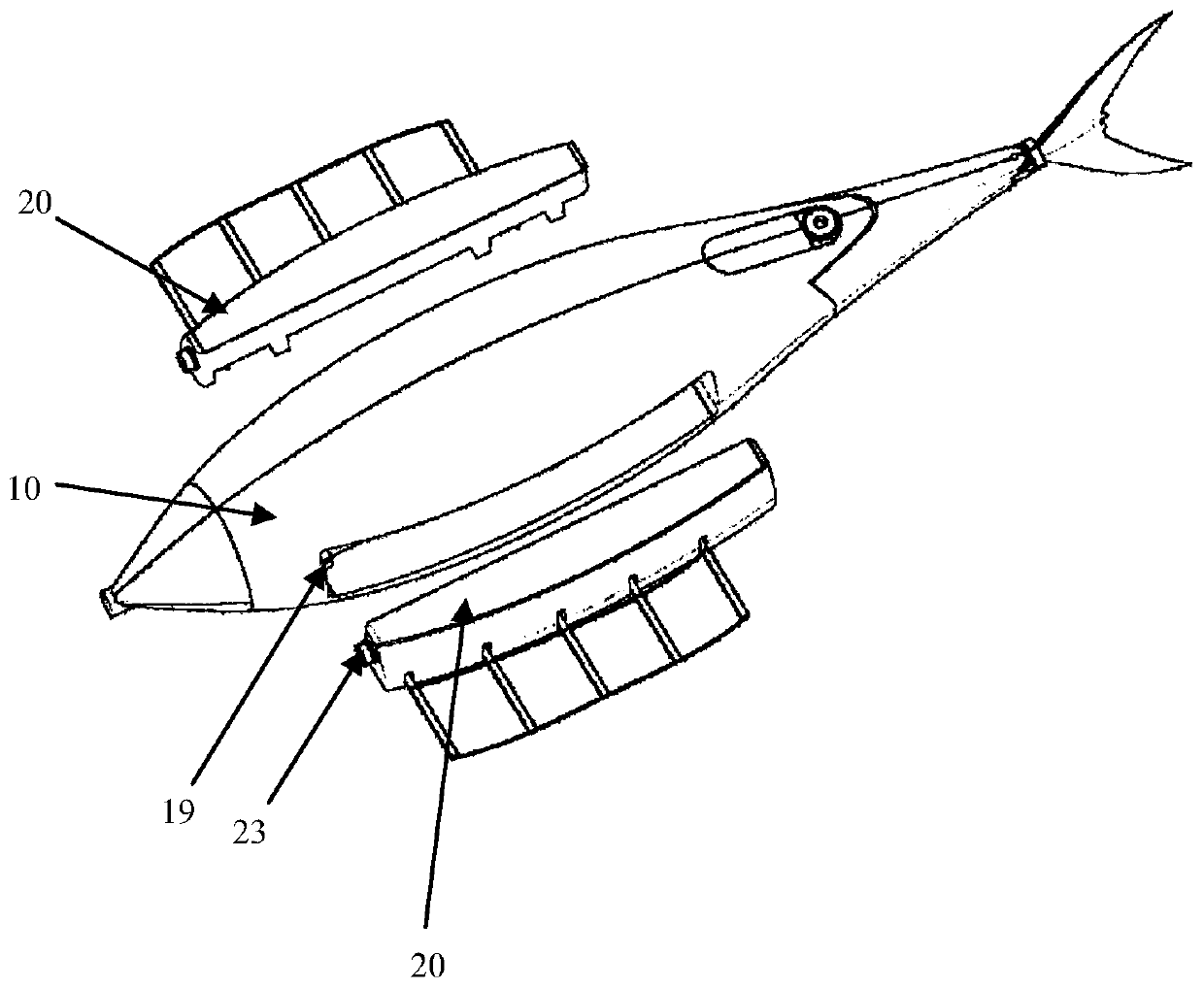
  • Figure 2
    Figure 2
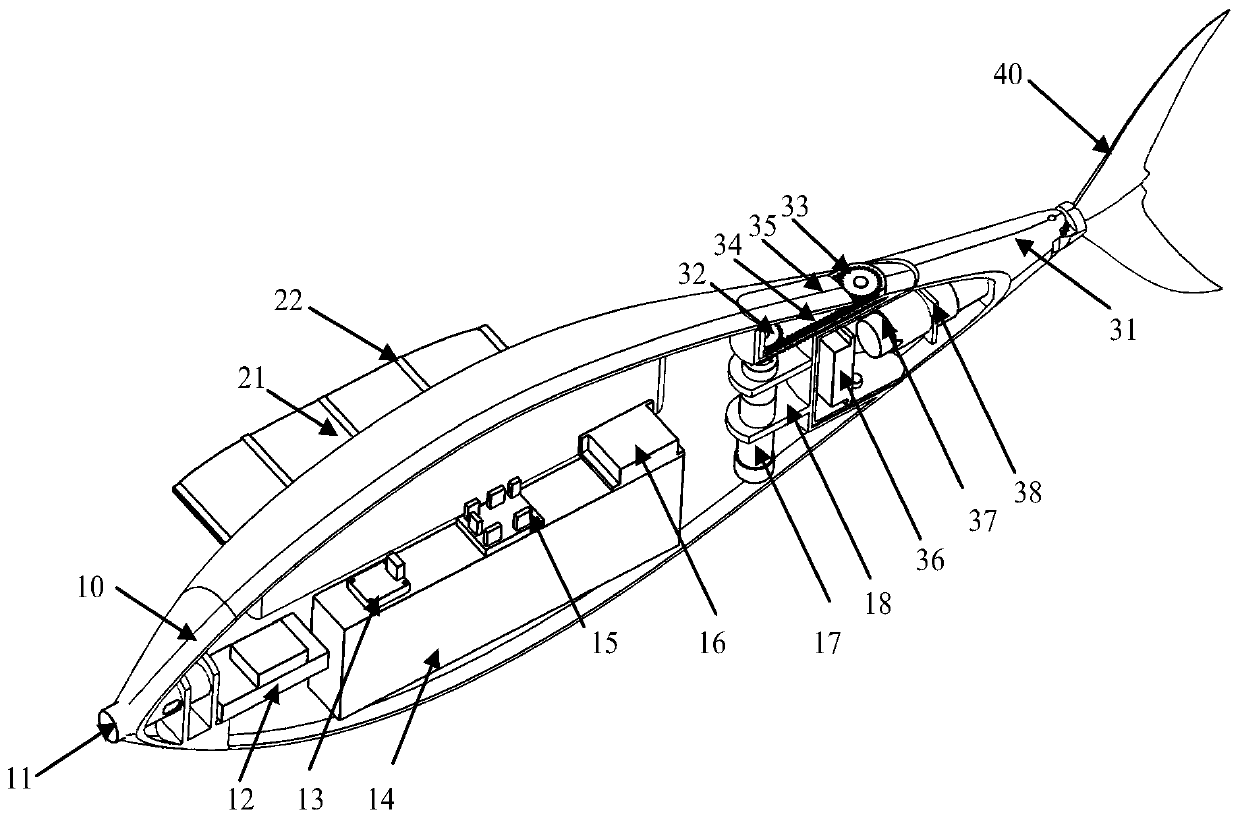
  • Figure 3
    Figure 3
Patent Text Reader

Abstract

The invention belongs to the technical field of bionic robots and particularly relates to a bionic robotic fish. The bionic robotic fish aims at solving the problems that in the prior art, the swimming performance of a bionic robotic fish is not sufficient, and high-speed swimming, low-speed maneuvering and good stability cannot be taken into consideration. The bionic robotic fish comprises a bodycabin module, a tail cabin module, a tail fin and pectoral fin modules symmetrically distributed on the left side and the right side of the body cabin module, wherein the body cabin module, the tailcabin module, the tail fin and the pectoral fin modules are independently sealed. The tail cabin module and the tail fin are sequentially hinged to the rear portion of the body cabin module. By meansof the bionic robotic fish, due to the combination motion of the tail cabin module and the tail fin, fish imitating BCF mode propelling is achieved, and fish imitating MPF mode propelling is achievedthrough pectoral fin fluctuation. The bionic robotic fish integrates the advantages of the BCF mode and the MPF mode, and the high swimming speed and high maneuvering of the BCF mode and low-speed maneuvering and stable swimming of the MPF mode can be achieved. According to an intelligent control method based on reinforcement learning, different work modes are selected automatically for adapting to different underwater environments and meeting different task requirements, and wide application prospects are achieved.
Need to check novelty before this filing date? Find Prior Art

Description

technical field

[0001] The invention belongs to the technical field of robots, and in particular relates to a bionic robot fish. Background technique

[0002] In nature, after a long period of natural evolution, fish have developed an extraordinary ability to swim in water. According to the different propelling parts of the body during swimming, the propulsion modes of fish are mainly divided into two categories: Body and / or Caudal Fin (BCF for short) and Median and / or Paired Fin (Median and / or Paired Fin, Abbreviated as MPF). The fish adopting the BCF mode mainly use the undulation of the body and the swing of the caudal fin to generate propulsion. After a long evolution, a variety of propulsion modes suitable for its morphological structure have been formed, such as the Anguilliform mode, Carangiform mode and Carangiform mode. Tuna mode (Thunniform), etc. Fishes in the BCF mode often have great differences in swimming performance due to their different morphological str...

Claims

the structure of the environmentally friendly knitted fabric provided by the present invention; figure 2 Flow chart of the yarn wrapping machine for environmentally friendly knitted fabrics and storage devices; image 3 Is the parameter map of the yarn covering machine
Login to View More