CBIR method based on improved PQ algorithm

An algorithm and product technology, applied in the CBIR field based on the improved PQ algorithm, can solve the problems of high operation and maintenance cost and time-consuming, and achieve the effect of improving the recall rate, good nonlinear retrieval, and optimizing the time-consuming algorithm.

CN111177435AActive Publication Date: 2020-05-19CHONGQING UNIV OF POSTS & TELECOMM
4 Cites 3 Cited by

Patent Information

Authority / Receiving Office
CN · China
Patent Type
Applications(China)
Current Assignee / Owner
Publication Date
2020-05-19

Smart Images

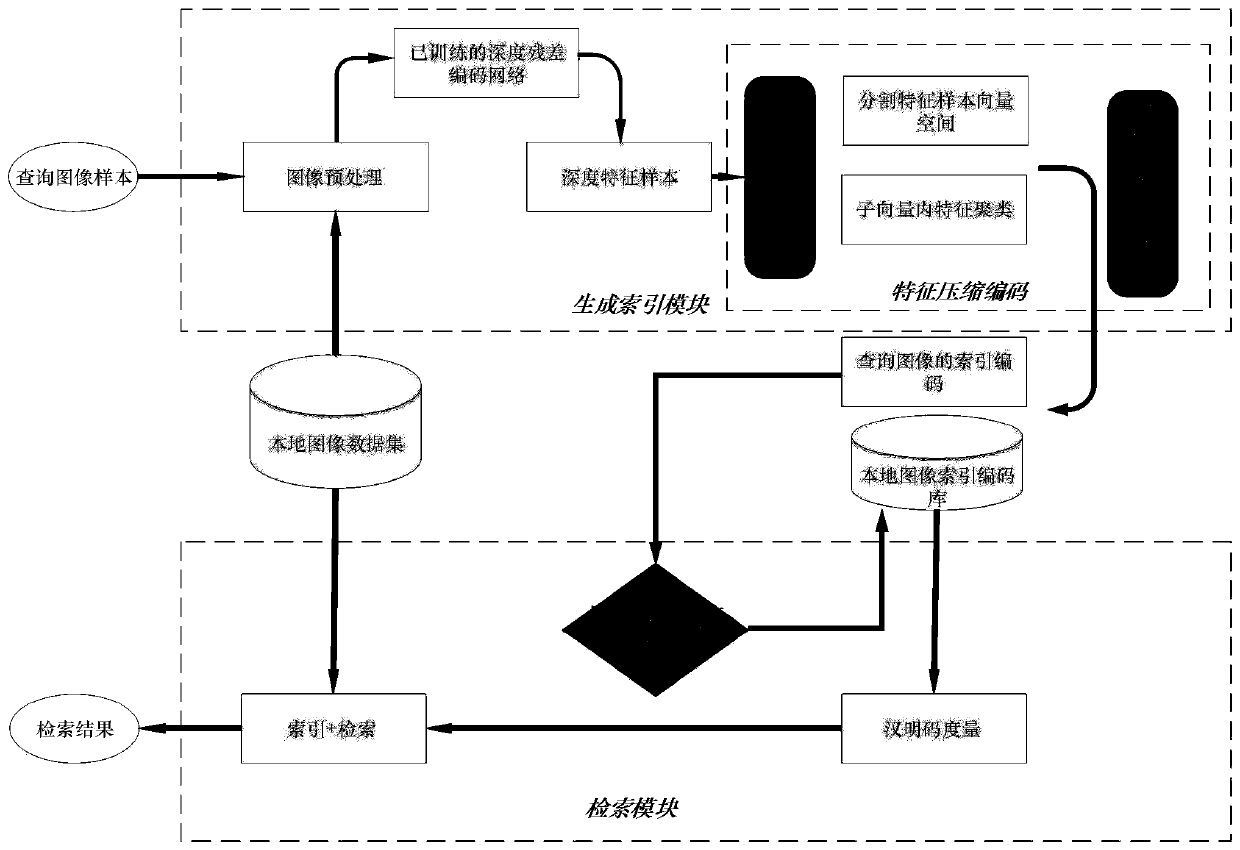
  • Figure 1
    Figure 1
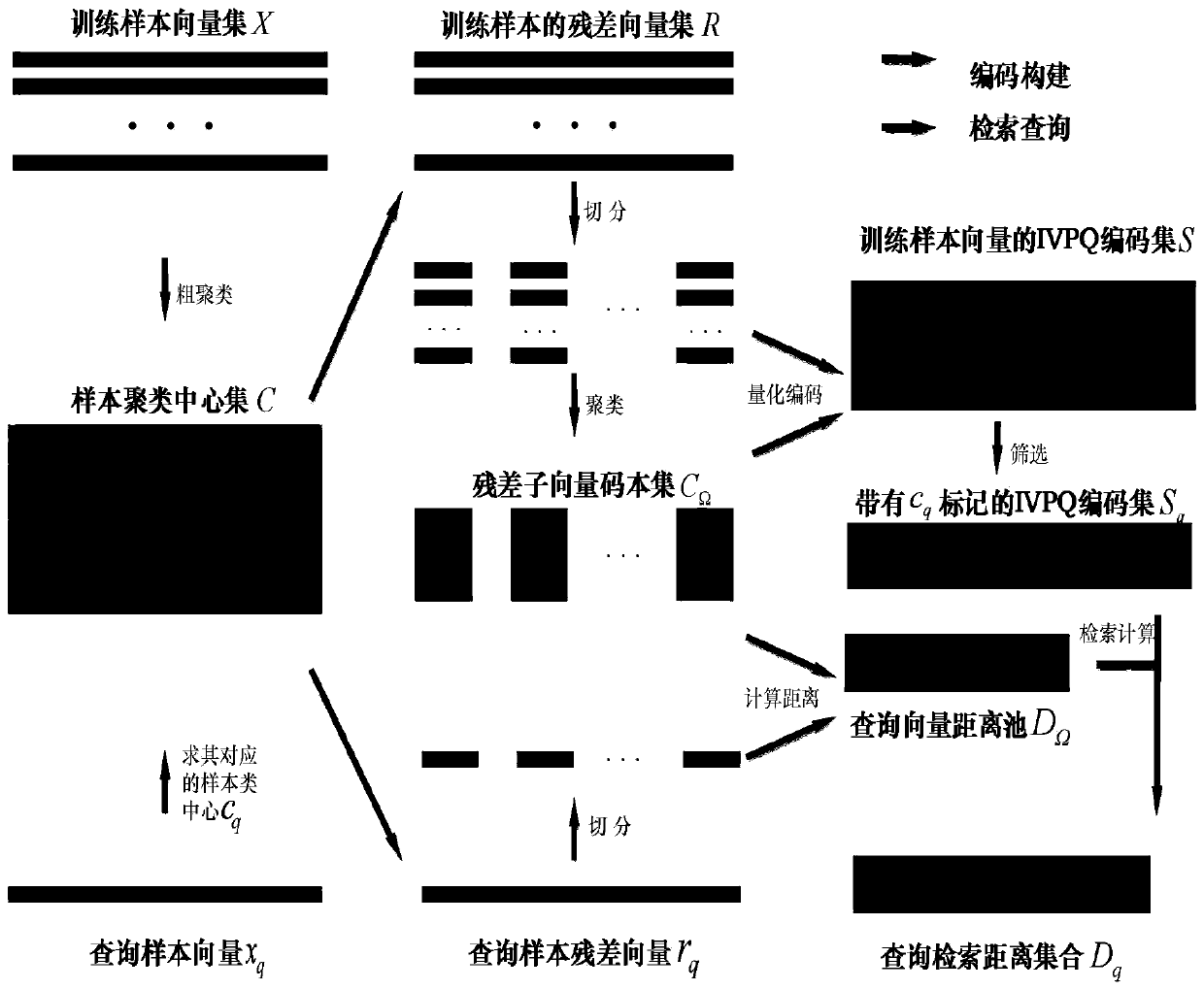
  • Figure 2
    Figure 2
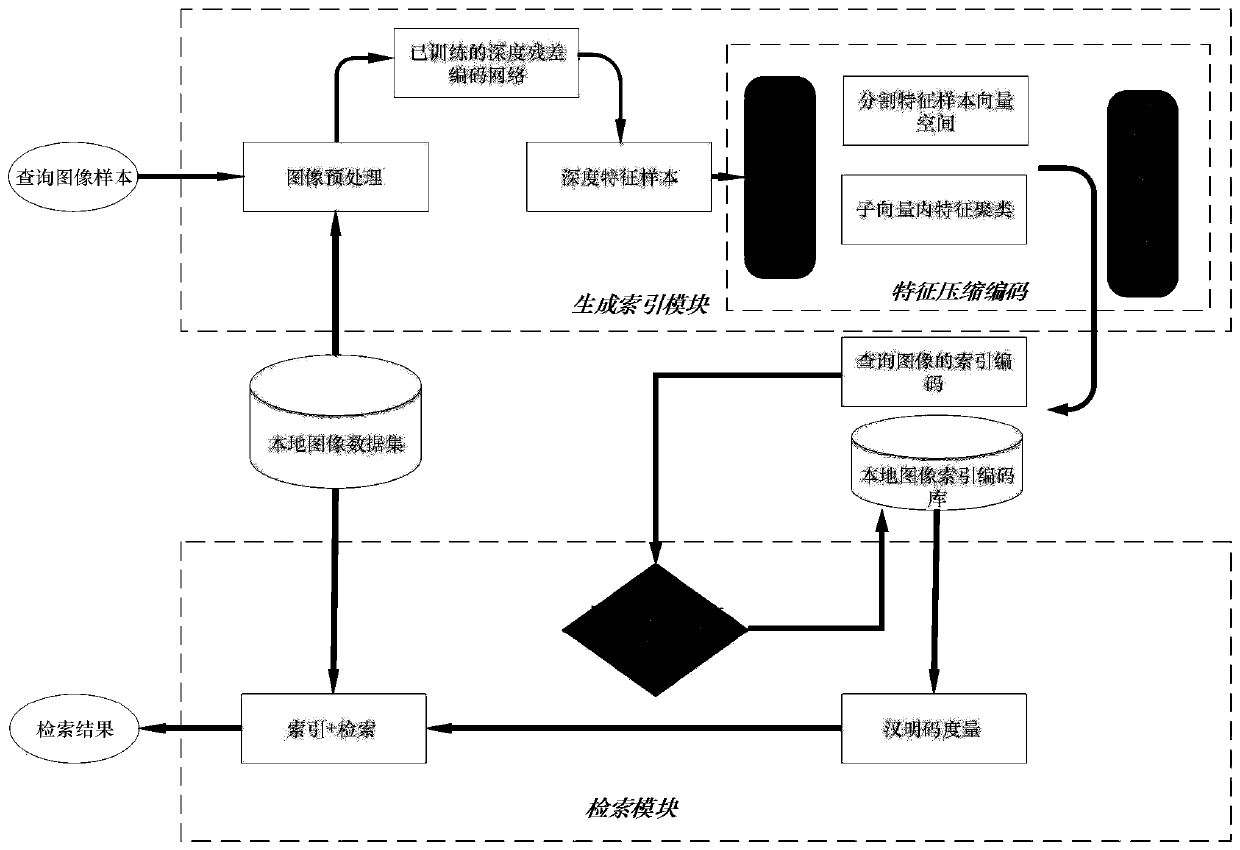
  • Figure 3
    Figure 3
Patent Text Reader

Abstract

The invention relates to a CBIR method based on an improved PQ algorithm, and belongs to the technical field of image processing. The method comprises the steps of extracting image depth features by improving a deep convolutional network; encoding and compressing the image feature data through an index retrieval module of an inverted index-based product quantization IVPQ algorithm adopting a non-linear retrieval ANN search strategy; obtaining a full-index database, generating indexes of the dynamic index database based on a Faiss framework, segmenting a data space of the full-index database through feature vector coding, quickly locking a certain subspace through Hamming distance rearrangement and then traversing during retrieval of a query picture, and outputting a retrieval image. According to the method, the dynamic retrieval of the index database is realized on the basis of the Faiss framework, and the high operation and maintenance cost generated for reconstructing the index database in the practical application occasion is avoided.
Need to check novelty before this filing date? Find Prior Art

Description

technical field

[0001] The invention belongs to the field of image processing and relates to a CBIR method based on an improved PQ algorithm. Background technique

[0002] In practical application scenarios, users need to search and judge massive, unlabeled, complex and unknown images based on key sensitive image databases to realize the function of "searching images by image". At present, it is recognized that the most effective way to represent indexed image information is based on the image content itself, so the content-based image retrieval (CBIR, Content Based Image Retrieval) method is selected for large-scale image retrieval system design.

[0003] The traditional CBIR method adopts the Brute-force strategy of similarity measurement. The Brute-force strategy will aggravate the consumption of memory resources with the increase of image feature index data. Especially when the scale of the data set in the actual application reaches hundreds of millions, due to the incr...

Examples

Embodiment example

[0077] 1. Conduct index algorithm test:

[0078] Using SIFT1M as the test data set, the improved and optimized IVPQ encoding retrieval algorithm in this paper is compared with several existing image retrieval algorithms based on ANN retrieval strategies, respectively from the three indicators of recall rate, retrieval time, and index file size. To measure the superiority of the retrieval algorithm. They are the unimproved product quantization method PQ proposed in the literature, the local sensitive hash method MLSH for multi-table query proposed in the literature, and the index quantization method HNSW proposed in the literature. The experimental parameters are described as follows: nlist: indicates the number of sample clusters; m: indicates the number of divided subspaces; nbit: indicates the number of binary coded bits of each vector subspace; nprobe indicates the number of the most similar class when querying number; R@n indicates the recall rate of returning the n most ...