
Transient weak signal detection method based on nonlinear time extrusion time-frequency transformation
A technology of weak signal detection and time-frequency transformation, which is applied in seismic signal processing, measuring devices, geophysical measurement, etc., can solve the problem that nonlinear squeezing time-frequency transformation is not suitable for detecting strong frequency signals, etc., and achieves easy implementation and reliable Good operability and improved time resolution
Patent Information
- Authority / Receiving Office
- CN · China
- Current Assignee / Owner
- Publication Date
- 2020-07-31
Smart Images
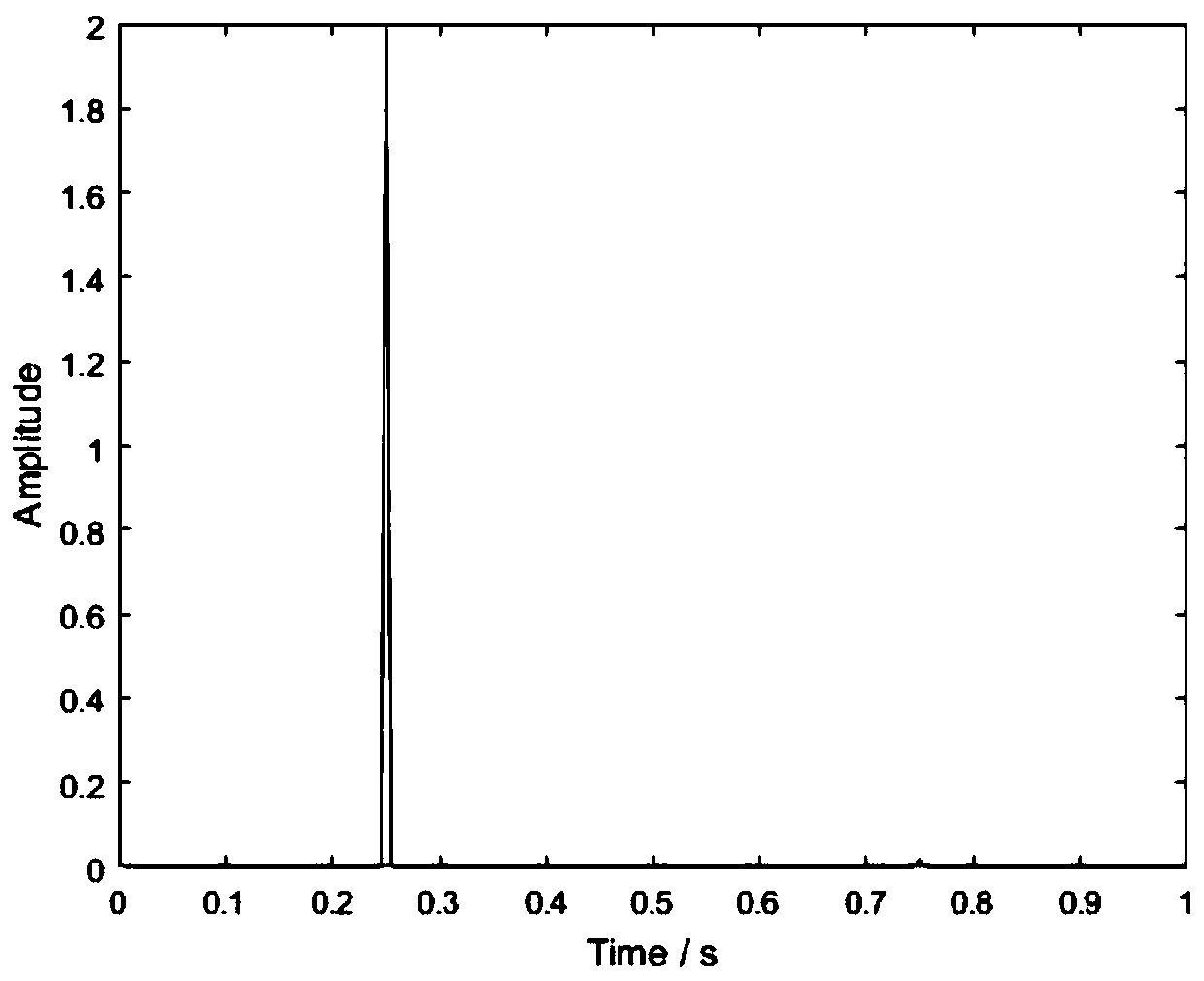
Figure 1 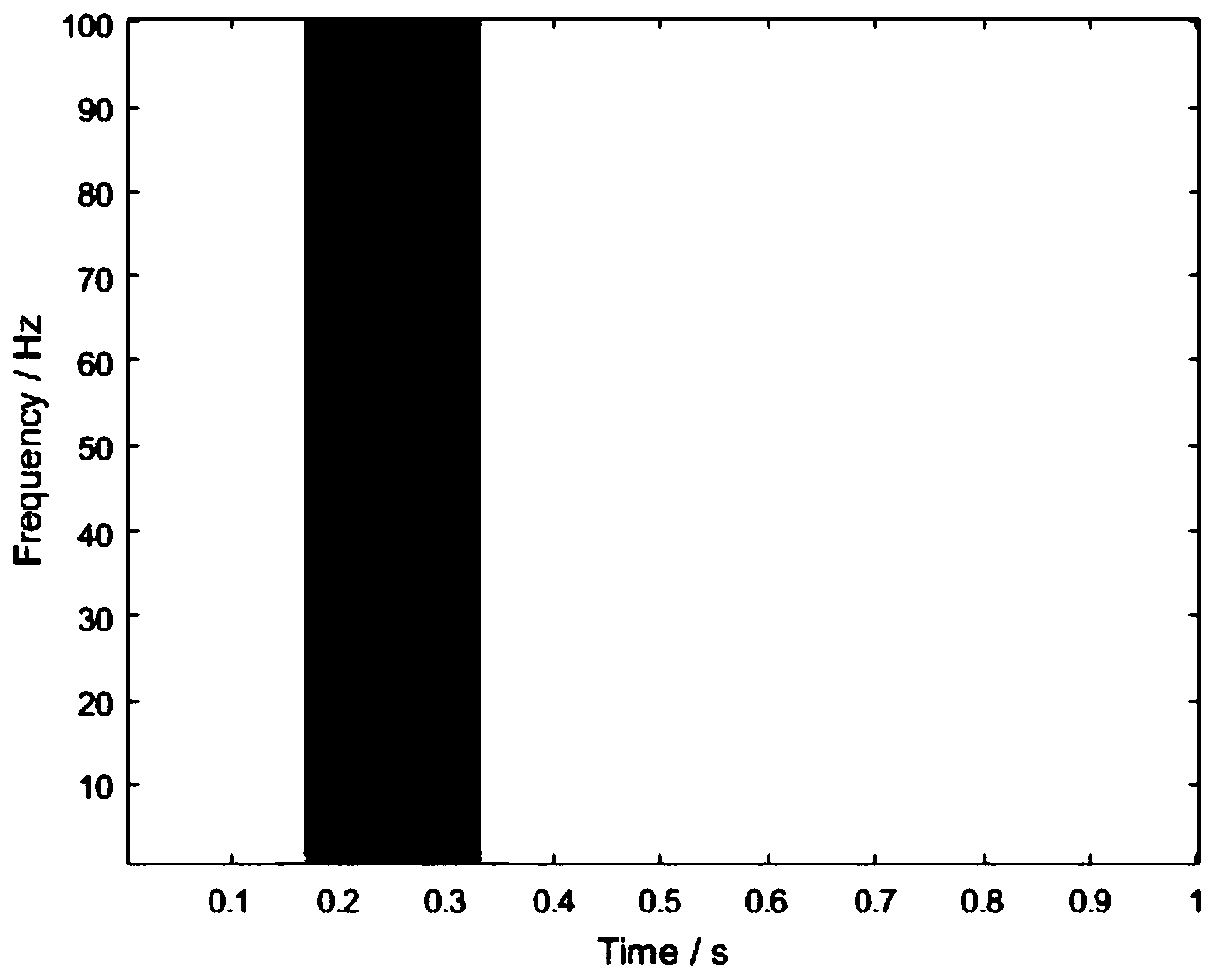
Figure 2 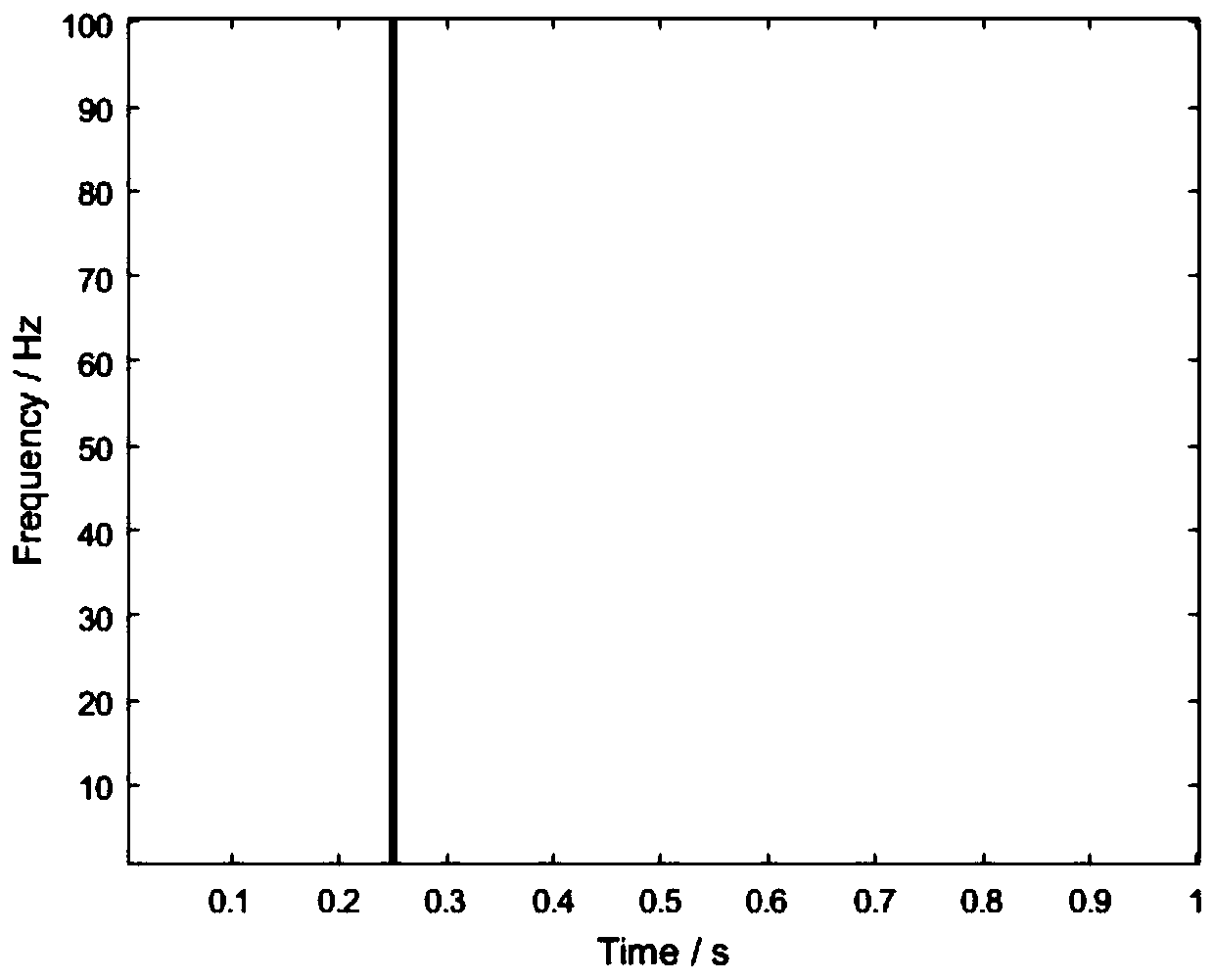
Figure 3
Abstract
Description
technical field
[0001] The invention belongs to the field of signal processing in geophysical prospecting, and relates to a detection method for transient weak signals, in particular to a detection method for transient weak signals based on nonlinear time-squeezing time-frequency transformation. Background technique
[0002] The phenomenon of weak signal is very common in practical engineering, and its detection and identification is an important task. Aiming at the detection of weak signals, there have been many theoretical and applied researches. The more commonly used methods include wavelet transform, curvelet transform and so on. However, the wavelet threshold method lacks effective protection of the signal amplitude when suppressing random noise, and its detection effect on weak signals is not ideal; while the curvelet threshold method can effectively detect weak signals, but the results often contain some " Artifacts".
[0003] In the new technology, some scholars ...
Examples
Embodiment 1
[0048] In this embodiment, the synthetic shock signal is used to test the effectiveness of the method of the present invention.
[0049] As shown in Fig. 1(a), an impulse response occurs at 0.25s and 0.75s, and their magnitudes are 2 and 0.02, respectively. The sampling frequency of the signal is 200Hz, and the sampling time is 1s. This example presents the time-frequency results of the short-time Fourier transform (Fig. 1(b)), the time-synchronously squeezed transform (Fig. 1(c)) and the nonlinear time-squeezed transform (Fig. 1(d)) . Through observation, it can be obtained that the energy in the time direction of the time-frequency spectrum of the time-synchronous squeeze transform is more concentrated than that of the short-time Fourier transform, but the existence of weak signals cannot be detected. However, as a result of the method of the present invention, components with weak energy can be accurately and clearly detected.
[0050] Then this embodiment provides a sim...