
Method for realizing dynamic gesture recognition and control in integrated imaging display system
A display system and dynamic gesture technology, applied in the field of image processing, can solve problems such as uncomfortable vision and fatigue
- Summary
- Abstract
- Description
- Claims
- Application Information
AI Technical Summary
Problems solved by technology
Method used
Image

Examples
Embodiment Construction
[0071] The present invention is described in detail below in conjunction with accompanying drawing:
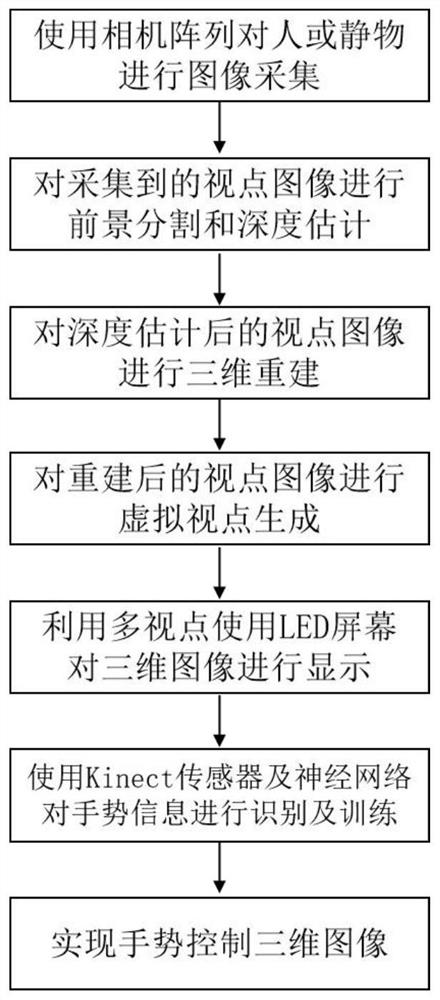
[0072] see figure 1 , the implementation of the method includes a total of six major steps: image acquisition, foreground segmentation and depth estimation, 3D reconstruction, virtual pilot generation, 3D image display, gesture recognition and training.
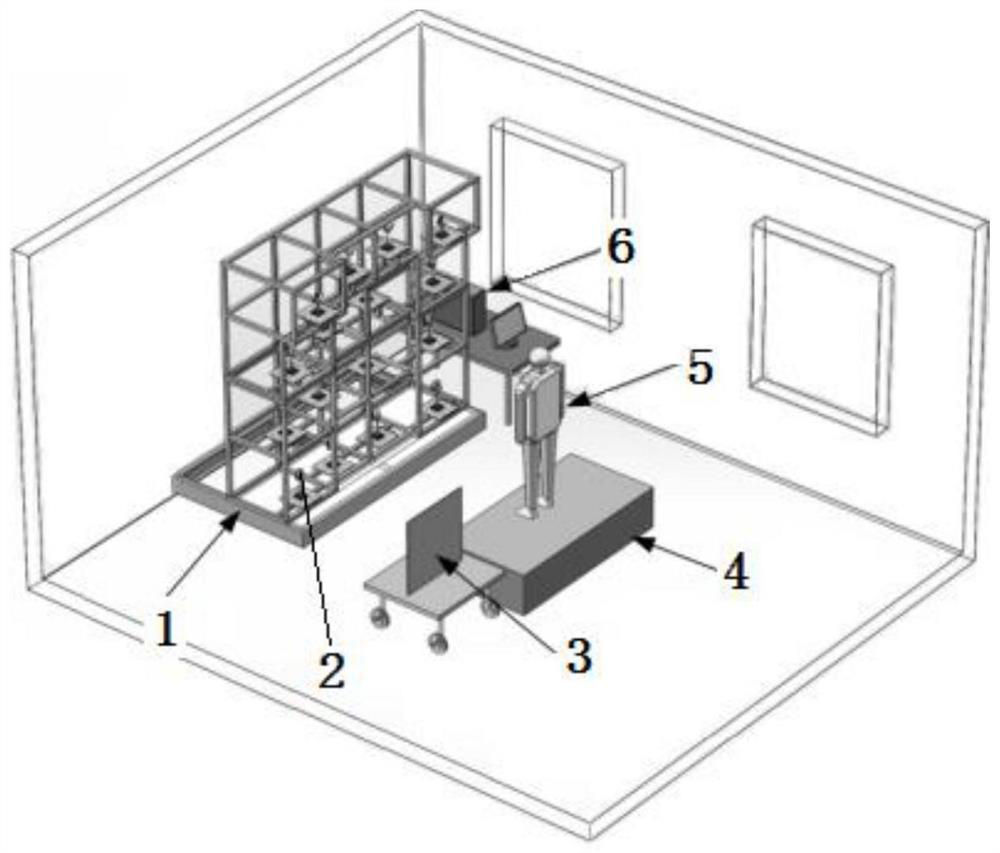
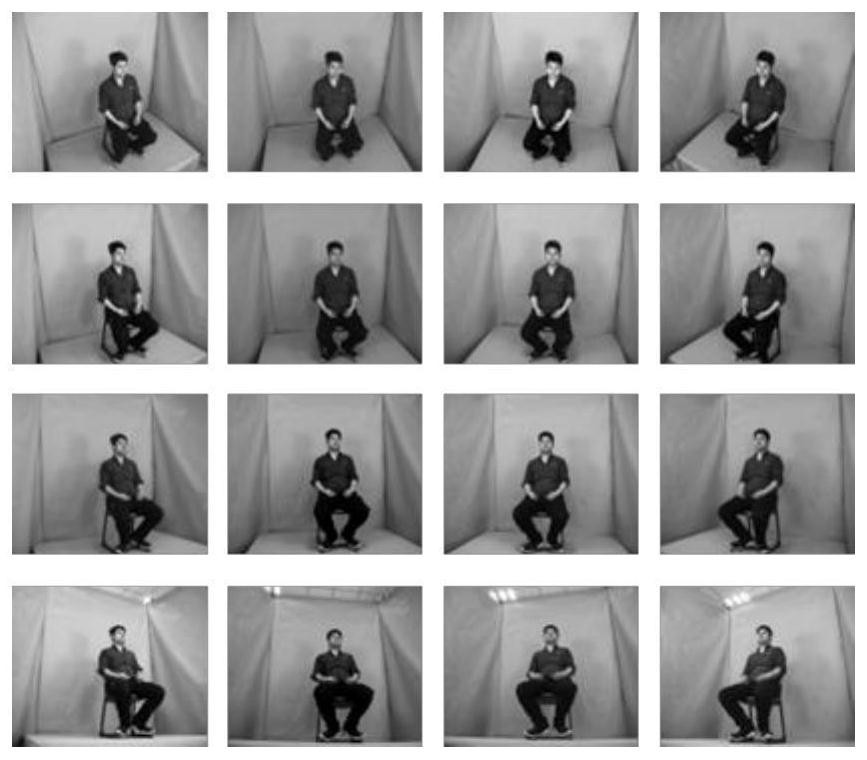
[0073] For image acquisition steps, see figure 2 , in the acquisition process, first, the server uses the camera calibration software Calibration to obtain the internal parameters of the 16 cameras (including lens distortion coefficients, equivalent focal lengths, and optical axis imaging positions) and the relative positional relationship between the cameras. If the acquired positional relationship If the deviation from the theoretical value is too large, use the position adjustment function of the camera calibration software to manually fine-tune the camera that deviates from the position, and then calibrate the camera ar...
PUM
 Login to View More
 Abstract
Description
Claims
Application Information
 Login to View More