
Buck-boost controller based on current mode
A technology of current mode and controller, which is applied in the direction of control/adjustment system, instrument, electrical components, etc., can solve the problems of difficult seamless switching and high dynamic loss of switching, and achieve the effect of smooth seamless switching and reduced dynamic loss
- Summary
- Abstract
- Description
- Claims
- Application Information
AI Technical Summary
Problems solved by technology
Method used
Image

Examples
Embodiment
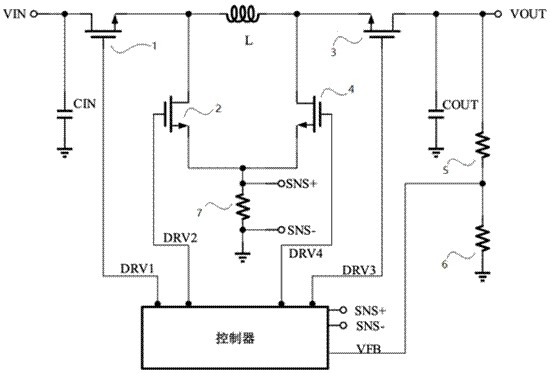
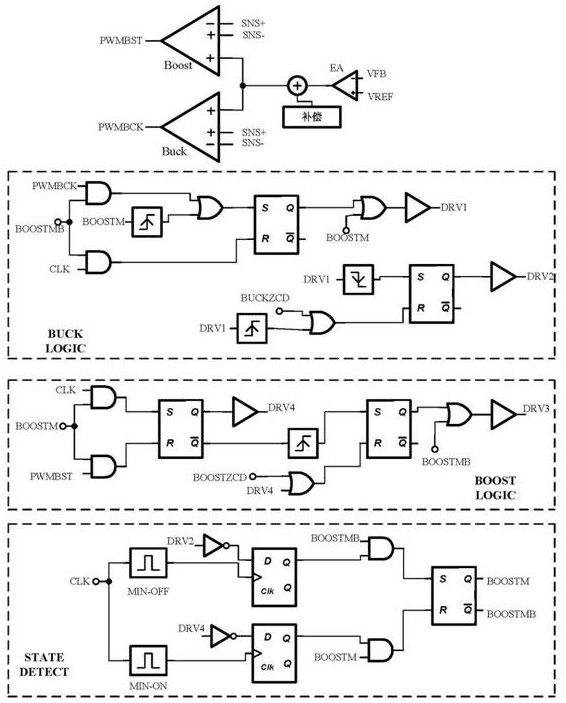
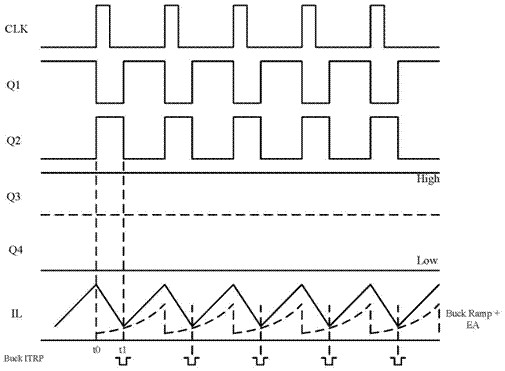
[0037] refer to figure 1 , figure 1 It shows a buck-boost converter composed of a controller, a voltage feedback circuit and a current sampling circuit. The buck-boost converter mainly includes two parts, namely the core controller and the voltage and current feedback loop that cooperates with the core controller , the controller outputs a DRV1 signal, a DRV2 signal, a DRV3 signal, and a DRV4 signal, and the voltage feedback loop includes a first switching tube 1, a second switching tube 2, a third switching tube 3 and a fourth switching tube 4, so The drain of the first switching tube 1 is connected to the VIN input signal, the gate of the first switching tube 1 is connected to the DRV1 signal of the controller, and the source of the first switching tube 1 is connected to the drain of the second switching tube 2; The drain of the third switching tube 3 is connected to the VOUT output signal, the grid of the third switching tube 3 is connected to the DRV3 signal of the contro...
PUM
 Login to View More
 Abstract
Description
Claims
Application Information
 Login to View More